
Some Nogai propagandists on the Internet make the absurd claim that the Crimean Tatar people do not exist (supposedly they are three different peoples, and the steppe Crimean Tatars, in their opinion, are part of the Nogai). I will make the opposite statement, the Nogai people are the Tatar tribes who followed Edigey and that’s it: the nickname «Nogai» was given to outstanding Tatar warriors of the great steppe, Mamai, Edige and others had it, it was never ethnic.

Genghis Khan is a representative of the Kara-Tatar people (kara in Turkic languages means not only black, but also great), the Kyyat Boryu Tegin tribe. He founded a great empire, the Great Tartary. He was neither a Nogai nor a Cossack (and if he was, which, of course, is not the case, then these are just class terms denoting a person living without power or a warrior, but not ethnic ones).
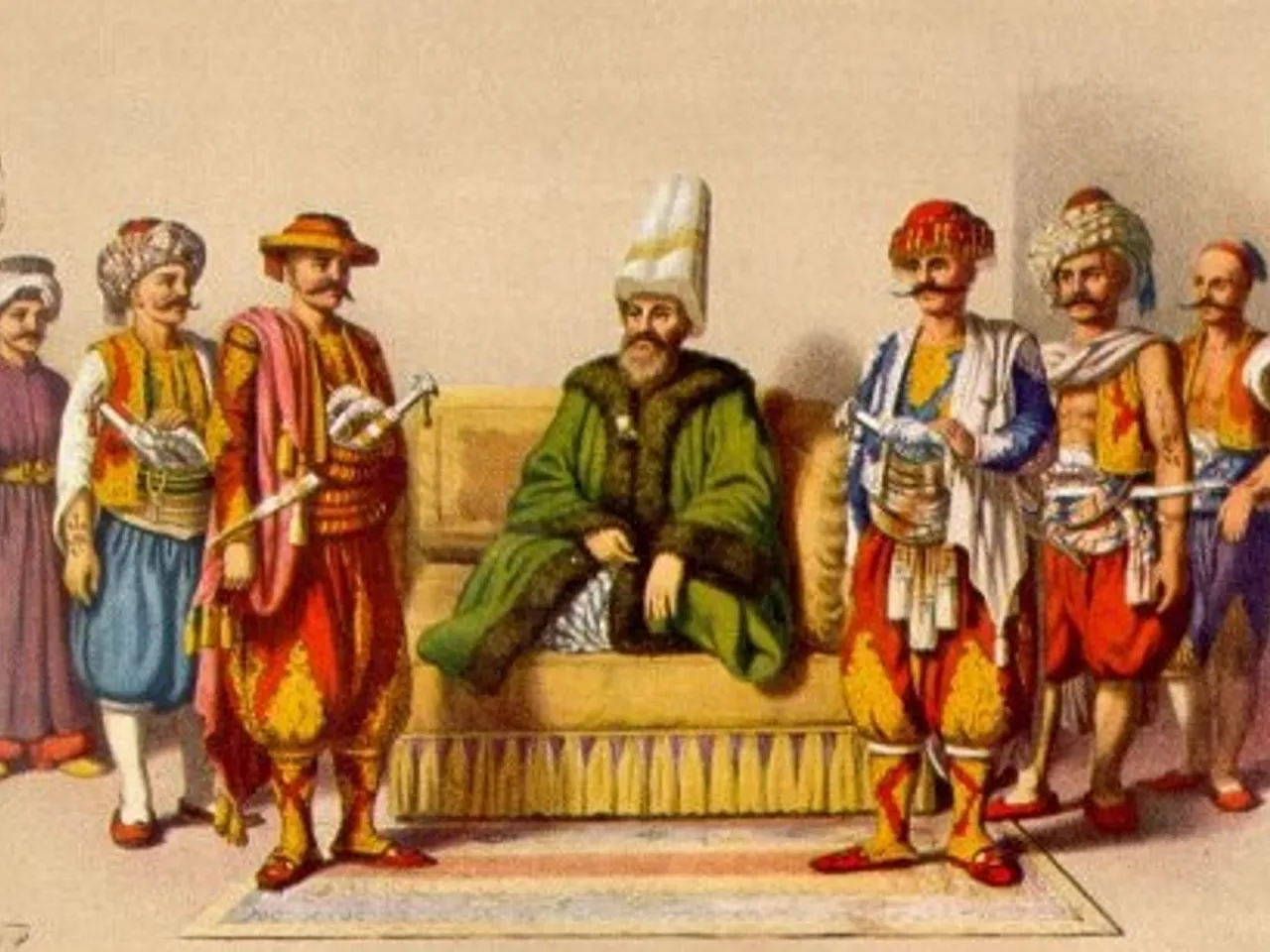
Nogai Tatar (left) and Crimean Tatar (right)
Some Kazakhs, having seen that the Crimean Tatars include common Turkic tribes (usually by looking at the old names of Crimean villages), such as Argyn, kyyat, konyrat, Mansur, kipchak, Yashlav and others, naively make the equally absurd claim that the Crimean Tatars are therefore Kazakhs, considering for some reason that The common Turkic tribes belong only to the Kazakhs (an absurdity). In general, I will remind Kazakhs that the term Cossack comes from the word kachak (from the verb kachmak – to run) – these are Tatar fugitives (Kerey and Zhanibek led their hordes away from the legitimate khan and began to roam by themselves, to Cossack).
The above, in turn, does not make the Crimean Tatars a subethnos of the Volga Tatars. Yes, the Crimean Tatars ruled Kazan for a certain time (let me remind you that Ulug Muhammad himself, having left the Crimea with part of the Tatars, founded the so-called Kazan Khanate), and yes Mehmed Gerai put his protege on the throne in Kazan (which in fact was the incorporation of Kazan into the Crimean Khanate, which was called Ulug Ulus), that is It would also be possible to raise the question of who is whose subethnos, but the Crimean Tatars will not engage in such nonsense. Nevertheless, after 1552, the Volga was incorporated into the Moscow state, and since then the Crimean Tatars and the Volga Tatars have developed independently of each other; the Crimean Tatars speak a different language of the Kipchak group of Turkic languages, and their language is not a dialect of anyone, but is an independent language that has hardly changed since The Codex Cumanicus of the 13th century is the oldest monument of the Crimean Tatar language. In addition, the Bulgars and Finno-Ugric tribes, who played a significant role in the ethnogenesis of the Kazan Tatars, did not participate at all in the ethnogenesis of the Crimean Tatars. Thus, the Crimean Tatars formed a separate people consisting of 3 subethnoses: the mountainous Crimean Tatars (these include Yalyboylu, Tatar and Orta Yolak – descendants of the Scythian Turks, Pecheneg Turks, Kipchaks and Khazars, displaced into the mountains by the Turks of Genghis Khan), steppe Crimean Tatars (actually Crimean Tatars, descendants of the great tribes the empire of Genghis Khan is the left main arm of the Khan’s army, the majority of the inhabitants of the Crimean steppes), Nogai (representatives of the Edisan, Dzhamboylutsky, Yedichkul hordes, the lesser Nogai, the Mansur clan – the right auxiliary arm of the Khan’s army, a minority of the inhabitants of the Crimean steppes). Thus, the connection with the Nogai can still be somehow declared only by those Crimean Tatar steppe dwellers who know for sure that their ancestors came from these hordes, and not all those who have a slightly narrow squint or come from a conditional Dzhankoy. And this is despite the fact that those Nogai who live in Crimea are supporters of the Crimean Khanate, while those outside Crimea usually fought against the Crimean Khanate, were supporters of Moscow, and were even its irreconcilable enemies (these are Yusuf Murza, Mamai Bey, Agysh Murza, and others), that is The connection of even those Crimean Tatars who know for sure that they belong to the Mansuri with the Nogais of the Caucasus, more than with the rest of the Crimean Tatars, is extremely doubtful and even unscientific. In general, the division into subethnoses is the last century, all the Crimean Tatars have long been mixed up, the deportation has also changed the places of traditional residence of subethnoses, that is, the division into steppe dwellers, mountaineers, and South bankers has certainly lost its relevance. The Crimean Tatars themselves should not be subjected to this hostile discourse, which seeks to portray them as a subethnos of another people: unity is strength.
This appeal does not apply to all Kazakhs or all Nogais. It refers only to those imperialist Nogais and Kazakhs who, due to their lack of education or intentionally, are trying to split the Crimean Tatar people, saying that «Crimean Tatars are a nickname», «Crimean Tatars do not exist» and other similar insulting and chauvinistic statements that have nothing to do with reality and are essentially a continuation of politics. the Soviet authorities, implemented after the deportation of the Crimean Tatars.