
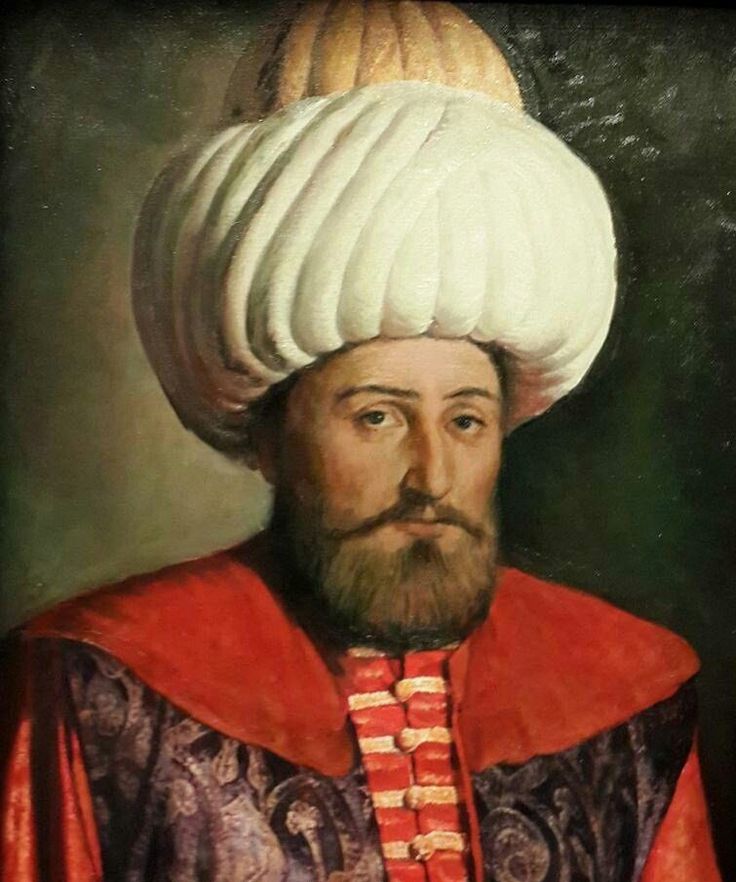
1909, Istanbul. Abdul Hamid II packs his belongings, surrounded by 47 wives and concubines. For thirty-three years, he ruled the empire founded by his ancestor Osman I in 1299. Now soldiers are waiting at the palace gates.
The journey to Thessaloniki, Greece, will take several days. The former sultan is not going into exile—he has signed an abdication. Voluntarily.
Or was he forced to?
It all began in 1876, when the throne passed to Abdul Hamid. By that point, the Ottoman Empire had existed for 577 years. The dynasty had never been interrupted—power passed from father to son, from brother to brother, but always within the family.
Abdul Hamid inherited a state in decline. The economy relied on agriculture. There was virtually no industry. Most of his subjects were illiterate.

The new sultan wanted to keep the empire intact. He stopped leaving the Yıldız Palace, surrounded himself with guards, and established a network of informants. Every move of a potential opponent was monitored.
But the main problem was not inside the palace.
In 1894, unrest broke out among the Armenian population in the eastern part of the empire. Christians demanded equal rights with Muslims. Abdul Hamid responded with force.
Over the course of two years, hundreds of thousands of Armenians were killed. Their homes were ransacked, their churches burned. European newspapers called the sultan “the Great Murderer.”
The empire’s reputation collapsed. But Abdul Hamid continued to rule. For another thirteen years.
The blow came from where it was least expected. The army—the traditional pillar of the throne—turned against the sultan. The officers were the most educated people in the country. They saw how the Ottoman Empire was weakening in comparison to the European powers.
They saw the cause. And that cause sat locked away in the palace.
The Young Turks movement began as early as 1889. Young military officers and officials wanted a constitution, a parliament, and a modern state. By 1908, the army was behind them.

Abdul Hamid tried to negotiate. He restored the constitution that he himself had abolished 30 years earlier. He convened parliament.
It didn’t help.
On March 31, 1909, a rebellion by conservative troops broke out in Istanbul. They supported the sultan. The Young Turks suppressed the uprising within a week. On April 27, Abdul Hamid signed his abdication.
He was 66 years old. He had reigned longer than the last ten sultans combined. Now he was being taken to Thessaloniki under guard.
The last autocratic ruler of the Ottoman Empire would spend four years there. In 1912, when the Greeks occupied the city, he was returned to Istanbul. Six years later, he would die in the Beylerbeyi Palace.
But the sultanate did not disappear with him.
His younger brother, Mehmed V Reshad, was placed on the throne. He was 64 years old. He had lived his entire life in the shadow of his older brother, possessing neither power nor influence.
Now he was sultan. Formally.
Real power was held by the Young Turks of the “Union and Progress” party. Mehmed V retained the right to appoint the Grand Vizier. That was the extent of his authority.
He died in 1918. The throne passed to his third brother, Mehmed VI.
Three brothers. Thirty-three years of rule shared among the three. Not one passed power on to a son.

The Ottoman dynasty lasted 623 years. During that time, there were 36 sultans. Most passed the throne to direct heirs. Some killed their brothers to eliminate rivals.
The last three rulers did not kill one another. They simply took turns occupying the throne, which lost its influence with each passing year.
On November 1, 1922, the Grand National Assembly of Turkey passed a law. The sultanate was separated from the caliphate. At the same time, the sultanate was abolished.
The Ottoman Empire ceased to exist.
Mehmed VI was in Istanbul at the time. On November 17, he secretly left the palace, boarded a British warship, and sailed to Malta. From there, he moved to Italy.
Formally, he remained the last Ottoman sultan. Informally, he was an exile without power or means.
He died in San Remo in 1926. He is buried in Damascus.
But the history of the dynasty was not yet over.
The Caliphate existed separately from the Sultanate for two years. The Grand Assembly elected Abdul-Mejid II as caliph—the son of that very Abdul-Hamid with whom the decline had begun.
For the first time in four centuries, the caliph did not hold the title of sultan. He had no army. He had no treasury. Only religious authority.
On March 3, 1924, a new law was passed. All members of the Ottoman dynasty were required to leave Turkey within 24 hours.
Abdul-Mejid II gathered his family and left for Switzerland. He later moved to France. He lived in Paris on a modest pension from the French government.
He died in 1944 during the German occupation. He was buried in Medina—next to the tomb of the Prophet Muhammad.
The last caliph of a dynasty that ruled a vast empire for 625 years.
From Ulubey Osman I, who united the tribes in 1299, to the exile Abdul-Mejid, who died in a foreign land. From a state that controlled three continents to a republic that erased the dynasty from history with a single law.
Three brothers ruled in turn. None left the throne to a son. The last bore the title without power.
Perhaps the empire was meant to end this way—not with a bang, but with a gradual fade. When each successive ruler is weaker than the last. When the throne passes horizontally rather than vertically.
When the dynasty forgets how to produce heirs worthy of the crown.