
Only the harems of the rulers of the Ottoman and Chinese empires, as well as the Achaemenid Empire—that is, large and powerful states—resembled something large, structured, and performing state functions. Rulers of lower rank and mere lords of countries with less bureaucracy either entered into political marriages one after another or seized beautiful women during raids and conquests, without attempting to turn this practice into a formal system.
Therefore, the fate of harem women after their master’s death varied significantly from place to place, depending on the historical era, the dominant religion, and several other factors. Let’s explore what happened in such cases.
For historical reasons, the customs of Ottoman harems are far better known—whether they involved the sultan’s concubines or maidens belonging to noblemen. As a rule, they held the status of slaves or something close to it—especially if they did not convert to Islam. Therefore, they were not always able to live as they pleased, even after their husband’s death.
Among the Ottoman Turks, there was a rule that the mother of a potential heir to the throne—and there were usually many such heirs—was sent to the provinces with her son while the sultan was still alive. She assisted him in governing and acted, in a sense, as the mistress of the house.
If it was her son who defeated his brothers in the struggle for power—which began after their father’s death—the widow of the former sultan and mother of the new monarch received the title of Valide Sultan. That is, she became the overseer of his own harem. There was a strict rule that it could only be replenished with new maidens. That is, the heir under no circumstances used his father’s harem.
The mother of a failed heir, sent to his death by his brother, faced one of two fates. Typically, she was sent to live out her days in the Old Palace (or “Palace of Tears”), which Sultan Mehmed had built immediately after the conquest of Constantinople—before he moved to his new residence at Topkapi.
But sometimes there could be exceptions. The former chief concubine of Suleiman the Magnificent, the Circassian Mahidevran, was sent to the city of Bursa, the second Ottoman capital, after the execution of her son and grandson. There she tended her son’s grave and mourned her widow’s lot. This was the usual treatment of sultan’s widows before the capital was moved from Edirne to Istanbul.
During her husband’s lifetime, Mahidevran was in dire straits and gradually sold off her own jewelry to make ends meet. Her servants were mocked and cheated at the local markets. But after Selim II ascended the throne, he granted her a monetary allowance, bought her a house, and paid off her debts. She had enough funds to lavishly decorate the tomb.
This was the standard practice for other women. If they did not bear the sultan a son but gave birth to a daughter, they were often sent to live in their husband’s household. Or they were permanently confined to the Old Palace. There, their allowance was not as lavish, but it was not so meager that they would starve.
This was the usual fate of adult women, whereas the new ruler could easily marry off the young ones. This was not considered out of line with Ottoman traditions. On the contrary, taking a girl from the sultan’s harem as a wife was a matter of prestige. During the ruler’s lifetime, the maidens he did not favor were given away, and after his death, most of those who retained their “marketable appearance” were married off.
Some young girls could remain in Topkapi Palace as maids—provided they were sufficiently compliant and wanted to do so themselves. But in the final century of the Ottoman monarchy, when numerous liberal reforms were implemented, beautiful women were given the opportunity to return freely to their father’s home, which meant the chance to live their own lives.
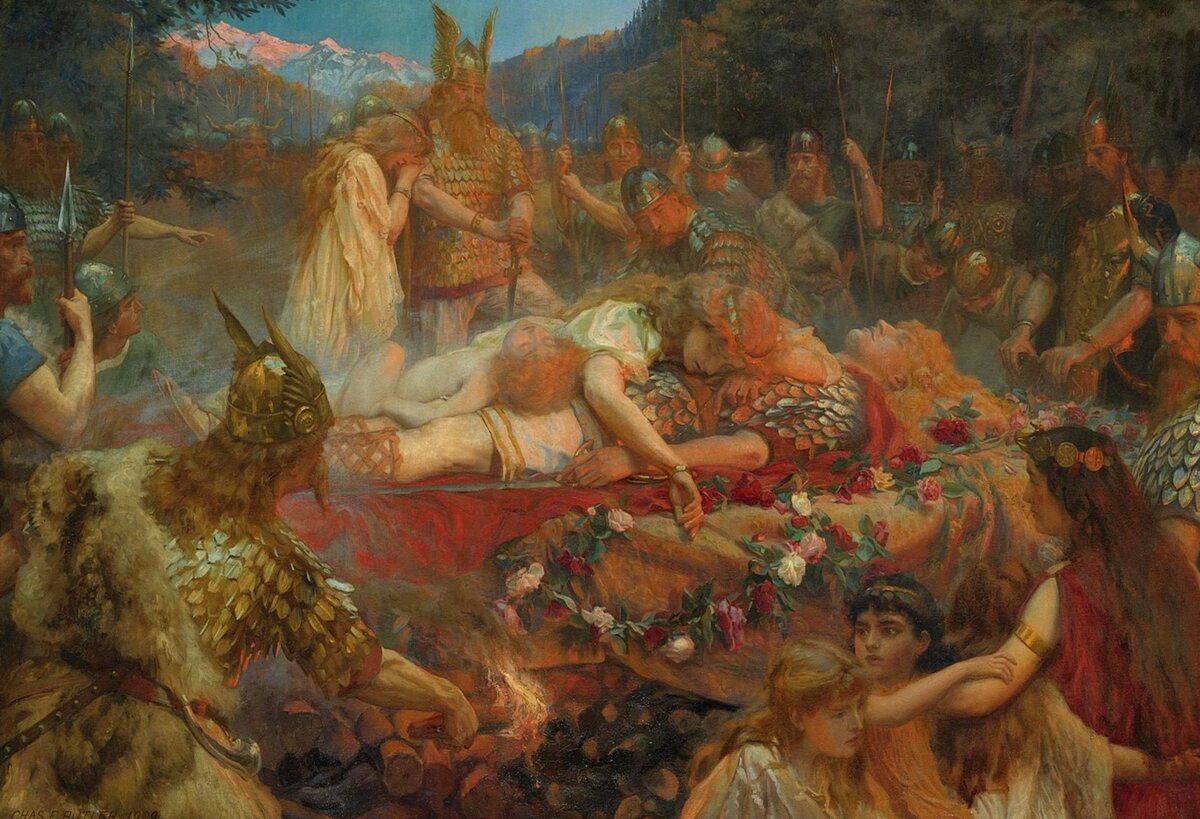
As for China, there were no religious restrictions there. At various times, the practice of xunzang was observed there. This concept meant that the wives of a deceased monarch were to go to the gods with him—just as among the ancient Slavs, the Varangians, and many others. Thus, in 210 BCE, after the death of the unifier of the Middle Kingdom, the first Emperor Qin Shi Huangdi, all his concubines were buried alongside their master—after being put to death, of course. After the death of Zhu Yuanzhang, the founder of the Ming Dynasty who overthrew Mongol rule, in 1398, 38 beauties shared his fate—the sovereign himself had wished it so.

Nevertheless, the barbarian dynasties of the early Middle Ages, which were less influenced by Chinese customs, rarely treated surplus women from the harem so harshly. They might be married off or given a sum of money and sent away. But the custom of xunjiang was not finally abolished until the 15th century.
As for other Islamic countries, where harems also existed, the main heir’s rivals were not eliminated. As a rule, all sons received a land allotment, and their mothers moved to live with them. Elderly women might be granted a pension, while younger ones were found husbands. Those who had given birth only to a daughter could expect the same, or follow her into her family.