
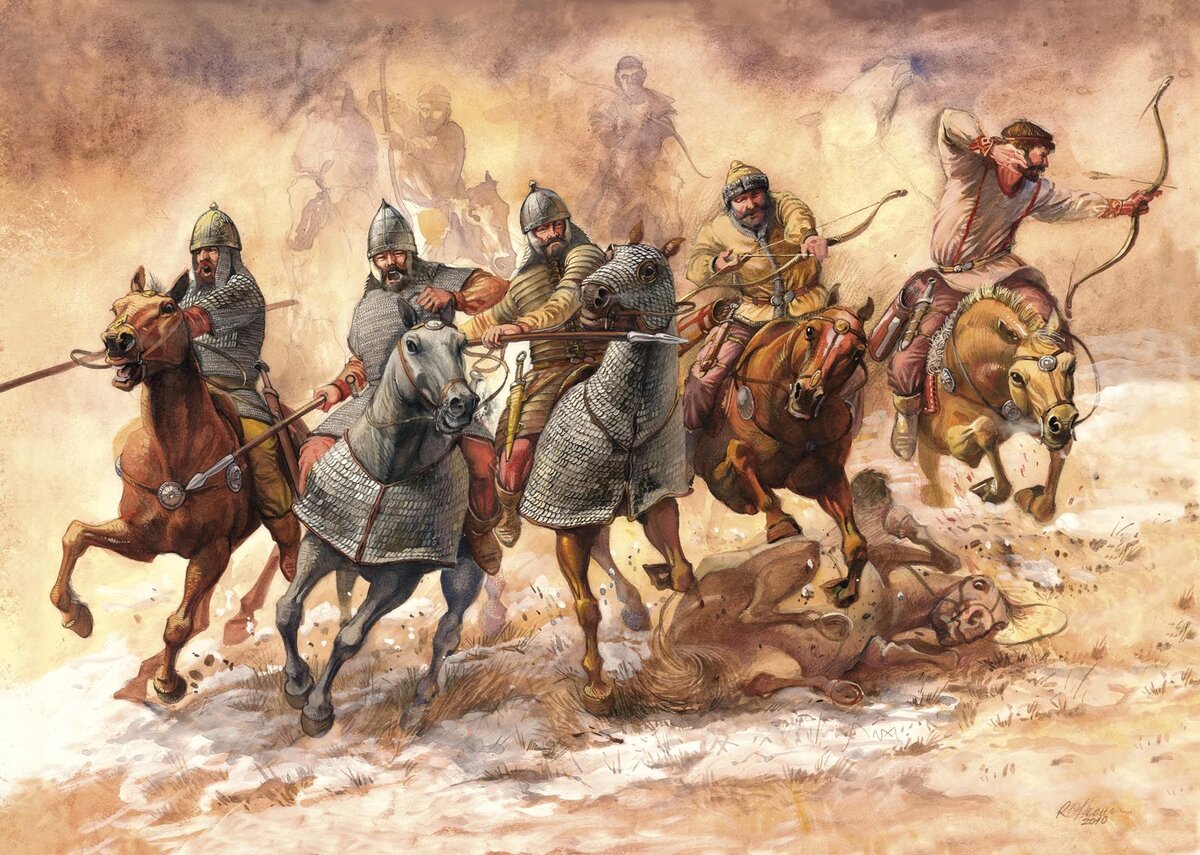
To put it briefly, an analogy with the Western and Eastern Slavs may help. Both groups belong to the same broader ethnic group, but their history, culture, customs, and sense of identity differ. The same applies to the Kalmyks and the Mongols: the former belong to the western branch of the Mongol peoples, while the latter, characteristically, belong to the eastern branch.
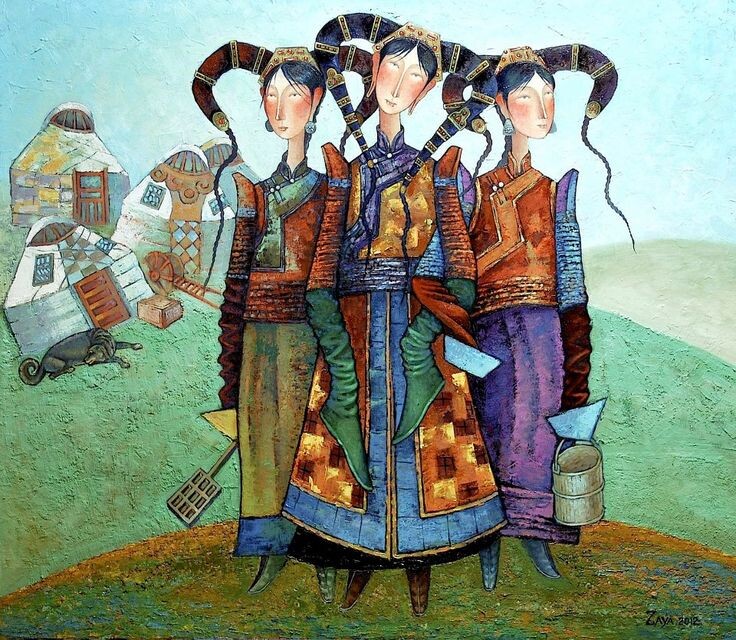
Generally speaking, the Turks called them Kalmyks (“those who separated”) when, in the 15th and 16th centuries, these nomads broke away from the rule of the Chinggisid dynasty. Their own name, Oirats—the exact meaning of which has long been forgotten—apparently means “people of the forest.”
The Oirats became part of the Mongol Empire about ten years after its proclamation. They were persuaded, not conquered, by Genghis Khan’s eldest son, Jochi. Later, one of the princes of this steppe confederation married the Chinggisid princess Checheygen, and subsequently this tribe was ruled by their common descendants.
Consequently, the Oirats held a fairly high status within the Mongol world. During the 13th and 14th centuries, they gradually migrated from Southern Siberia to western Mongolia. Thanks to their large numbers, they broke free from the rule of Genghis Khan’s heirs and began to fight for dominance in the steppe on their own. As already mentioned, the Turkic Muslims nicknamed them Kalmyks for this. However, only the Kalmyks of Russia adopted this name as their self-designation.
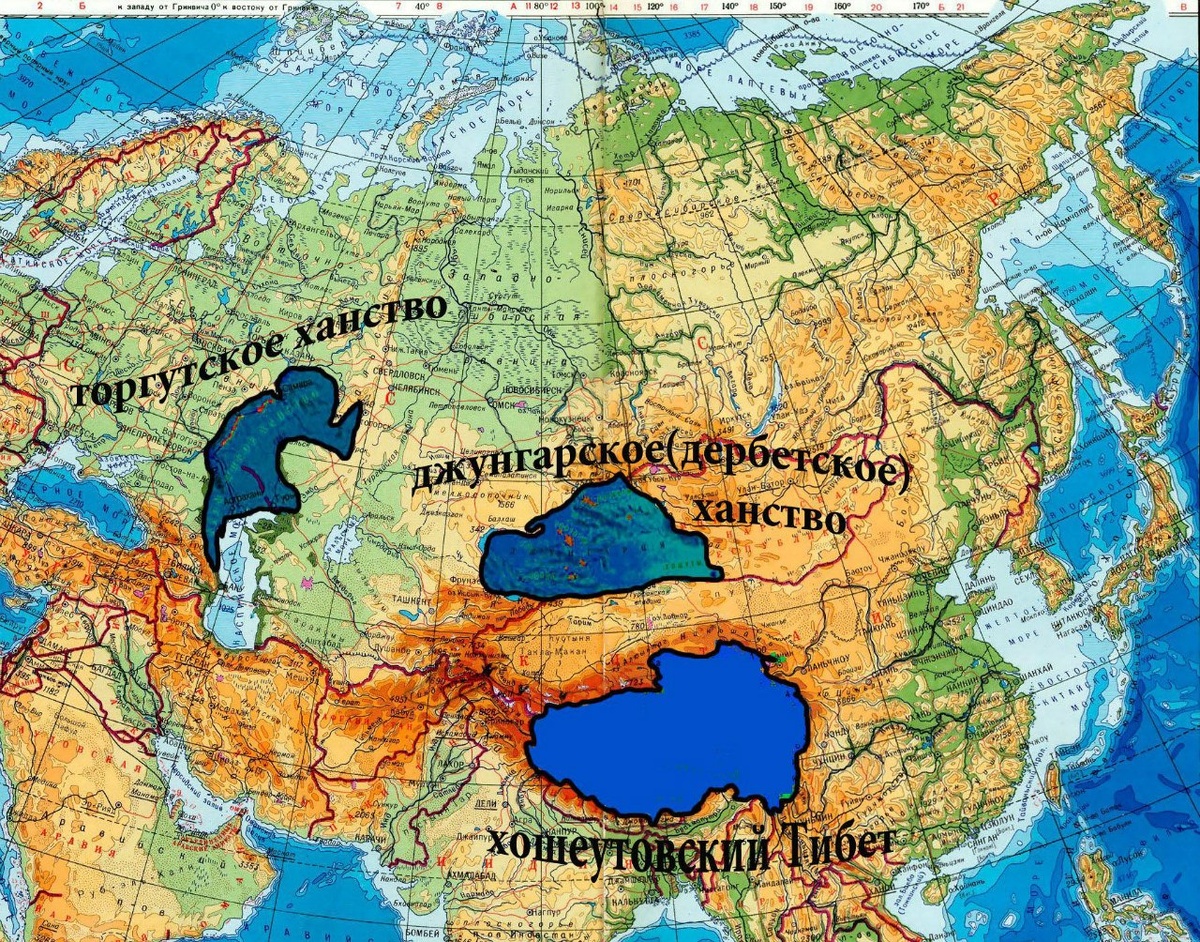
In the early 16th century, the Oirat Khanate collapsed as a result of power struggles. The Khoshut tribe moved to the southeast, where they established a state bearing their name. The Torguts, led by Prince Ho-Orlyuk, traveled through the Kazakh and South Siberian steppes to the Volga region. Those who remained became the founders of the powerful Dzungaria—but that is not the subject of this discussion.
So, our Kalmyks are only a small part of the Oirat ethnic group of the Modern Era. And they differ significantly both from the Oirats as a whole and from all Mongols.
Let’s move on to specific examples. The first difference is ethnic origin. The ancestors of the Kalmyks were those whom the medieval Mongols called “forest peoples.” Moreover, this term encompassed tribes of Mongol, Turkic, Tungus-Manchu, and, to some extent, Samoyedic origin. This is why haplogroups N1 and R1 are more common among the Kalmyks on average, indicating a Siberian and Scythian heritage.
The second difference lies in physical appearance. The Mongols, in their time, absorbed many steppe tribes, so their physical types are more diverse. Among them, one can find people with different eye and hair colors. Recall that, according to many descriptions, Genghis Khan himself had red hair and blue eyes.
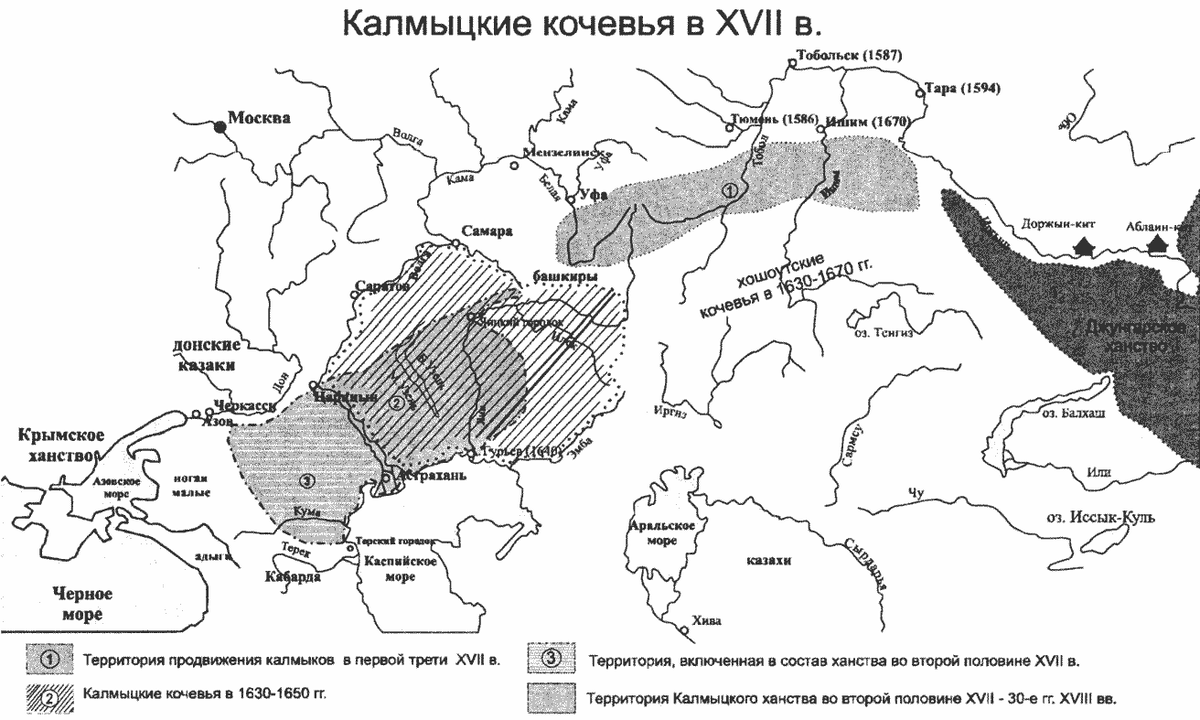
The Oirats were the same in this regard, as dozens and hundreds of different steppe clans had integrated into their ranks. But the Kalmyks were primarily made up of relatively small groups driven into Siberia and other small numbers of nomads who agreed to join them. Therefore, they are less diverse; for the most part, they are dark-eyed and dark-haired.
Various Mongolian leaders had been attempting to convert to Buddhism as early as the 14th century. However, in Mongolia itself, this process would not be completed until the 17th, if not the 18th, century, when the country was forced to submit to the Manchu Qing dynasty, which then ruled China.
In contrast, the Oirat princes began to embrace this faith of their own accord as early as the 1540s and 1550s. They finally converted thanks to the efforts of a devout monk named Zaya Pandita, a name that sounds so pleasant to the Russian ear. In 1640, the Oirats convened a general assembly where they adopted common laws and declared Buddhism their universal religion. Consequently, the Buddhist faith took much deeper root among the Kalmyks. Whereas among the Mongols, it retains many elements of paganism.
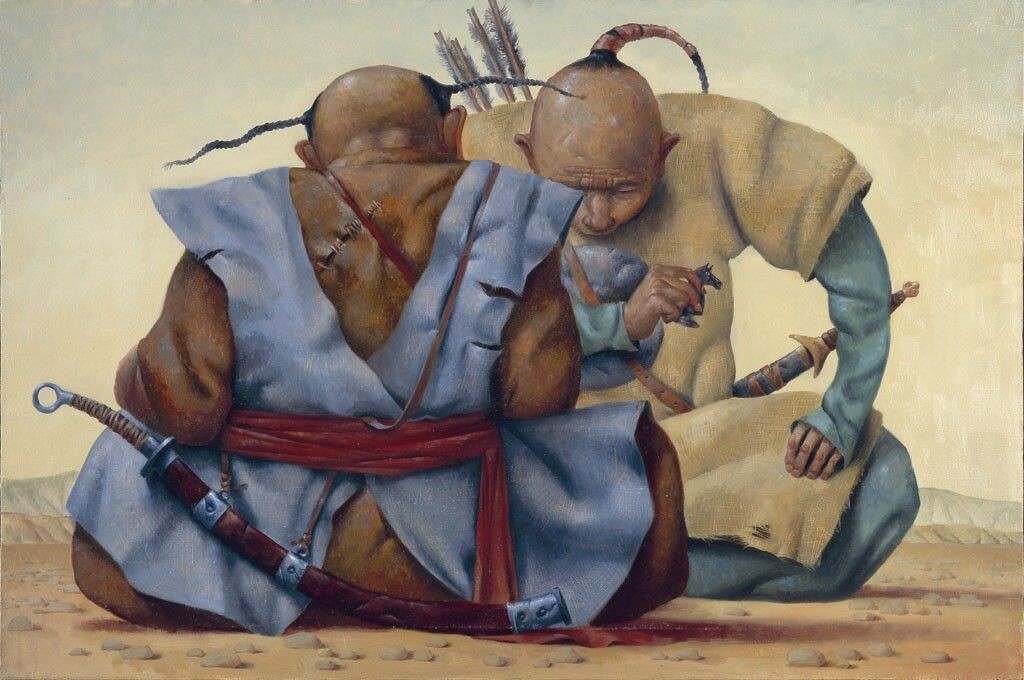
By the way, there is one minor but amusing detail. As far back as 1437, the chief Oirat prince Togon—who effectively led what remained of the Mongol Empire after China’s secession—issued a decree stating that the Mongols must distinguish themselves from the Oirats, including visually. This distinguishing mark was the red tassel of the Ulan Zala, which was sewn onto traditional four-cornered hats.