
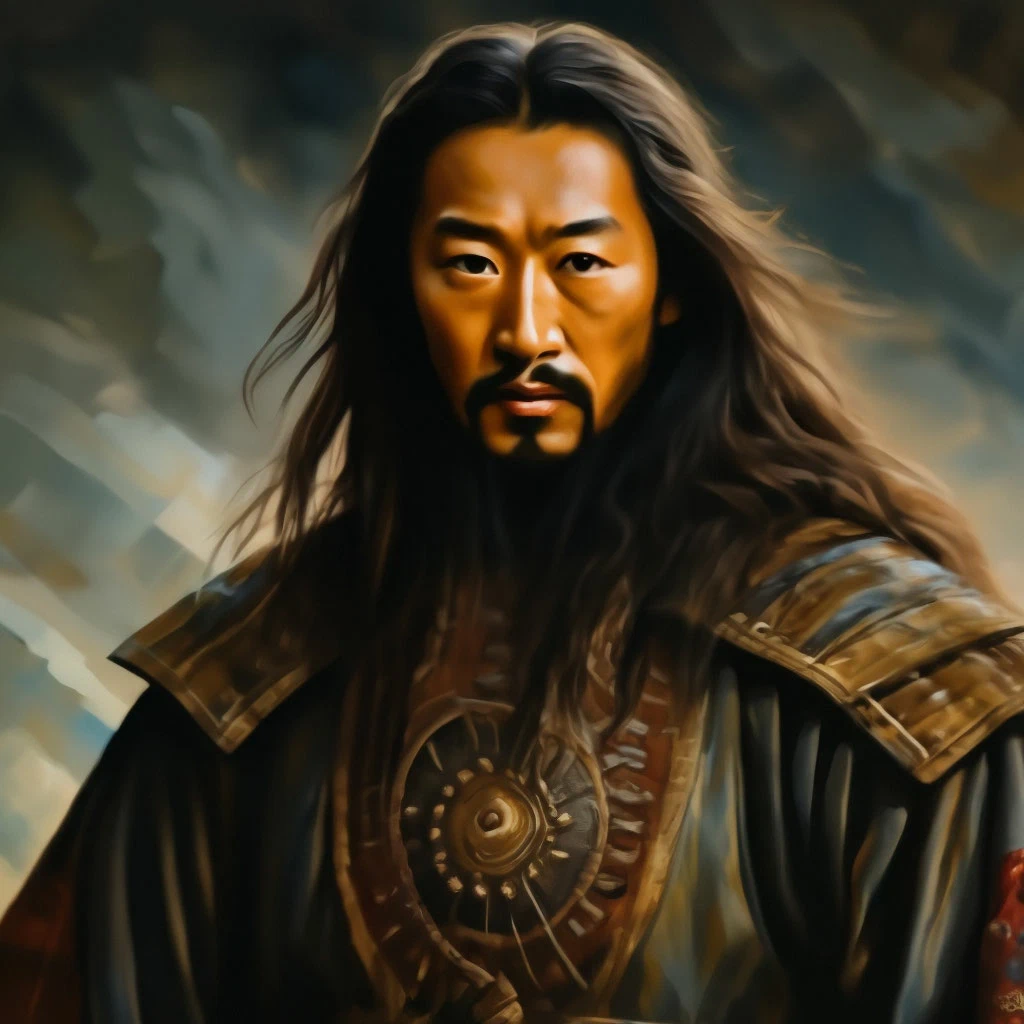
The history of the Mongol Empire knows many names of great generals, but the figure of Jebe-nayon stands apart. His biography is a journey from Temujin’s mortal enemy to his most trusted «hound dog», whose tracks mysteriously end at the peak of his fame, immediately after the legendary battle on the Kalka River in 1223.

From enemies to the vanguard of the empire
At the beginning of his journey, the future fear of Eurasia was named Jirgoadai and belonged to the Besut tribe. In 1201, he fought against Temujin on the side of the Taijiut. Legend has it that it was he who wounded Temujin’s horse with an arrow in battle. After the defeat of his tribe, Jirgoadai found himself in a desperate situation and voluntarily surrendered.
Temujin not only pardoned him, but also appreciated the honesty of the warrior, who acknowledged his accurate shot. He gave him a new name, Jebe (which means «arrow» or «weapon») and appointed him commander of the ten. This was the beginning of a brilliant career: Jebe worked his way up to commander of the tumen (ten thousand warriors). By 1206, he had officially acquired the title of one of the «four hounds» of Genghis Khan, an elite of military leaders capable of chasing the enemy to the ends of the earth.

A strategy of relentless pursuit
Jebe’s military handwriting was characterized by incredible speed, cunning, and psychological pressure.
-Chinese Campaign (1211): Capture of the Jiuyun Pass and capture of the capital Dongjing. Here, Jebe used the tactic of a false retreat over a colossal distance (up to ten days of travel) in order to lull the enemy’s vigilance. Leaving the extra baggage, his cavalry made an exhausting march back, leading the horses by the bridle, and stormed into the unprepared city.
-Destruction of Kuchluk (1217): With a 20,000-strong corps, Jebe invaded the empire of the Kara-Kitai. He proved himself not only as a warrior, but also as a politician, banning looting and ensuring the support of the local population suffering from religious persecution in Kuchluk.
-The hunt for Khorezm Shah (1219-1220): It was Jebe who led the pursuit of Muhammad II. Rashid al-din notes that in this duet with Subotei, it was Jebe who initially occupied the senior position. He drove the ruler of a vast empire to death on an island in the Caspian Sea, effectively decapitating the resistance of Khorezm.
The Great Raid: across the Caucasus to the steppes of Russia
In 1222-1223, Jebe, together with Subotei, carried out an unprecedented raid. Georgian chroniclers of the time noted with amazement that this army, which had only bows, unshod horses and practically did not use heavy defensive weapons, crushed the regular troops of the region.
On his way through the Caucasus, Jebe demonstrated the ruthless effectiveness of «Mongolian diplomacy.» When passage through the possessions of the Shah of Derbent was required, the Mongols executed one of the ambassadors sent, threatening the others to become guides through dangerous mountain passes.
Tactical skill was also shown in the clash with the Alans and the Kipchaks. The Mongols bribed the Kipchaks, appealing to the «steppe brotherhood», and after the defeat of the Alans, they overtook the former allies and took the gifts back along with their lives. By the winter of 1222, the Mongols had already plundered Sudak in the Crimea.
The Battle of Kalka and the finale of the path
The culmination of the campaign was the battle of the Kalka River in May 1223. Russian princes, including Daniil Galitsky, first encountered the tactics of «hounds of dogs.» The Mongols exhausted the allied army with a false retreat, and then launched a decisive counterattack.
After this triumph, Jebe’s name suddenly and forever disappears from the sources. The commander, who was the «tip of the arrow» of Genghis Khan for twenty years, is no longer mentioned in any document.
The mystery of the disappearance
There are several versions of his fate. The most likely one is that Jebe died of illness or old wounds during the long journey home in 1223-1224. His death marked the end of the era of the first «dogs of war.» Jebe-nayon remained in history as a symbol of the Mongolian meritocracy: a man who turned war into the art of persecution and proved that talent and dedication can elevate a former prisoner to the top of world power.