

Who are the Merkits? In the shadow of the great Mongol conquests lies the history of a powerful and proud people who not only crossed paths with the future Conqueror of the Universe, but also left their mark on him forever.

Where did the Merkits come from?
Scientists are still debating this question. Some, following the Persian historian Rashid al-Din (1247–1318), consider them an ancient Mongol tribe. Others, relying on Chinese chronicles from the 6th–7th centuries, see them as the Turkic people “milige” who lived in the Sayan-Altai region. This duality is the key to understanding the Merkits: they were a bridge between two great steppe worlds.
Their name speaks for itself. “Mergad” in Mongolian and Buryat means “sharp-shooting, skilled.” This was probably a reference to the people’s outstanding military or hunting skills. They divided themselves into three large groups: the Uduit-Merkits, the Uvas-Merkits, and the Khat-Khatai (Asakhan-Merkits). Each of them controlled their own lands and had their own leaders.
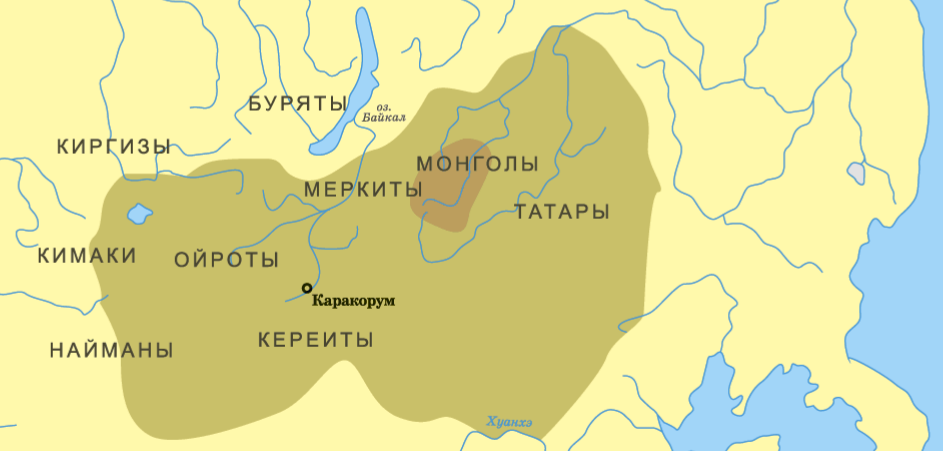
The Merkits’ home was southwestern Transbaikalia — the endless steppes and forest-steppes south of Lake Baikal, in the basins of the Selenga and Chikoy rivers.
It was a strategically important region, rich in pastures and migration routes.
Like all steppe peoples, the Merkits led a nomadic lifestyle. Their wealth consisted of herds of horses and flocks of sheep. They lived in felt yurts, and their society was organized along tribal lines. Military prowess was valued above all else, which made them one of the strongest and most numerous peoples of Central Asia at the turn of the 12th and 13th centuries.
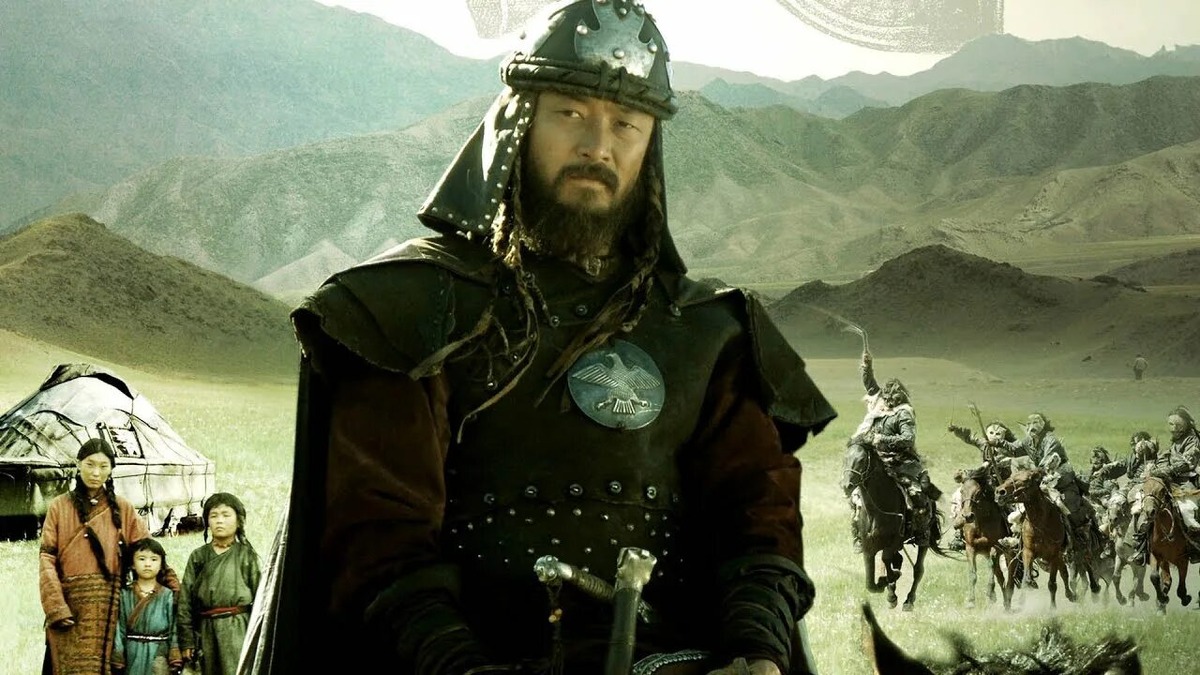
History has forever linked the Merkits with the name of Genghis Khan. Their confrontation was personal, bloody, and decided the fate of both peoples. It all began with a distant grievance: according to The Secret History of the Mongols, Temujin’s future mother, Oelun, was originally betrothed to the Merkits’ Chiledu. However, she was kidnapped by Temujin’s father, Yesugei-bagatur. This story sowed the seeds of enmity.
The hatred flared up with renewed vigor when Temujin himself was still a young leader. In retaliation for the past, the Merkits raided his camp and kidnapped his young wife, Borte. This act was a declaration of war. With the help of his sworn brother Jamukha and his patron Toghrul Khan (Wang Khan) of the Kereits, Temujin attacked the Merkits and recaptured Borte. Thus began a long struggle to the death.
The Merkits were not easy prey. Led by their khan, Tokhto-beki, they put up fierce resistance. Their headquarters were located somewhere in the Khilkh-Selenga region, and their warriors were renowned for their fortitude. The Secret History describes fierce battles in which the Merkits, “entrenched in the fortification of Taihai, did not surrender,” and Genghis Khan had to send an entire wing of his army against them.
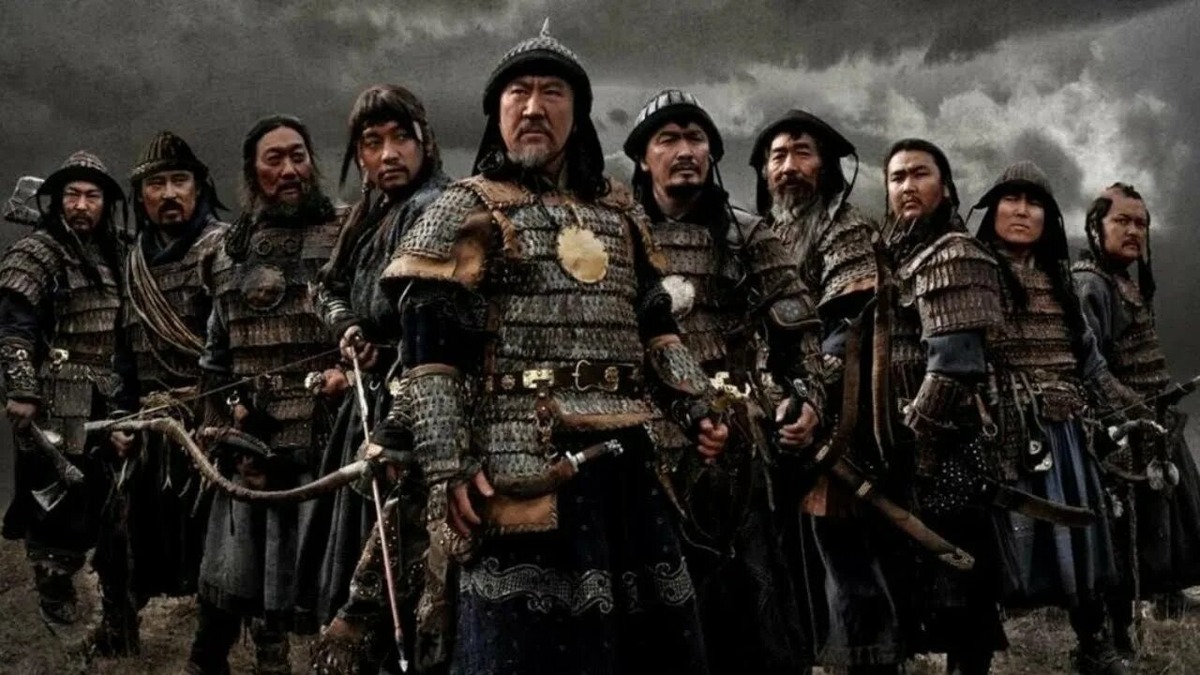
The power of the nascent Mongol Empire was irresistible. After a series of crushing defeats, the main forces of the Merkits were destroyed by 1208. Some of the warriors, led by Tokhto-beki, fled westward, but were overtaken and destroyed on the Irtysh River.
The fate of the defeated was typical of the steppe tradition: male warriors were exterminated, and women, children, and livestock were divided among the victors. The Secret Chronicle preserves a touching detail: after one of the defeats, Mongol warriors found a five-year-old boy named Kuchu wearing a sable hat in an abandoned nomad camp. He was taken into the family and grew up to be a loyal servant. This is how entire tribes were erased and became part of a new history.
The Merkits did not disappear without a trace. They dissolved into the peoples of Eurasia, leaving their mark in their genes, culture, and memory.
The descendants of the Merkit clans became part of the Khalkha Mongols and Buryats. The Khorin Buryats still preserve clans that trace their origins back to the Merkits.
Some of the Merkits who migrated westward became part of the Oirat union and later the Kalmyk people. In the Kalmyk Khanate, there were still Merkits’ aimaks (ulus) in the 19th century. Many researchers see the Merkits as one of the key ancestors of the Yakuts. Anthroponyms, toponyms, and the totemic cult of the eagle in Transbaikalia closely link the Merkits with the ethnogenesis of the Sakha.
An amazing trace of the Merkits has been found far to the south. The Merkits who settled in Afghanistan formed one of the tribes of the Hazaras, a people of Mongolian origin who speak Persian. Their name was transformed into “Merkit.”
Clans with the name “Merkit” are found among the Bashkirs, Altai, and Teleuts, confirming their wide dispersion.

Interesting facts and historical mysteries
The Merkit eagle cult is associated not only with legends, but also with specific archaeological and folkloric data. This could be a reflection of their ideas about strength, freedom, and connection to the sky.
There is a hypothesis that Genghis Khan’s mother, Oelun, may have had Merkit roots. If so, then the blood of his fiercest enemies flowed in the veins of the great conqueror.
“Mekrites” or “Merkits”? Sources often confuse the Mekrits (Mukrins) tribe, which is considered to be the western branch of the Mohe people. Some medieval authors, as noted by Rashid al-Din, used these names as synonyms, although they were probably different groups.
The Merkits are not just an episode in the biography of Genghis Khan. They are a whole world, a whole civilization of steppe warriors who disappeared from the historical stage, yielding to the power of a united Mongolia. Their history is one of resistance, tragedy, but also of remarkable vitality. They were not completely wiped out: their genes, their memory, and their name live on in dozens of peoples from Lake Baikal to the Hindu Kush.