
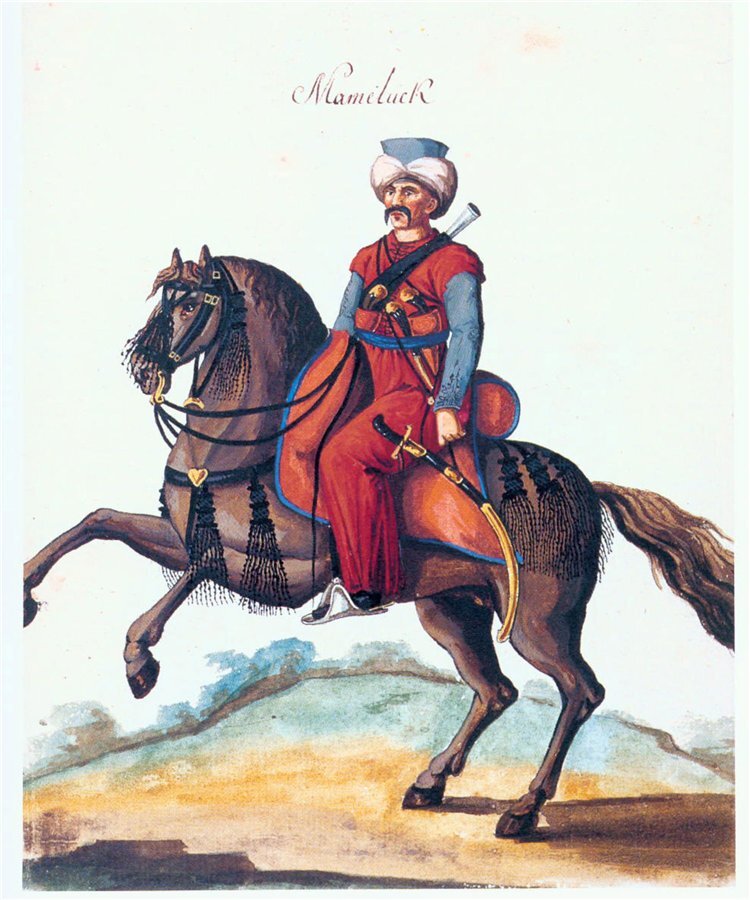
Few people remember this now, but the Ottoman Empire began with 500 warriors who fled the Mongol invasion and received land in Anatolia from the Seljuk sultans. These people created the westernmost of the Turkish principalities, which for this reason did not fight with Muslims for a long time. Because of this, brave warriors flocked here, wanting to turn their weapons against the infidel Greeks, which at first became a serious military aid for the Ottomans.
Successful wars in Europe led to their military and political dominance in the post-Seljuk world. And subsequently, to the emergence of a powerful Islamic state that united a significant part of Southern Europe, the Middle East, and North Africa in just a hundred years.
At the height of its power, European Christians dared to oppose the Ottoman Empire only as part of a large coalition, involving the Iranian Turks whenever possible — and even then, the war did not promise to be successful. However, there were nations that managed to fight back and withstand the confrontation with one of the greatest states of the gunpowder era.
Which ones?
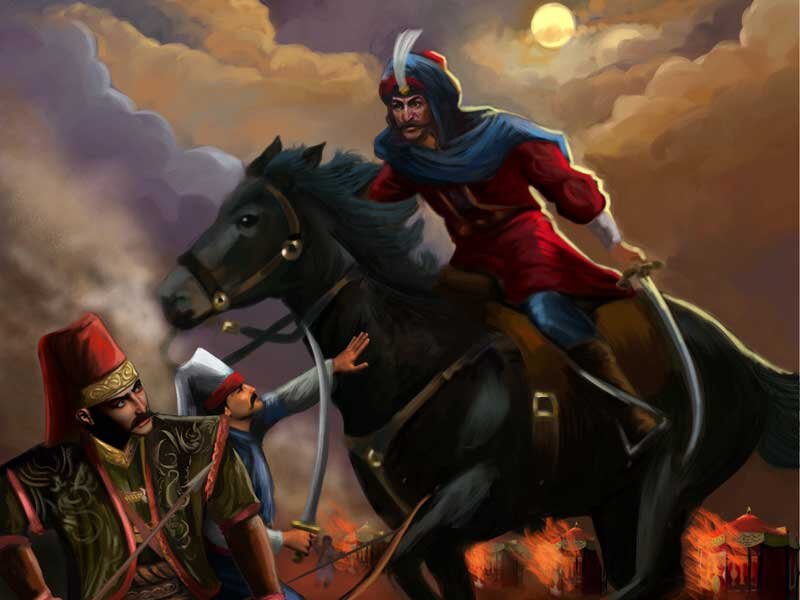
At the end of the 15th century, the last independent Christian countries on the Balkan Peninsula were Hungary and the principalities of Moldavia and Wallachia. The Hungarian kingdom would fall in 1526 and be divided between the Turks and the Austrians, but the Romanian states would resist very stubbornly. Despite the obvious imbalance of power, Moldavian Prince Stephen III the Great and his Wallachian counterpart Vlad III Tepes, better known as Dracula, inflicted numerous humiliating defeats on the Ottomans and managed to defend the freedom of their native land. Wanting to avoid the ruin of their possessions, their heirs agreed to recognize nominal Turkish suzerainty. However, Istanbul’s rule would be intangible and ephemeral—it was not until the 18th century that direct Turkish rule was introduced in Wallachia, while Moldavia was divided between the Austrians and Russians.

In the 1520s, Austria was only at the beginning of its path to world power, although it was the richest principality of the Holy Roman Empire. Its ruler managed to become the German emperor, and the descendants of this man would consolidate their power. Nevertheless, this was not enough to stand on equal terms with the Turks, who besieged Vienna in 1529. In addition to a small local contingent, the city was defended by Spanish and German mercenaries – experienced seekers of money and fortune – as well as townspeople and farmers mobilized for the occasion. Together, they numbered about twenty thousand, and there were about six times as many soldiers in the Turkish army. Despite the fact that they were led into battle by the young and ambitious Sultan Suleiman the Magnificent, several attempts to storm the city were unsuccessful. The Janissaries were promised six times their pay, but all their attacks were repelled by the Landsknechts and arquebusiers. And then, for the first time, they refused to climb the walls, although they had previously demanded to go on the attack—this was the first Janissary revolt in history.

The Polish-Lithuanian Commonwealth of the 17th century was a large and powerful European state whose military might was based on its excellent cavalry – the famous winged hussars. The most serious war in their shared history and the first war in a hundred years began in 1620 and became part of the Thirty Years’ War in Europe. The young Bohdan Khmelnytsky, among others, took part in it. After several defeats, the Ottomans were stopped by the Polish-Cossack army at the Battle of Khotyn. Despite a popular uprising, war with Russia, and the Swedish invasion, Poland remained strong even at the end of the century. In 1683, its hussars defeated the Ottoman army in the second battle of Vienna, which is considered one of the largest heavy cavalry attacks in history.
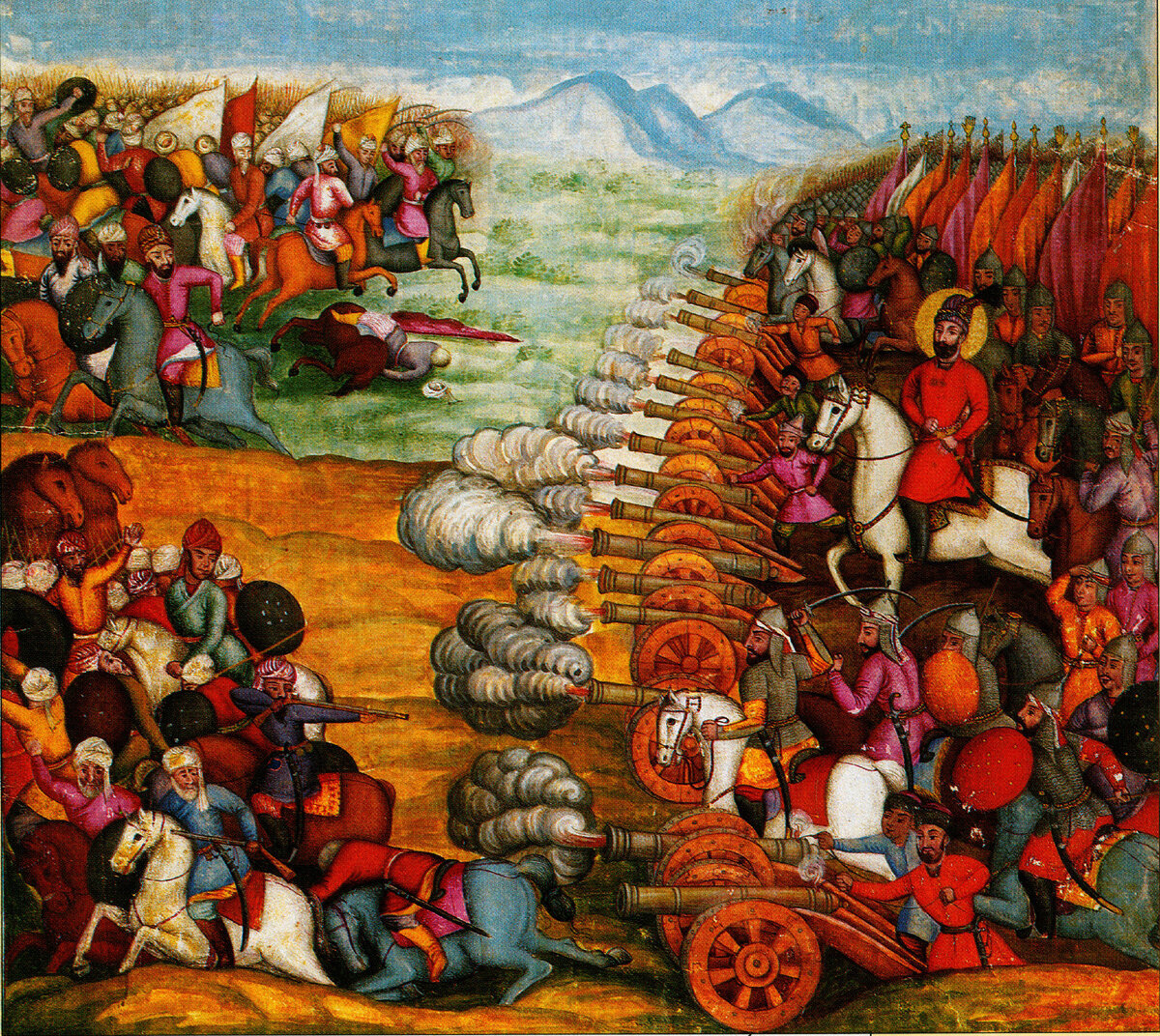
Despite their common origins, the Ottoman Empire was always at odds with the Iranian Turks. And when the latter converted to Shiism under the Safavid dynasty, this confrontation became particularly intense. The Iranians had to endure several full-scale Turkish invasions, during which they repeatedly lost their capital. At the beginning of the 18th century, another crisis in the history of their state began—the Turks briefly occupied Azerbaijan and Western Iran. But their neighbors fought back during the next dynasty—the military leader Nader Shah defeated the Ottomans and occupied the entire Caucasus and Iraq.
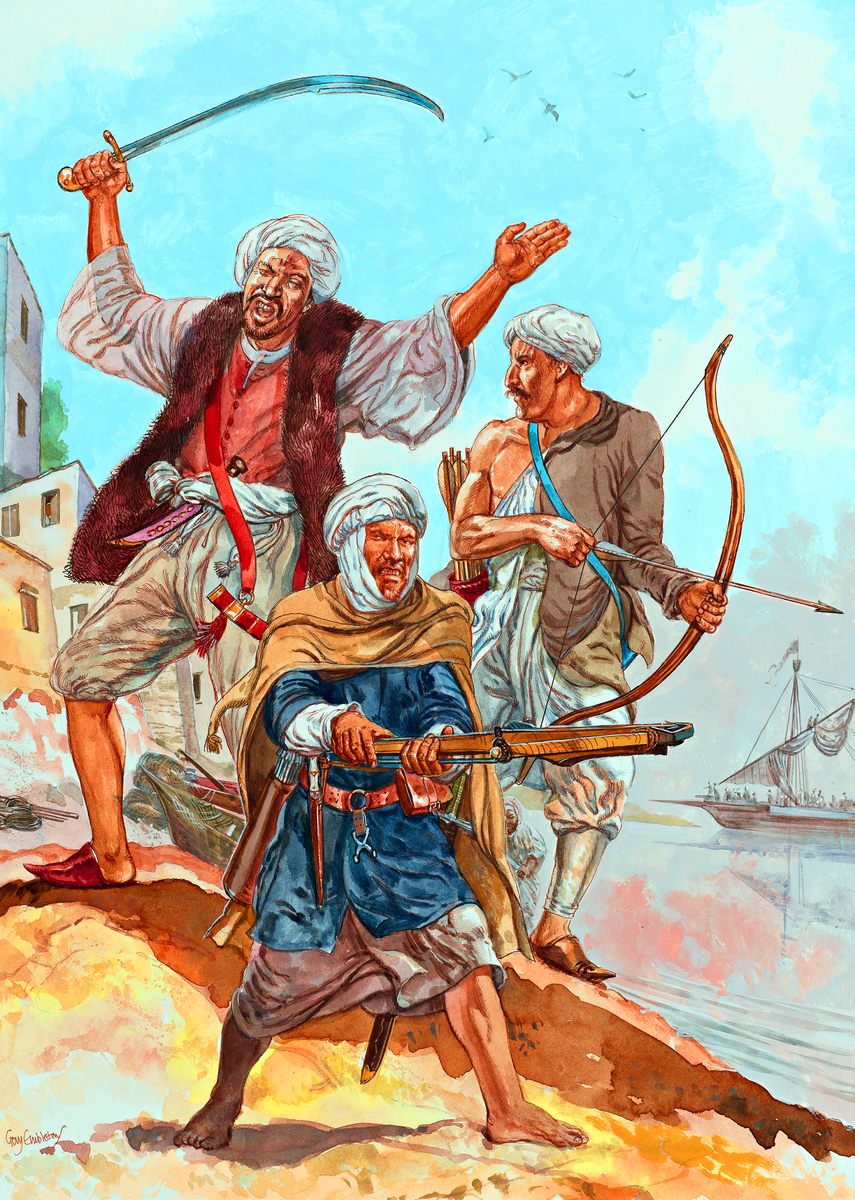
Despite several invasions from sea and land, the Turks were unable to capture Morocco, which took advantage of its geographically protected position and formed military alliances with the Spanish and Portuguese. Several times, its sultans went on the offensive, responding with raids on the Algerian coast, during which thousands of Janissaries were sent to heaven. In the end, what could not be achieved by washing was achieved by skating – the candidate for the throne of Morocco took advantage of the Ottoman Empire’s help in the struggle for power. After that, he acknowledged his vassalage, but the dependence was purely formal.
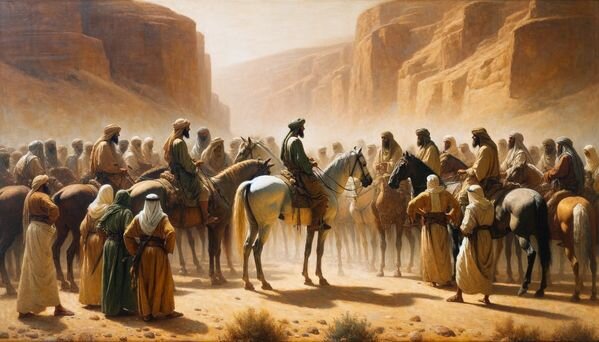
The central part of the Arabian Peninsula was of little interest to Istanbul, unlike the Muslim holy sites located near the coast. The policy of non-interference allowed Saudi Arabia to emerge and consolidate its power, with its rulers acting in alliance with the Wahhabi religious movement. As a result, at the end of the 18th century, the Saudis managed to occupy the holy cities and the entire Hejaz. In 1810, this led to a military invasion by the Egyptians, sanctioned by the empire—troops from the land of the pyramids eliminated the hostile state under their noses and occupied the interior regions of the peninsula. But soon they were forced to leave due to logistical problems and the harsh climate. After that, Saudi Arabia quickly recovered. A hundred years later, it led the Arab uprising against the Ottomans.