
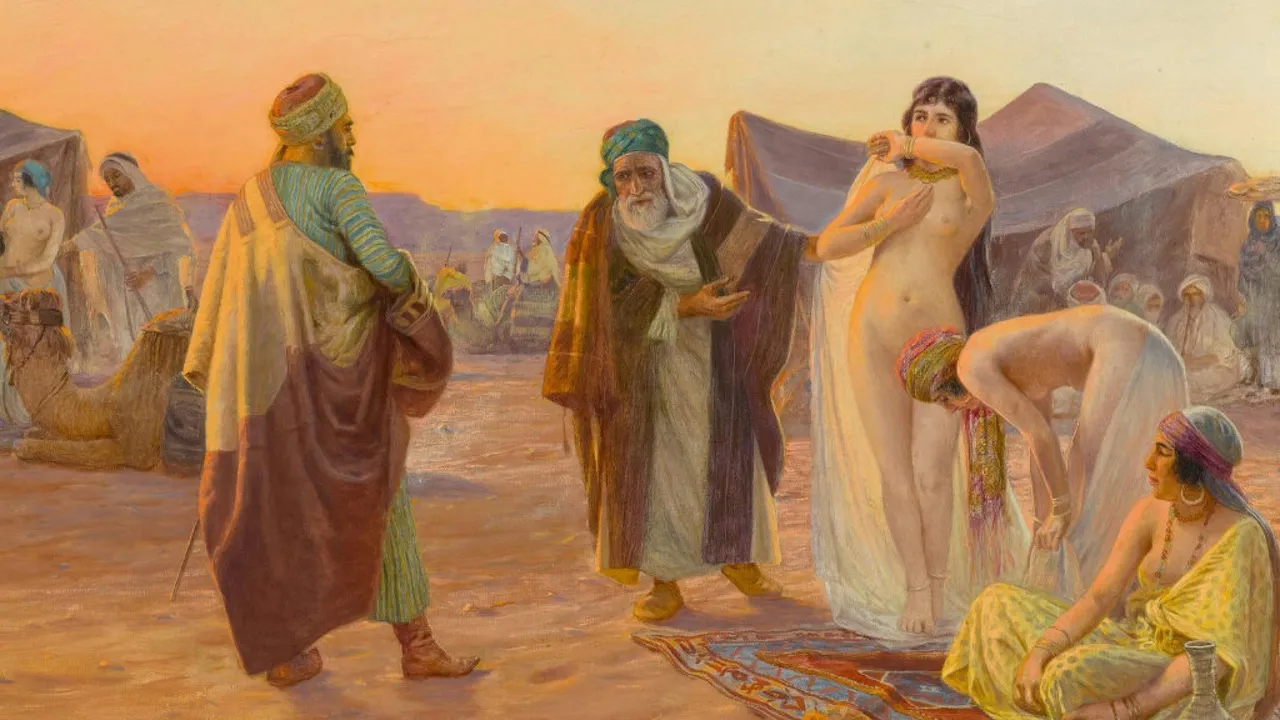
EVICTION OF THE PADISHAH’S HAREM TO THE OLD PALACE
The wives of the Padishahs, his children and djarie (slaves: odalisques and servants), in short, his family lived in an old palace built by Fatih Sultan Mehmed in the Beyazid district on the site of the modern Istanbul University. The New Palace, built later, better known as Topkapi, housed the Padishah and the childless djarie who served him until the middle of the 16th century. At that time, the harem in this palace was small, so pregnant jariye were sent to the Old Palace where the Padishah’s family lived. This continued until the death of Hafsa Walid Sultan in 1534, after the death of her mother-in-law, Hurrem Sultan moved to Topakapi to her husband, Kanuni Sultan Suleiman, and slowly began to transport the entire harem here. The process was accelerated by Haseki Selima II Nurbanu Sultan, who lived almost permanently in Topkapi.
Thus, the residence of wives, children and djarie in Topkapi brought with it the tradition of evicting the wives, daughters and djarie of the former Padishah to the Old Palace during the change of the ruler. These changes affected not only the harem, but also Enderun, the local ags were given new assignments or transferred to other duty stations, thus being expelled from the palace, and the new Padishah had the opportunity to gather those he could rely on in both the harem and Enderun.
For the first time, the eviction of the wives, daughters and djarie of the former Padishah to the Old Palace took place on December 13, 1574 and was applied to the harem of the deceased Selim II.
Murad III, having ascended the throne, killed five young brothers, and evicted his father’s entire harem to the Old Palace. The only exception was Nurbanu Sultan, whose status grew from haseki to Walid Sultan. This expulsion marked the beginning of a new tradition, which was followed by subsequent changes of power.
Murad III expanded both the Topkapi Palace harem itself and its functions, and established the tradition of sending the former Padishah’s harem to the Old Palace. His own harem, consisting of wives, 27 daughters, djarie and children, after the death of Murad III, the day after the julus of the new Sultan, were put into carriages in Sarachkhan and, together with all his belongings, loaded into baskets and chests, were sent to the Old Palace. Thus, Murad III’s harem did not escape its fate. Murad III spent most of his time in the harem and, according to some versions, had more than 100 children, at the time of his death there were 40 children left in the harem, 20 of whom were shehzade, and 27 Sultan, and 7 more were pregnant.

The Venetian ambassador Marco Vernier, who was in Istanbul just at the time of this Sultan’s change, described that Murad III’s wives and daughters, who were sent to the Old Palace, could weep there as much as they liked, because crying was forbidden in Topkapi and serious punishment was imposed for this. In addition, he pointed out that pregnant women from the former Padishah of Jariye remained in Topkapi until the birth of children. Most likely, this was so that the birth of the heirs of the former Padishah would take place under the vigilant control of the new government, if shehzade was born, «necessary measures» would be taken immediately, and no one would have any doubts about this.
Mehmed III, who began large-scale reforms of the bureaucracy, changed his place of service 10 days after Julius, «according to the long-standing law of the Ottoman Empire,» scattered ichoglans, advisers and servants who served in Enderun, who were henchmen of the previous Padishah, or retired. In total, 1,270 employees were involved in this operation, based on this figure, we can imagine the scale of what is happening. The system, which was first applied to the servants of Enderun, the wives and the harem of Selim II, was applied at each subsequent change of the throne, lasted until the 19th century and turned into an ingrained tradition.
THE WALIDE PROCESSION
The first thing the new Padishah did after julius was to return his mother, whom he had not seen for a long time, from the Old Palace to Topkapi or to the palace in Edirne (some Sultans lived there in the 17th century). During the use of the Shimshirlik (cage), some mothers of shehzade had to wait almost their entire lives with hope until their sons’ turn came, for example, the wives of Mustafa II, Salih Sultan and Shehsuvar Sultan. Salih Walide Sultan, who was sent to the Old Palace after the death of her husband Mustafa II on August 23, 1703, waited 27 years for her son Mahmud I to ascend the throne in 1730, and Shehsuvar Walide Sultan nurtured hope in the Old Palace for 51 years before her son Osman III ascended the throne in 1754.
The sources mention different dates for the first Walide Procession, but in one of our previous books we established that the first Walide Sultan to be transported from the Old Palace to the New One was Mustafa I’s mother, whose name we do not know; Kesem Sultan also moved from the Old Palace to the New One when her son Murad IV on September 9, 1623 He ascended the throne, but we do not know the details; it was the Walide Procession that was first mentioned in the sources regarding Suleiman II’s mother, Salih Dilyashub Walide Sultan. When Ahmed I died unexpectedly in 1617, and Mustafa I took his place, his mother was moved from the Old Palace to the New One, but the sources do not give us any clues about how and when exactly this happened.

When Ibrahim ascended to the throne after Murad IV, his mother Kesem Sultan, and after his overthrow, the mother of the new Sultan Mehmed IV, Hatice Turhan Sutan, were already in Topkapi, so there was no need for Walida’s March. Therefore, the first Walide Procession described in detail in the sources is that of Saliha Dilyashub Sultan, the mother of Suleiman II, who ascended the throne after the overthrow of Mehmed IV on November 8, 1687.
Mustafa II ascended the throne on February 6, 1695 in Edirne. With his ferman, the new Sultan broke the news to Gulnush Emetullah Sultan’s mother, who lived in the Old Palace, and at the same time appointed Dariussaade aga to be responsible for her mother’s relocation to Edirne, and Kaymakama Elmas Mehmed Pasha to guard the procession. Gulnush Emetullah moved from the Old Palace to Topkapi in a procession, and then went to Edirne in an even more magnificent procession. Mustafa II sent a silver carriage to Hafsa to meet his mother, and he and the Grand Vizier, Sheikhulislam and other statesmen went to Iskenderkeya to meet his mother, whom he had not seen for many years. In Hafs, he bestowed a sable caftan on the Grand Vizier, and in Iskenderkey, on both the Vizier and Sheikhulislam. First, he talked with his mother, and after the feasts he returned to Edirne by a separate route from the Procession. In Edirne, he organized festivities on this occasion, the slaughter of sacrificial animals and treats for the poor.
The Walide Sultan was usually transported in a carriage, but a palanquin was used for the mother of Osman III, Shehsuvar Sultan, during the Walide Procession on December 19, 1754. The sources of that time mention interesting demands of the people. They believed that Walide Sultan was the mother of all the faithful (ümmü’l-mu’minât) and, like all the wives of the Prophet, could not marry anyone else, so she had to open her face and greet the people during the Procession.
The Walide procession was not held often, so they turned to protocol records for its organization, the day and time were determined by the new Padishah. On April 11, 1789, on the fifth day after Julus, the Procession of Selim III’s mother Mihrishah Valide Sultan took place. There is a lot of information about this March, and it can also be considered to have taken shape from the point of view of protocol, so the tradition of the March can be described using it as an example. The day before the March, an invitation was sent to all participants with instructions to appear at the Old Palace at a certain time in Sofa clothes. Also, for security purposes, military personnel were stationed in certain places along the route of the march.
At the very beginning, sofa chavush rode on horseback, then in turn kapıdjıbashi agha, Miralem, shikyar-y hümayun agha, rikab-i hümayun agha, servants of Mecca and Medina; according to the ranks – kethyud daughters of the Padishah, governors of the Padishah waqfs, harem eunuchs; kethyud Valide Sultan with a large mace in his hand and Dariussaade agha, and behind them was the carriage of Walide Sultan; the servants of Mecca and Medina, personal guards, personal peikas and solaks walked on both sides of the carriage on foot; behind the carriage were the carriages of the Sultan’s daughters and jariye, whom Walide Sultan selected to move to Topkapi.
The soldiers stationed along the route were given generous gifts from Valila Sultan. At the Beyazit outpost, she was greeted by the janissary aga, if he was on a campaign, then the acting sexenbashi, Valide Sultan, rewarded them with a caftan. Also, the chief aga Valide Sultan handed over 200 gold sexenbashes. When the procession reached Jebehane (arsenal), Waleed Sultan greeted jebejibashi and received 100 gold pieces. When Valide Sultan was greeted at the Sultan’s Bakery, the cavouches loudly praised her, then the carriage drove through the Middle Gate, and the procession ended there. The courtiers poured ringing coins to the people all along the way.
During the procession of Mustafa IV’s mother, Ayesha Blue Liver Walida Sultan Haseki bashi and Dariussaade agha distributed 50,500 kurush ($171,195) to the people, this figure may give an idea of the amounts usually distributed. Awards for the servants of Mecca and Medina who participated in the procession, divan chavush, kapidji, peiks and solaks, the sheikh of the Old Palace, employees of Enderun and Birun, Valide Sultan set later.
On the day of the march, some employees of the Old Palace, according to their rank, were presented with various fabrics, such as Chinese silk embroidered in gold or silver, and the main agent, Valida Sultan, presented with a horse in full harness. In addition, the cost of the fabrics was given to the protocol staff and their assistants in monetary terms.
In 1807, after Julius Mustafa IV, before the Procession, Walida kaymakam, Sheikhulislam and Kaptan-y derya sent flowers and fruits to Sultan’s mother Aysha Blueberry as congratulations on her son’s enthronement. But it is not clear whether this was a tradition or whether officials came up with this gesture for a specific Walida Sultan. It is worth noting that we have no information that such a tradition existed before. The march of Valide Ayshe Sineperver was held 10 days after Julius, most likely due to the fact that her son came to power in a coup, so officials had more urgent tasks after the enthronement.
The day after the March, a delegation from Valide Sultan with sable caftans and a dagger headed to Bab-y Ali, where she was met at the stairs of the Sofa by the Grand Vizier’s kapi-kethiud, Selyam agha and Belyukbashi, and the Grand Vizier himself in front of the official reception hall. The Grand Vizier put on a sable caftan and clipped a dagger to his belt, then read the order standing up, after distributing treats to the person who brought gifts, he gave out a sable caftan, a horse in full harness and 1000 gold, and money and simpler caftans were distributed to the escorts. If the Grand Vizier was outside Istanbul, then what was presented to his deputy in the capital, kaymakam, should also be sent to the Grand Vizier.
The last Walide Procession in the Ottoman Empire took place on Monday, August 8, 1808, it was the procession of Mahmoud II’s mother Nakshidil Walide Sultan. After the death of Mahmud II, Abdulmejid ascended the throne, his mother, Bezmialem Walide Sultan, had previously been in the palace as Mahmud II’s wife, so there was no need for Walide to march. Thus, the tradition has de facto ended. Information has also appeared in the protocol records: «Since the aforementioned venerable Valide is already located in the Center of all greatness (here – Topkapi) [the Valide procession] will not be needed, it will be abandoned.»
MEMBERS OF THE DYNASTY AND JULUS

For a long time, both women and men of the Dynasty congratulated the new Padishah on his ascension to the throne, they sent congratulatory letters and gifts. Even when Yavuz Sultan Selim ascended to the throne, he was congratulated and expressed loyalty by both his sisters Ainishah Sultan and Ilaldi Sultan, as well as his brother Shehzade Korkut, who lost the fight for the throne, although he had an equal right to it. Of course, we cannot know how sincere the members of the Dynasty were in their congratulations, but we do know that, whether they wanted to or not, they sent a congratulatory letter and valuable gifts to the new Padishah, and this tradition persisted until the last days of the Empire.
Traditionally, there was a gift of an envoy who brought news to the members of the Dynasty, or as it was called in the Dynasty, «happy news» about the change of the Padishah. When Selim III ascended the throne, Beikhan Sultan, his half-sister, presented the messenger with a saddled horse in armor and a fur coat. But there is no information that Beikhan Sultan gifted the messenger Ali aga with a caftan or a horse after the ascension to the throne of Mahmud II, her cousin, that is, it can be concluded that there were no prescriptions for gifts.
In honor of Selim III’s ascension to the throne, Beikhan Sultan presented her brother with a very expensive gold bag encrusted with diamonds, diamonds, rubies and emeralds. Its value was 7% of her annual income, so such gifts were usually bought on loan, and any change of Padishah significantly emptied the purses of the Dynasty members. The level of kinship with the real or deposed Padishah did not matter, the members of the Dynasty acted on the principle of «The King is dead, long live the king!», therefore, regardless of who ascended the throne, it was expected that everyone would fulfill their assigned roles. As an example, Beikhan Sultan, who doted on her brother Selim III when he was overthrown in a coup and her cousin Mustafa IV took his place, she may have overstepped herself, bought a jarie and gold worth 24.3000 kurush (82.377 $) and presented it to the new Padishah. In addition, she also ordered a jewel–encrusted dagger worth 25,000 kurush ($84,750), most likely to give it to the new Sultan.
Beikhan Sultan spent a lot of money after the ascension to the throne of Mahmud II. This time she bought two djariyas as a gift to the new Sultan, and in her chambers she scattered coins and distributed gifts.
As can be seen, both women and men of the Dynasty made expensive gifts to each other on such significant events as the change of the Padishah or the Sword-Girding Ceremony, which, like jewelry or expensive fabrics, could cost a fortune. These gifts were often bought on loan. Therefore, Abdulhamid II strongly opposed this tradition at his Girdling Ceremony and warned the women of the Dynasty (Sultansh and kadynefendi) that he did not approve of this, and asked them to come to the palace without gifts.
The Padishah admonished not only the members of the Dynasty, but also all those invited. The Sultan, who was economical in his personal life, did not want the members of the Dynasty to get into debt because of such traditions. Despite this, it can be said that the tradition of congratulations and gift exchange persisted until the last days of the Ottoman Empire.