
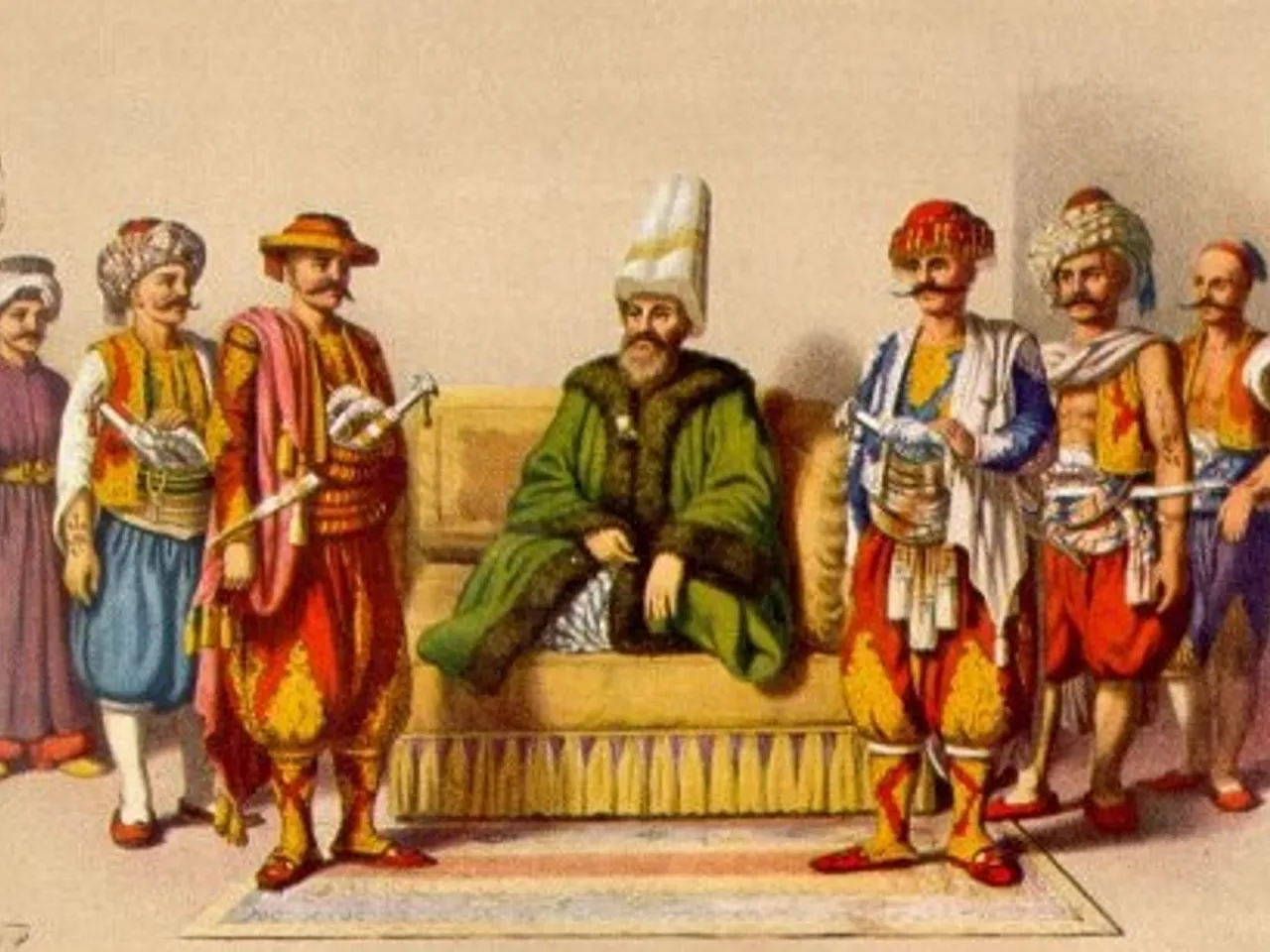
The most magnificent palace festivities were held during the reign of Suleiman the Magnificent Kanuni. But the most magnificent ceremony in the entire history of the Ottoman Empire is the celebration of sur-y humayun in 1582, organized on the occasion of the circumcision of Murad III Shehzade Mehmed’s son.
In the 16th century, the star of greatness of the Ottoman Empire shone, and this period was especially significant in terms of palace celebrations. The three most striking celebrations of the century in 1524, 1530 and 1539 fell during the early period of Sultan Suleiman’s reign (1520-1566). Perhaps there were other celebrations during this period, but only the three mentioned left a mark in history, as well as sur-y humayun, organized in 1582 on such a large scale and with such pomp that it can be called the crescendo of this century.
«Sur-y humayun», which means the Sultan’s celebration, were ceremonies that lasted several weeks in a row and left an indelible impression on the audience. They usually combined two significant events: the khitan ceremony, the circumcision of the Padishah’s sons, called shehzade, and the wedding of the sultan’s daughters.

Surname-i Humayun, 1582
Hatice Sultan is getting married!
The first celebration during the reign of Kanuni fell on 1524, when at that time it was still Maqbul (pleasing) Ibrahim Pasha, who suddenly rose from the governor of the Padishah’s chambers to the Grand Vizier, married the sister of Sultan Suleiman and the daughter of Yavuz Sultan Selim Hatice Sultan. The celebrations lasted 2 weeks until June 5th. Awnings were stretched on the Atmeidans to protect them from the scorching sun, a place for the sultan’s throne was built on an elevation, portable spectator loggias were built for important guests invited from Rumelia and Anatolia, cooks and bakers with apprentices deployed traveling kitchens and bakeries from the sultan’s kitchens of Matbah and Amire. On the sixth day of the festivities, Hurrem Sultan gave birth to Shehzade Selim (Selim II). Shehzade’s birth in the midst of the celebrations was seen as a good sign that fate would be kind to Selim.
During the wedding, Atmeidany looked more like a circus arena: during the day, processions of artisans, military reenactments, acrobatic performances, comic performances of mudhike, kechek dances (men in women’s robes) and sports competitions took place, invited guests and people were treated to wedding dishes prepared in field kitchens; and at night, fire performances and fireworks were launched.

Surname-i Humayun, 1582
The wedding night of Hatice Sultan and Ibrahim Pasha took place, if at all, in the Atmeydana palace (Ibrahim Pasha’s palace), but they did not manage to stay together for long, then tradition did not allow the Padishah’s son-in-law to stay with the Sultaness for a long time immediately after the wedding, so Ibrahim Pasha, along with the fleet, was transferred to Egypt.
Shehzadeh’s circumcision
The second celebration, which began on June 27, 1530, was brighter and more magnificent, it lasted for 3 weeks until July 17. The reason for this is the shunnet (circumcision) of the Sultan’s three sons, Shehzade Mustafa, Shehzade Mehmed and Shehzade Selim, who was born during the previous festival. Another reason was Kanuni’s failure during the siege of Vienna, so the Sultan had to demonstrate his might and steadfastness to the Ambassador of Venice and the diplomats of other European states in Istanbul, as well as support the morale of his own troops. For this reason, the geography of events has expanded this time. Along with Atmeydany, the program also included Okmeydany, where jirta competitions, archery, javelin throwing and equestrian competitions were held, and the Kyagitkhane lowland, where thousands of ordinary children were circumcised along with Shehzade.
The Sultan’s tent is spread out on Atmedans in the Mehterkhane area from Hagia Sophia. The throne was brought here from the palace, as the reception of guests took place here. Separate tents were erected around the perimeter of the square for the distinguished guests from Arab countries, Iran and Crimea.
Statues have appeared on Atmedana!
Statues captured in Buda during the campaign against Hungary were placed around the obelisk on Atmeydany as a symbol of victory. The entire square was decorated with colorful phages, flags, bunches and awnings.
The chronicles tell not so much about the celebration itself as about the gossip surrounding the statues. One of the poets of that time, Ramadan Chelebi Figani, composed an apt ironic couplet on this topic.:
Two Ibrahims came into this world. One, hazreti Ibrahim, destroyed idols.,
And the second one, Ibrahim Pasha, is building them again.
After the solemn drums sounded, the Sultan hosted the guests for two days. According to the protocol, the first to arrive were the ambassadors, loaded with generous gifts, the religious elite, the viziers and the corps officers. All of them presented Egyptian, Indian and Damask fabrics, weapons, porcelain, transparent bowls and dishes, silver and gold products, expensive furs, jewelry and beautiful slaves.
In the following days, unprecedented performances were staged by magicians, tricksters, acrobats, skilled storytellers, horsemen, archers, wrestlers, dog trainers and horse breakers from all over the Empire and even the world. The Janissaries also staged a colorful battle at the fortress walls between two artificial towers built by Matrakchi Nasuh Efedi. In addition to the daily feasts, an additional reception for theologians was held on July 6. Shehzade’s circumcision itself took place on July 11, and together with them, poor and orphans were circumcised in tents spread out in Kyagitkhan. Another lavish reception was tripled here. Horse racing has been taking place in Kyagitkhan for the last 5 days, while jousting and archery competitions have been held in Atmeydany.
Which celebration was more magnificent?
There is a belief that Sultan Suleiman considered the celebration on the occasion of Shehzade’s circumcision to be more magnificent than the previous one on the occasion of his sister’s wedding, and wanted Ibrahim Pasha to acknowledge this as well. But he answered the question: «Which celebration do you think is more magnificent?»:
Well, it’s just a circumcision celebration that the Sultan arranged for his sons. But my wedding guest was the ruler of the world himself, the greatest Padishah Sultan Suleiman. Of course, my wedding was more magnificent!
The third celebration on November 11-26, 1539 was held with the same program as the celebration of 1530. It was the wedding of Kanuni and Hurrem’s only daughter, Mihrimah Sultan, who married Rustem Pasha. The two youngest sons of Kanuni, Shehzade Bayezid and Shehzade Jihangir, were also circumcised.

Surname-i Humayun, 1582
Shehzade Mehmed’s Sonnet
The celebration organized by Sultan Murad III (1574-1595) on the occasion of the circumcision of his son Shehzade Mehmed (Mehmed III) is recognized as one of the most magnificent in the history of the Ottoman Empire. This approach can be explained by the fact that written sources colorfully describing this event have been preserved to this day. Notable shahnameh master Seyid Lokman told about the celebration in Shekhinshahnam, anonymous – in Surnam, in the ballad Zübdetü’l-eş’ar, Gelibolulu Ali – in Cami’u’l — Buhur Der Mecalis-i Sur and in the History of Selyaniki – 1582 Sur-y Humayun.
Preparations for the festivities lasted a year, and rulers from both the West and the East, government officials, khans of dependent beyliks and states, boyars, tsars, leaders of eyalets, and all the honest people of Istanbul were invited. Ships loaded with rice, sugar and spices arrived from Egypt for food. 50 bags of akche were allocated from the treasury for various expenses. Storerooms, field kitchens and stoves were built on Atmeydany; coppersmiths were ordered to make 1,500 cauldrons and dishes; tiled dishes and bowls, crystal glasses were brought out of the palace.; 600 sipahi and 1,000 jebeji (gunsmiths) were assigned to deliver the food. Ali wrote the following about the sugar ships that arrived from Egypt:
Sugar treasures entered the sea –
Ships drowning in the sahara
From this we can conclude about the scale of the training carried out.
Atmeidany, prepared for festivities and celebrations, resembled an open-air palace. A scarlet awning was stretched around, tents made of elaborately embroidered fabric were erected, and spectator seats were allocated in rows. Tents and balconies were added to the palace of Ibrahim Pasha for people close to the Padishah.

Surname-i Humayun, 1582
Sources indicate that Murad III agreed to show the rehearsals. The guards who guarded the order tied a bag of drying oil on their backs and sprayed it on the violators of the order. This method was preferred because it was not only effective, but also funny.
The festivities began on June 1 and lasted 51 days until July 21. They included demonstrations by artisans, performances by magicians, acrobats, fire swallowers, puppet shows, comic performances, dancing and music, sports and military reenactments, fire performances and fireworks launching. Feasts were held for thousands of people every day, and gifts were presented to the Padishah.
During the celebrations, starting with theologians and ending with street vendors, each professional group had its own day when they built a stand on special platforms called «siskhane» and presented their line of work. They could also arrange a procession in columns for this purpose. From the point of view of culture and the history of society, this can rightfully be considered the most impressive part of this significant event.

A procession of glaziers. Surname-i Humayun, 1582
Four years after that, in 1586, Murad III’s daughter Ayshe Sultan was married to Kanizheli Ibrahim Pasha. A celebration was also organized for this purpose, but we have little information about the details of the event.
Metin And in his work «40 days 40 nights» gave a short excerpt of the sur-y Humayun program of 1582 from the second to the twelfth day.
Day 2: Tightrope walkers, cymbal performances, sword swallowers, aerial acrobats, jirith.
Day 3: Tightrope walkers who place an anvil on their stomachs and forge iron like that, climb out on a Dikilitash, nail horseshoes to their heads. At night: capture of two artificial towers
Day 4: Procession with animals made of sugar, stoning of a Turk, pig hunting with dogs
Day 5: Climbing the Dikilitas, a procession of artisans, masked aerial acrobats, a demonstration of a car driving by itself, wrestling with a donkey, performances by riders, a tightrope walker who does not use a balancing pole
Day 6: Comedy performance, buffoons, artisan procession, pig hunting
Day 7: Artisan Procession
Day 8: Performances with animals – monkeys, cats, pigs, goats, etc.
Day 9: Military Performance – 60 man battle between two artificial towers
Day 10: Pole climbing, greased with grease, procession of artisans, pig hunting, horse racing without riders
Day 11: Sipahi performances, dervish procession, musical concert, fox hunting
Day 12 Night: Performance of 50 riders in Spanish costumes, a jirite, a military show featuring three artificial towers and a ship.