

MENGU-TIMUR (Munke-Timer) (? -1282) was the khan of the Golden Horde (1266-1282), who achieved de facto independence from the great Khan. The grandson of Batu Khan and the son of Tukan by his wife Huchuhadun (Kuchu), the daughter of Torelchi-gurgen from the Oirat clan.
After the death of Khan Berke (1266), he seized power in the Golden Horde, relying on the ancestral aristocracy of the Jochids, who received new possessions. In particular, Sultan Nogai took possession of the western part of Ak Orda, the steppes of the Northern Black Sea region from the Danube to the Dnieper. The nephew of Khan Oran, Timur, took possession of the Crimea and made the new city of Solkhat (Iski-Crimea) his capital at the intersection of trade routes from Sudak and Kafa deep into the Crimea and further to the cities of the Volga region.
Relying on their military might, Mengu-Timur actually refused to recognize the illegal election of Kublai Khan as the great Khan (1260) and defiantly supported Arik-Bug, minting coins on his behalf, and later simply with the tamga of the Jochids.
Khan Mengu-Timur actively developed trade and under him the Great Silk Road from China to the ports of the Black Sea region was fully operational. Italian merchants received security guarantees and stable trade duties. Old towns began to develop and new ones are being built, their rural districts expanded, crafts and culture began to develop. New towns emerged – Akkerman (now Belgorod-Dniester), Kilia (in Transnistria), Soldaya (Sudak), Azak (Azov), Saraichik (near modern Atyrau), Isker (near Tobolsk) and others.
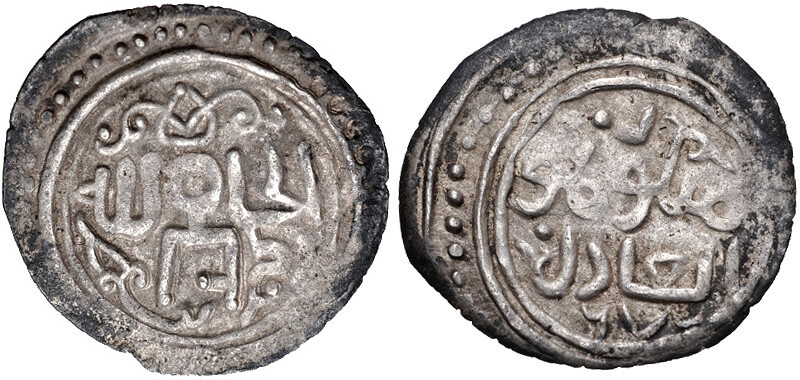
Coinage of Menge (Mengu) Timur. The Bulgarian Mint. Dated 672 or 3rd year of Hijri (1273-1275 A.D.)
Khan’s policy in Russia
A local census of the taxable population was conducted again and the taxation system was streamlined. Interestingly, the clergy were not accounted for. Now all taxes went to the treasury, and the system of pay-offs was abolished. Under the Khan, the Vizier’s office for the management of administrative affairs and taxes was established. Particularly noticeable changes have occurred in Tatar politics in Russia. Now the Russian princes received labels directly from the hands of the khan of the Ulus of Jochi, and expensive and dangerous trips to Karakorum stopped. The labels of Mengu-Timur for the grand duchy, issued to Prince Yaroslav Yaroslavich of Tver (1266), have been preserved. to Genoese merchants for the right to establish a colony in the Crimea in a Cafe (now Feodosia).
The first extant label on behalf of Khan Mengu-Timur has been preserved, which exempted the Russian Orthodox Church from taxes and a number of duties and duties (1267). In fact, under this Khan, a system of equidistance of power from religions was established. The business of the clergy was to pray for the health of the Genghis Khan family and the Khans’ power, in exchange for tax benefits. Orthodox people in the khan’s service held high positions and even fulfilled diplomatic assignments – Bishop Athenogenes of Sarai was appointed head of the embassy sent to Constantinople.
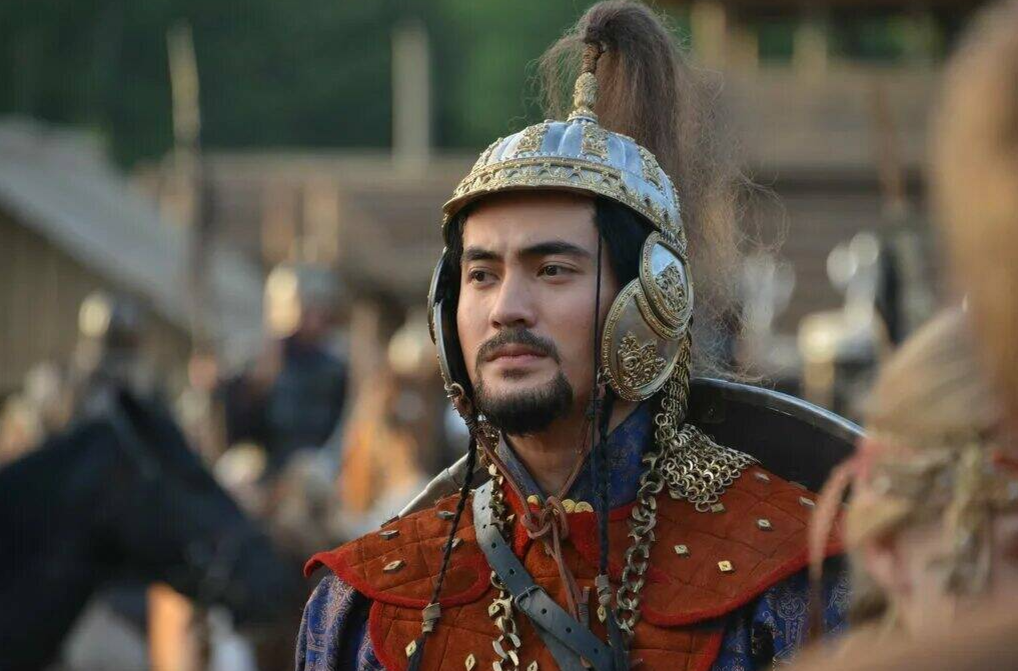
Sanjar Madi as Mengu-Timur in the series «Golden Horde»
This was perceived in Russia as a weakening of the power of Islam.: «… if the Tatar king Berkai died, he would be weakened by Christian violence.» At the same time, the position of Muslims in the country and among the Jochids only increased. At the same time, the basis of the Khans’ religious policy remained non-interference in the affairs of the clergy and equidistance from all religions, and the basis of the Khans’ faith was a variant of Tengrianism with faith in the Eternal Heaven and the divinity of Genghis Khan’s power.
Attempts to violate religious policy and use it against the weakening of the khan’s power and the ceremonial of the khan’s court, as before, were strictly observed and punishable by death. Thus, in 1270, Prince Roman Olgovich of Ryazan was put to death by quartering, who, according to a denunciation, condemned the khan’s faith and refused to obey Tatar rituals.
The Warlike Khan
The consolidation of power within the Jochi Ulus allowed Mengu-Timur to pursue an active foreign policy, which was basically a continuation of the actions of his predecessors.
The war with the Hulaguids was periodically resumed. In 1268, Khan Mengu-Timur invaded Transcaucasia and fought with Abaga, the son of Hulagu. In this war, he was supported by Egypt, where the Mamluk Sultan Baybars I ruled. The war ended with a truce, which was connected with the beginning of a series of internecine wars caused by the usurpation of the throne of the great Khan Kublai. His elder brother Arik-Buga opposed him, and after his defeat, Chagataid Khaidu. All of them were supported by the Jochi Ulus. As a result of a series of wars, the Tuluid possessions in Central Asia were divided among other uluses. In 1269, Mengu-Timur organized and held a kurultai on the Talas River, where the independence of the Jochi, Hulagu and Chagatai uluses, which did not recognize the usurpation of the throne of the great Khan, was actually legitimized.
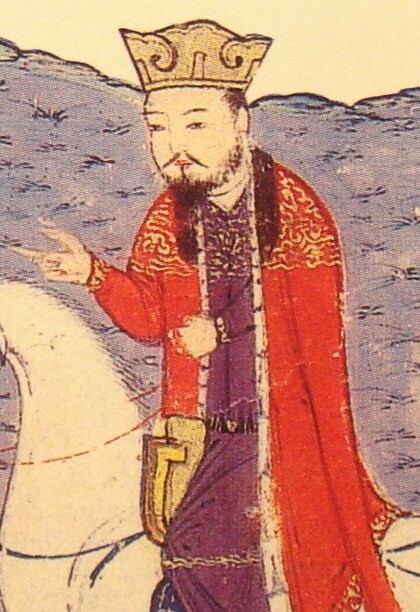
Khan Mengu-Timur’s opponent is the Ilkhan of Iran Abaka
Mengu-Timur was very active in Western politics. In 1269, at the request of the Novgorodians, he sent an ambassador to Novgorod with a small detachment to protect him from the Livonian Order. This turned out to be enough for the Crusaders to make peace «according to the will of Novgorod.» He defended Khan and Southern Russia from Lithuanian raids. In 1275, a campaign was organized by Ulusbek Nogai and a coalition of South Russian princes led by Galician Prince Lev Daniilovich against eastern Lithuania.
In an effort to suppress the resistance of the Alans and clear mountain passes for trade caravans, in 1277-1278 Khan Mengu-Timur organized a campaign against their capital, Dedyakova, in which the squads of Russian princes also took part. The city was taken and destroyed.
In general, the policy of Mengu-Timur was the last outbreak of military activity of the Jochi Ulus and the expansion of the empire.
The shadow side of power
There was an intensification in foreign policy, while stability was maintained within the empire. But it was a visible part of politics. The war effort required the strengthening of the role of the Ulusbeks, most of whom were Jochids, who themselves aspired to supreme power. The power of Ulusbek Nogai was especially strengthened during this period. He controlled the western part of the Jochi Ulus and extended his influence to the Balkans. He married the daughter of Michael VIII Palaiologos, who revived the Byzantine Empire (1261), and his son Chaka was married to the daughter of the ruler of the Second Bulgarian Kingdom, George I Terter. In addition, he traditionally controlled the collection of tribute from the southern Russian lands. Thus, his power and might could compete with the Khan himself.
No less powerful were the rulers of the eastern part of the Golden Horde, the heirs of the Horde, Shiban and Tukai-Timur. They controlled the cities of Khorezm and the Eastern Aral Sea region, as well as trade routes through them. With the weakening of the central government, they pursued a semi-independent policy in Central Asia.
Therefore, in the early 1280s, the khan’s power began to weaken, and separatist aspirations intensified among the Jochids, who relied on their possessions. But at that moment, Mengu-Timur suddenly died of an illness due to an unsuccessful opening of an abscess on his throat (1282). A serious internal conflict has arisen.