
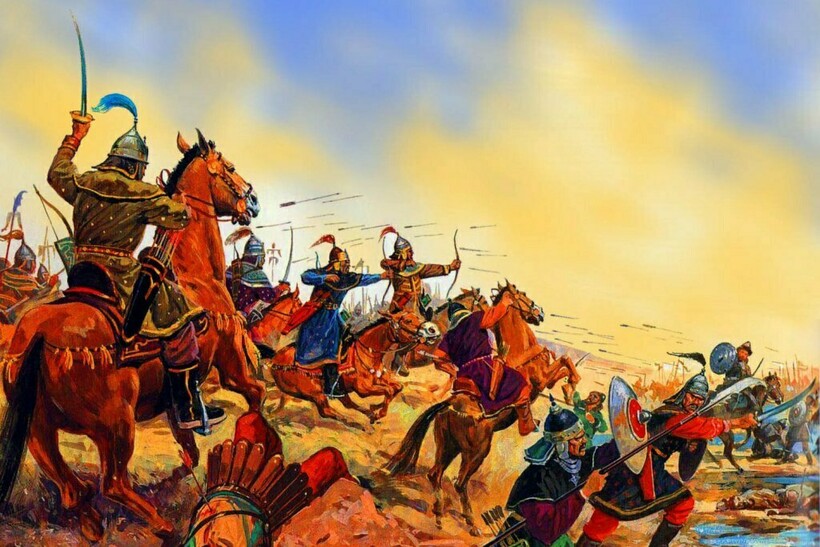
The chosen one of the Jochids
Thither (Tudan)-Mengu (1257-1287), khan of the Jochi Ulus (Golden Horde). Grandson of Batu and Toucan, who married his widow Borakchin. After the internal struggle for the throne and the execution of his parents, he was obviously raised at court.
It is possible that Emir Nogai, who rose under Berk and strengthened his influence under Mengu Timur, played a major role in this. Even under Berke, he became Ulug karachibek, and also ruled the western part of the Jochi Ulus and implemented the khan’s policy in the Balkans. He was even married to Euphrosyne, the illegitimate daughter of the Byzantine Emperor Michael Palaiologos. In the second half of the 13th century, he was the most influential aristocrat of the khanate. His contemporaries considered him «an extremely brave and daring sultan.» It is known that during the battle with the Hulgau troops, he was wounded in the face and lost an eye. Most likely, it was for this reason that he could not claim power and would like to rule by the hands of the khans he had enthroned.
There, Mengu enjoyed the support of both Nogai and the Sarai aristocracy, and most importantly, the patronage of Mengu-Timur’s widow, Jijek-khatun, who had great influence on the khan’s court. At the same time, he was the first in the Jochid clan in seniority, so his election did not raise objections.
Interestingly, upon ascending the throne, Tam-Mengu sent an embassy to Egypt, announcing the adoption of Islam and the resumption of the former alliance against the Hulaguids.
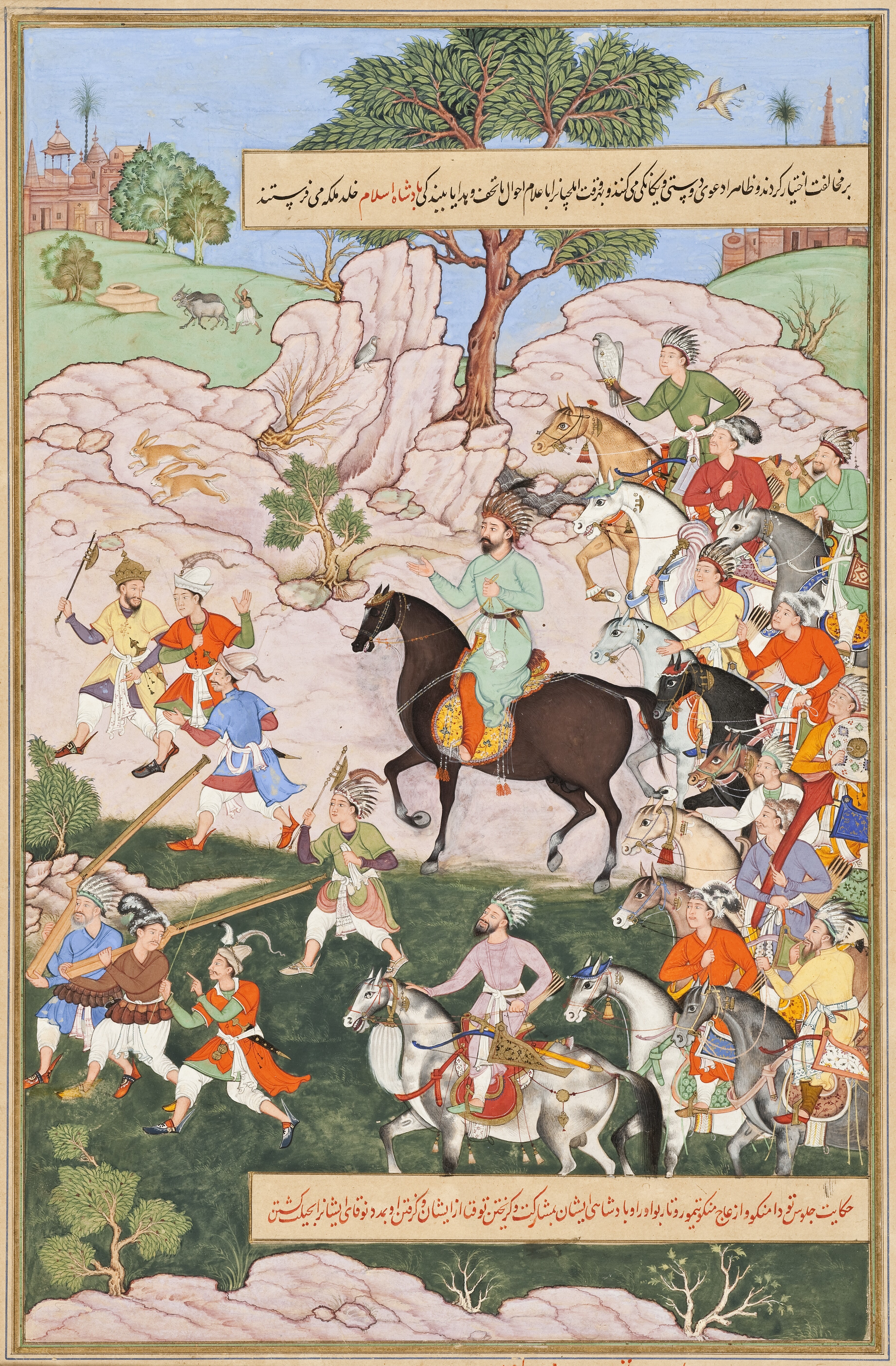
There is a Mengu at the head of the army
Removal from power
However, after the accession, serious disagreements arose between the khan of Tut-Mengu and Nogai. Obviously, they touched on many issues, but the most well-known dispute over the great reign of Vladimir between the sons of Alexander Nevsky. Dmitry became Grand Duke during the reign of Mengu-Timur, and after his death his rights were supported by Nogai. But Andrei Gorodetsky decided to take the throne for himself and received a label from the khan, forcing Dmitry to flee to Nogai.
But Thud-Mengu was not involved in state affairs for long. According to the testimony of his contemporaries (we do not know whether they were true or false), he retired from business and left others to deal with it. The foreign policy was actually led by Nogai, who actively corresponded with the sultans of Egypt and asserted his authority in the Balkans. Russian Russian chronicles wrote, based on some legends, that at that time the khans often gave taxes from Russian lands to the princes and Baskaks, who profited from it.
Tammengu himself not only converted to Islam, but became a zealous follower of some Sufi tariqas and «devoted himself to the community of sheikh fakirs.» He withdrew from government affairs, renounced worldly concerns, and «began to show a penchant for hermitry.» Such eccentricities caused a serious crisis among the Jochids, since with the khan’s inaction, power drifted away from them to Nogai and other powerful Ulusbeks.
Conspiracy and Kurultai
The Jochids were particularly annoyed by the campaigns in the Balkans and Lesser Poland in 1285-1287, during which the troops of Nogai and Tula-Bug acted disunited. In 1285, Tatar troops invaded Transylvania and ravaged it, but they could not take the protected fortresses and cities. Upon their return, the Jochid troops were attacked and trapped by bad weather in the Carpathian passes. In 1286, both armies ravaged the environs of Sandomierz, besieged Lviv and Krakow. But they could not take them and returned back, emptying the rural district. Both campaigns did not achieve serious successes and did not lead to conquests. In fact, they were the last serious attempt to storm the western lands. As a result, the organizers of the campaign were unhappy with its results, blaming each other for the failures, causing general discontent.
In this situation, the sons and nephews of Mengu-Timur conspired and gathered the kurultai of the Tatar elite to resolve this issue. It explicitly pointed out to him «that if there is a kingdom, it is necessary that it be ruled by a king» and forced him to abdicate in favor of his nephew Tula-Buga. Apparently, Tum-Mengu himself renounced power. According to Rashid da-Din’s contemporary, the Hulaguid statesman and historian, the Jochids overthrew the «mad khan» and began to rule the state themselves. According to another historian, the Jochids «hid the Tamenga like an out-of-circulation gold coin.» Most likely, he was killed some time later.
The new Khan and the old feud
In 1287, the Kurultai of the Jochids, headed by the sons of Mengu-Timur and Tarbu, elected a new khan, who became Tula-Buga (1260s — 1291). Tula-Buga was the son of Tarbu and the great-grandson of Batu. He was the eldest son of Mengu’s brother Timur and was legitimately enthroned. The only strange thing is that the son of Mengu himself, Timur Alguy, did not become khan. It is possible that he was just younger than his cousin. But at the same time, in some Russian chronicles Tula-Bug and Alguy are called kings, which gives a hint of their general high position in the hierarchy of power.
It should be emphasized that by this time Tula-Buga had established himself as a skilled and determined commander. Moreover, his enmity with Nogai made him a representative of the interests of all the Jochids who were dissatisfied with the strengthening of Ulusbek’s power.
Relying on them, Tula-Buga began to pursue a policy of centralization. The interests of Khan and Nogai collided in Russia. Nogai considered himself, according to the tradition dating back to Mengu-Timur, entitled to manage the state of affairs in the Russian lands and collect taxes and taxes, often handing them over to the Basques. The Russian russians complained to the khan, who sent his man and, with the help of the Russian princes’ squads, expelled the Baskak. But Nogai sent his troops and executed the rebellious princes. In response, Tulabuga Khan launched a campaign against the Ryazan and Murom lands in 1288. These events clearly showed that a dual power was formed in the Jochi Ulus and the power was not on the khan’s side.
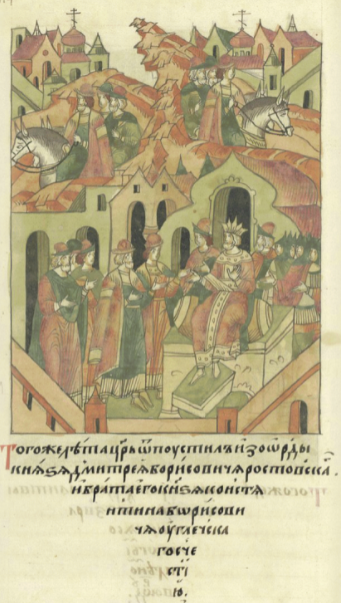
Dmitry Rostovsky at Khan Tula Bug
Leg Support
Meanwhile, the country as a whole prospered thanks to the global trans-Eurasian trade, continued the growth of cities and the strengthening of the power of the clan aristocracy. The expansion of trade with the Mediterranean countries shows the conclusion of a trade agreement with Venice and permission to build trading posts in the Crimea and the Azov Sea.
actions against the Hulaguids in the Caucasus, organizing two campaigns – in the spring of 1288 and in the spring of 1290. Both, despite the participation of Nogai’s troops, proved unsuccessful. This further strained relations within the Jochid elite.
Formally, Nogai did not oppose the khan and showed loyalty to him, but in fact behaved as an independent ruler, pursued his own foreign policy and consolidated his power. He managed to sow discord in the Jochid camp by luring some of them to his side. Khan Tulabuga responded by threatening his relatives. Some of them fled from Sarai to their clans and became Nogai’s allies, for example, the sons of Mengu-Timur – Tokta, Tudan and Sarai-Bug.
At the same time, he conspired. Claiming to be terminally ill, Nogai lured Tula Bug and his brothers to his territory in September 1291, and then captured them. He accused them of treason and suggested that Tokta be executed. Khan Tula-Bugu, the son of Mengu-Timur Alguy, and some of the brothers were rolled up in carpets and had their backs broken, since the shedding of Genghisid blood was prohibited by the laws of Yasa. Thus, Tokta killed all other contenders for power and, thanks to Nogai’s support, became the new khan.
It can be said that the entire reign of Tum-Mengu and Tula-Buga was marked by the smoldering struggle of the Jochids, primarily the Sarai aristocracy against Ulusbek Nogai, who aspired to power but could not take it. As a result of this feud, the internal and foreign policies of the Jochi Ulus became inconsistent. Sooner or later, this situation was bound to lead to a victory for one of the sides. In this round of the fight, Nogai emerged as the clear winner. He not only overthrew and killed his opponent, the khan of the Ulus of Jochi, but also organized the enthronement of his protege.