
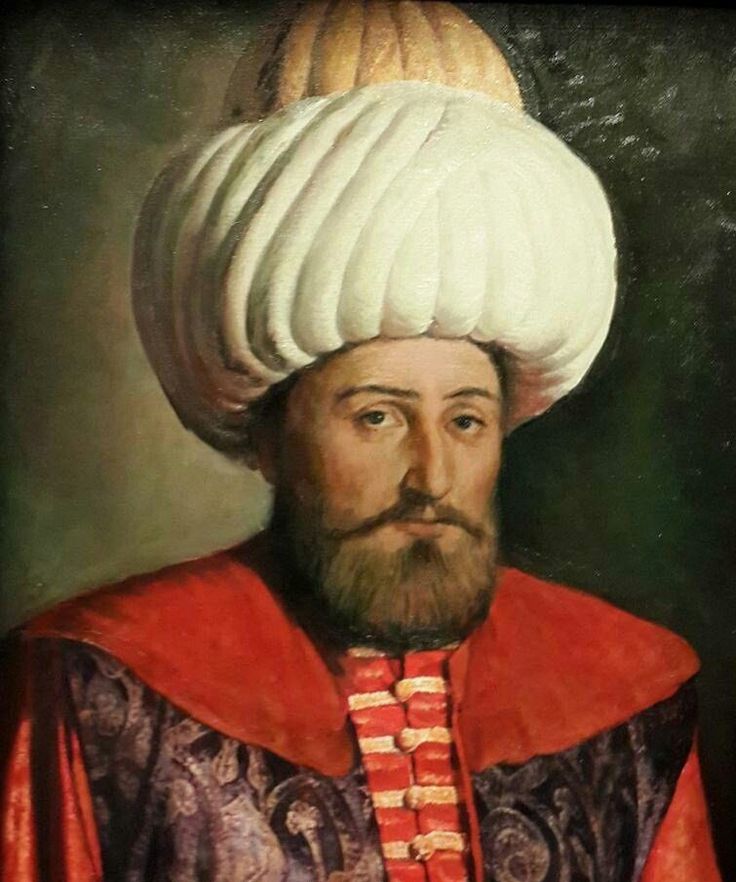
Young Mahmud realized just how brutal the struggle for power could be when he was only six years old. Back then, as a young boy and one of the sultan’s sons, he learned that the ruler had been overthrown. Mahmud’s uncle took the throne in his father’s place. Yes, this had happened before, but this blow proved to be particularly painful for the son of the deposed sultan of the Ottoman Empire. But how did he manage to regain power?
The Sultan’s Son
Mahmud was the son of the Ottoman ruler Mustafa II and his wife Saliha Sultan, who was of Greek descent. From his father, the boy inherited a firm character; from his mother, cunning and prudence. The authoritative father believed that his sons should receive the best education, and so the young Shehzade Mahmud’s schooling began with celebrations and initiation ceremonies.
It must be admitted that the boy studied with pleasure and displayed considerable talent. Quick-witted and intelligent, he delighted his father, who believed that Mahmud would become a good sultan in the future.
And then, when Mahmud turned six, his entire familiar world collapsed. In 1703, a Janissary revolt broke out in Edirne, forcing Mustafa II to abdicate the throne. The violent coup was organized by Mahmud’s uncle, Ahmed III, who became the new ruler of the Ottoman Empire.
A Man of the Ottoman Empire / © WOH
The Sultan’s Mistake
It seems to me that for some time, the newly installed sultan pondered what to do with his predecessor’s sons. In the end, Ahmed decided not to oppress his nephews, believing they posed no threat to his power.
But this was Ahmed’s mistake. Young Mahmud knew that his uncle had seized power illegally. “The time will come—and I will help my father reclaim the throne,” the boy vowed silently. But after some time, he learned that the deposed sultan had died. Another might have resigned himself to his situation, but Mahmoud became even more determined to take revenge on his uncle.
Mahmud was not the organizer of the coup or the ideological inspiration behind the rebels. No, but he skillfully managed the forces dissatisfied with the sultan and bided his time, waiting for the right moment. As alert as a predator lying in wait, he remained inconspicuous and modest for a long time. But in the fall of 1730, Mahmud suddenly and decisively rushed forward—toward the throne. At that time, the Patrona Halil uprising was raging in Istanbul, stirring up the entire urban underclass. As a result of the revolt, Ahmed III was forced to abdicate, handing over power to his nephew.
Remarkably, the cunning uncle was the first to swear allegiance to the new ruler. He also urged Mahmud not to trust anyone and to rule independently. At that moment, looking at his defeated relative, the new sultan knew—he was telling the truth. But what was the reign of Mahmud I like? And did he fall victim to a new coup?
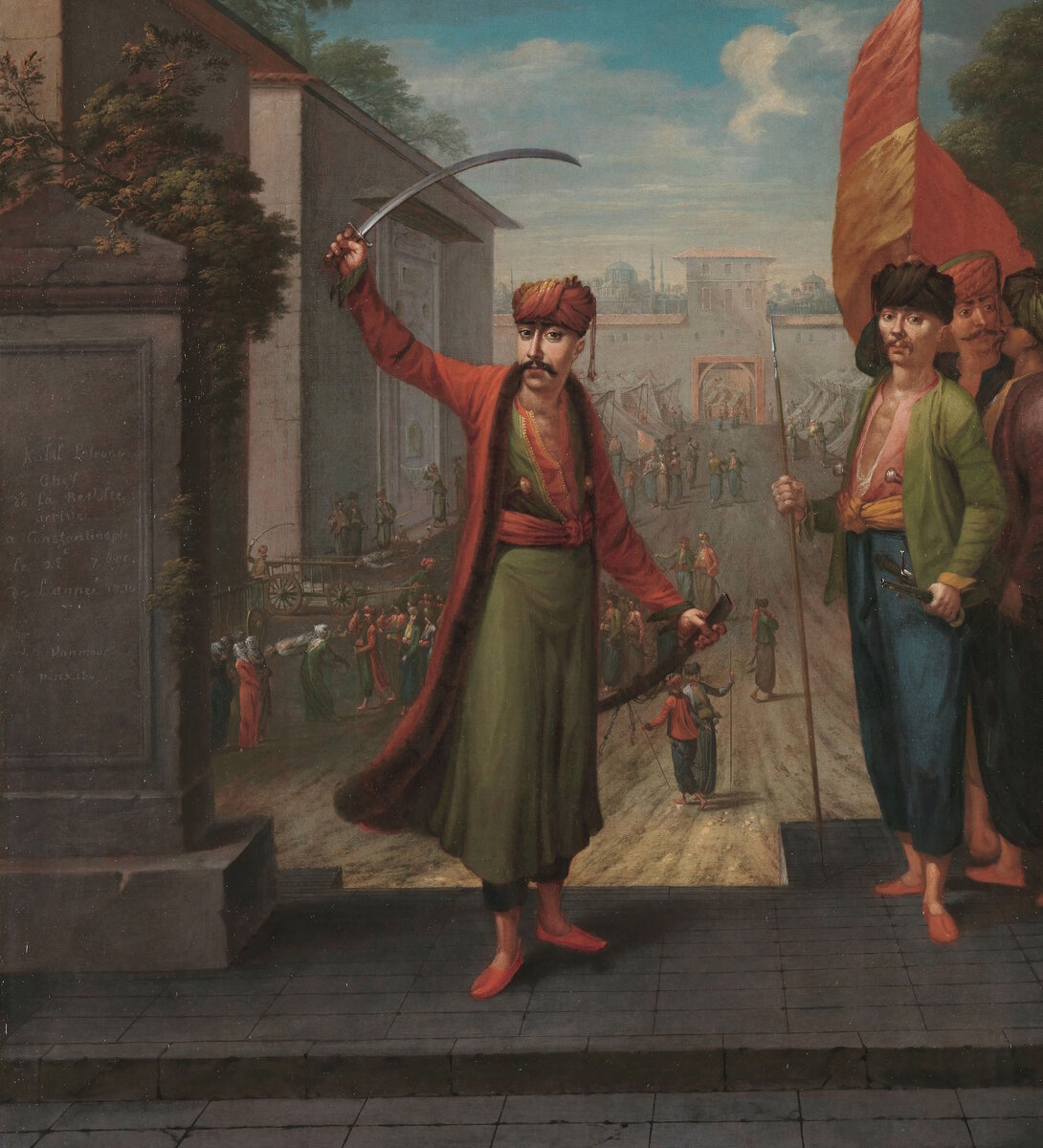
Jean-Baptiste van Muur, “Portrait of Patron Khalil” / Rijksmuseum, Netherlands
The Invisible “War”
By ensuring the rebels’ demands were met, the new ruler immediately gained popularity among the people. However, the rebels’ “appetites” kept growing. They were well aware that Mahmud I owed his power to them.
The ruler himself sensed how fragile the power he had sought for so many years actually was. In essence, the reins of power over the Ottoman Empire were concentrated in the hands of Patron Halil, the leader of the rebels. At first, Mahmud even planned to eliminate (physically) the troublesome rebel, but he realized that this was unlikely to solve the problem.
Then the cunning Mahmud decided to act differently. He managed to win over many high-ranking military officers, thereby breaking Patron Halil’s influence. Although the rebels did eventually storm the palace, their latest uprising failed—by that time, both the army and the city’s residents were supporting Mahmud I.
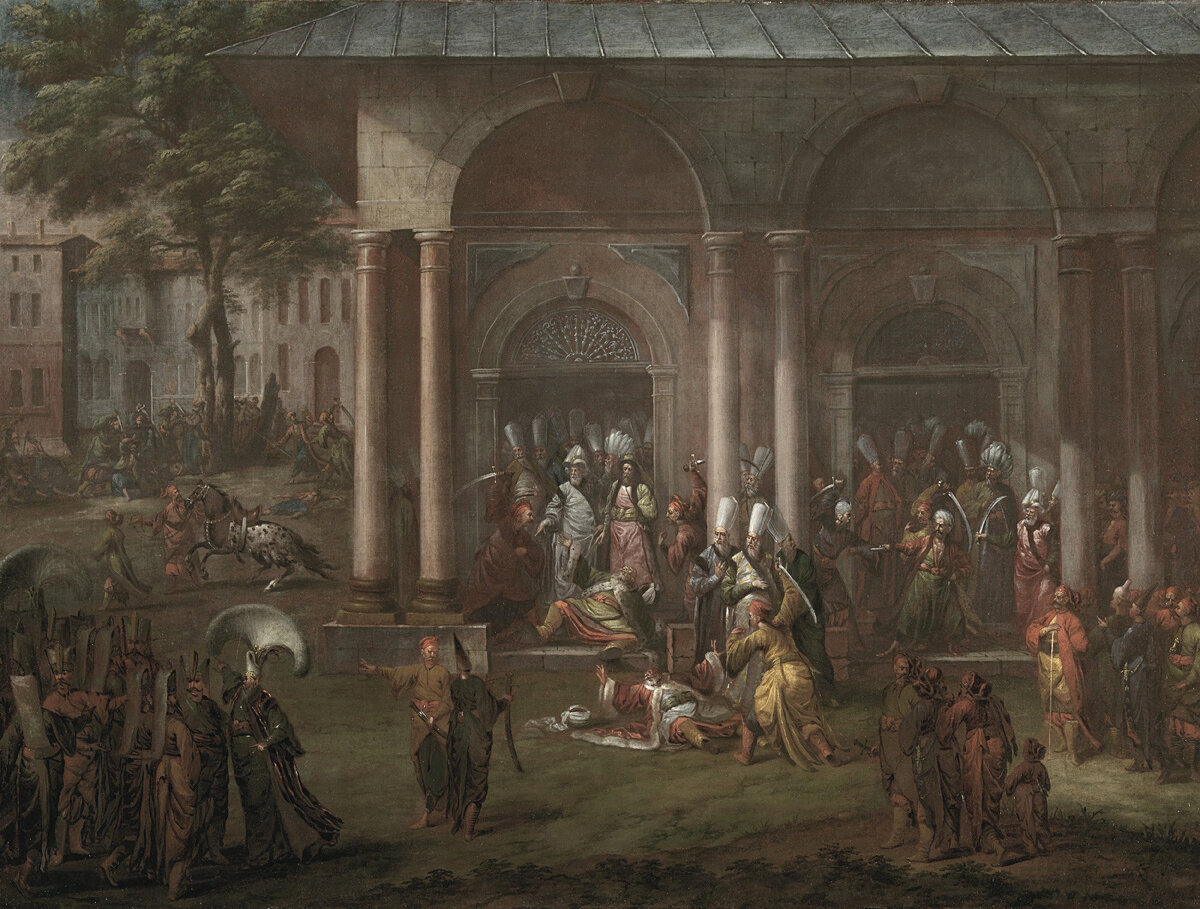
Jean-Baptiste van Muur, “The Revolt of Patron Halil” / Rijksmuseum, Netherlands
Mahmud in Power
Mahmud’s reign was far from peaceful. Having resolved internal issues, the sultan turned his attention to foreign policy, and it was here that his warlike nature truly came to the fore. During the reign of Mahmud I, the Ottoman Empire was at war with Persia and Russia. Thanks to the efforts of diplomats, the former balance of power between the Ottoman Empire and European countries was restored in 1740, and peace was maintained for more than two decades.
Mahmud I was actively involved in construction and philanthropy. He believed that under his rule, his empire would experience a period of prosperity and strengthening. He became the founder of many religious buildings—quite a few of Istanbul’s mosques were built during Mahmud’s reign.
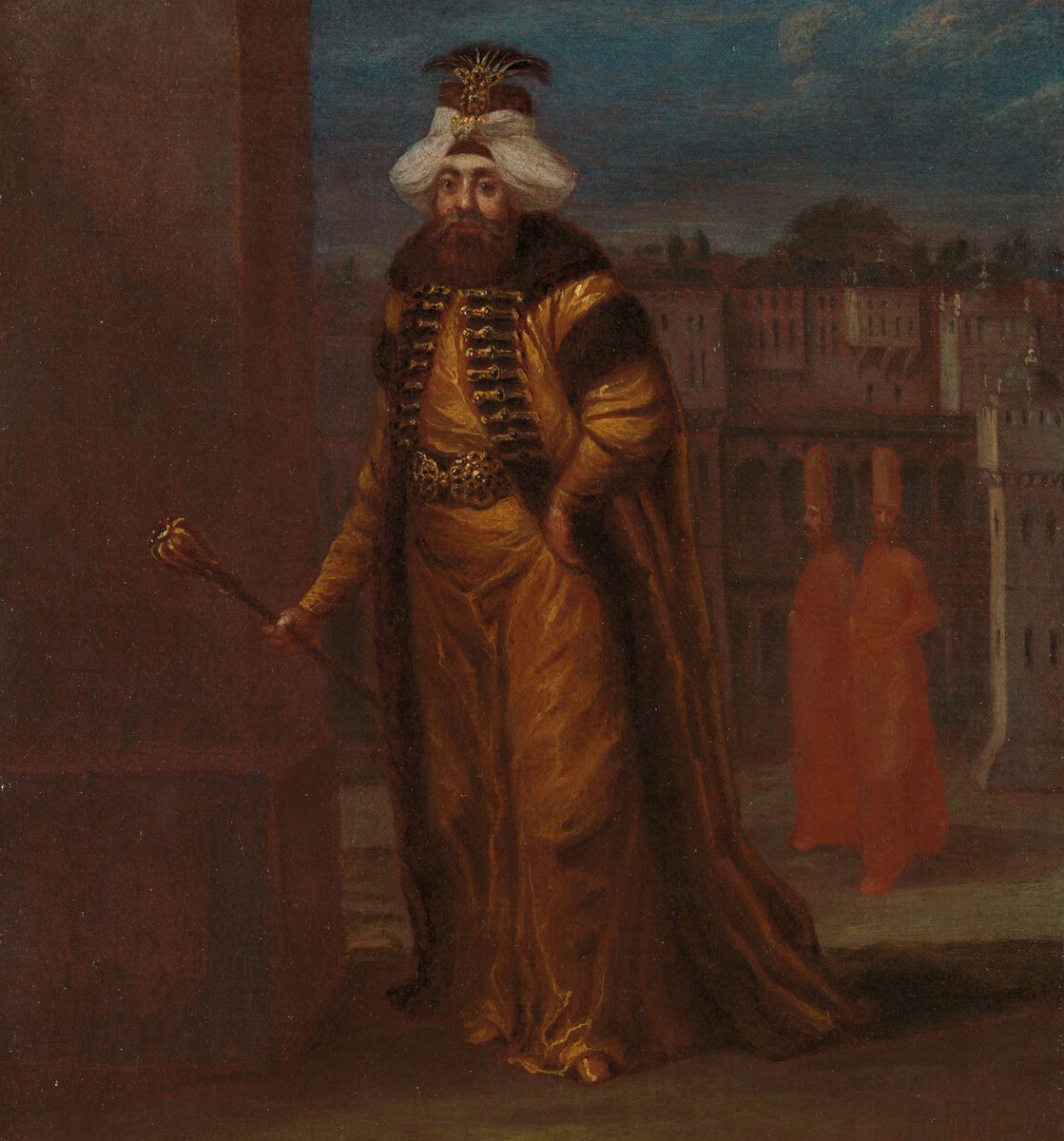
Jean-Baptiste van Muur, “Portrait of Mahmud I” / Rijksmuseum, Netherlands
Mahmud I lived to be 58 years old. It must be acknowledged that this was a respectable age for the leader of a country where many rulers met violent deaths. In his twilight years, Mahmud no longer feared coups or unrest—he knew his power was firm and strong—but he worried about what the future held for the Ottoman Empire. Mahmud I died peacefully in his palace after returning from Friday prayers. His reign went down in the history of the Ottoman Empire as its last golden age. The sultan managed to accomplish everything he set out to do, becoming one of his country’s greatest rulers.