
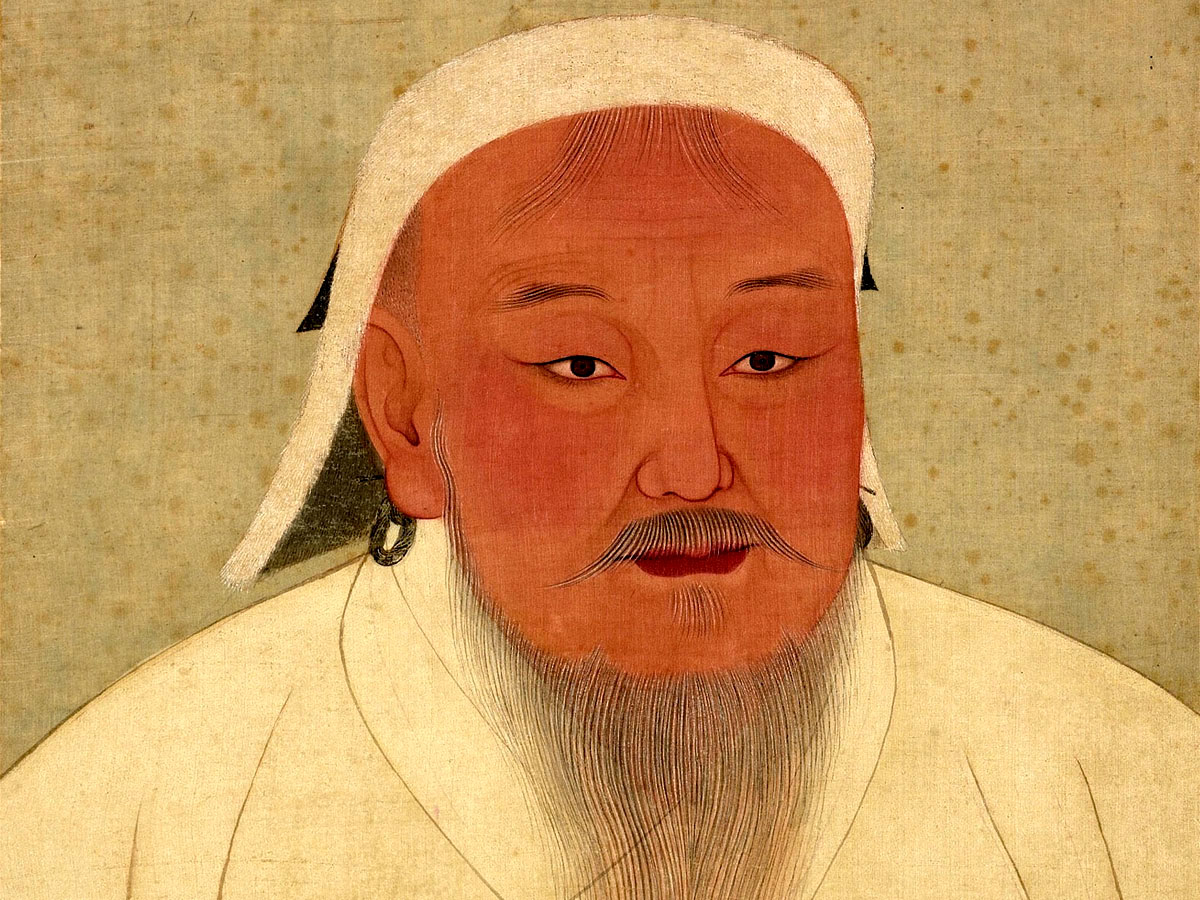
The last path of the Great Khan
In 1227, during a campaign against the Tangut state of Xi Xia, the great conqueror Genghis Khan left this world. According to the «Secret Legend of the Mongols,» the oldest literary monument of the Mongolian people, Khan died at the age of 65. His death marked a turning point in the history of the greatest land empire that has ever existed on Earth.
The last days of Genghis Khan are shrouded in mystery. According to one version, he died from wounds sustained in a fall from a horse. Other sources claim that Khan was a victim of malaria or was poisoned. Regardless of the cause of death, the events that followed gave rise to one of the greatest mysteries in history.
According to legend, Genghis Khan’s body was taken to his homeland, to the Onon River Valley in what is now Mongolia. The funeral procession stretched for many kilometers, and everyone who met it on the way was killed in order to keep the burial place of the great Khan a secret.
Operation «Perfect secrecy»
Genghis Khan’s burial was perhaps the largest grave concealment operation in human history. According to some estimates, up to 10,000 soldiers participated in it. After burying the body, they allegedly trampled the area with a herd of 10,000 horses to hide all traces. Then, according to legend, a river was let through the grave to completely cover its tracks.
But the precautions did not end there. All the participants in the funeral, from ordinary soldiers to high-ranking military leaders, were executed upon returning to the camp. This cruel action was meant to ensure that no one would ever be able to uncover the secret of the great conqueror’s resting place.
Such extraordinary measures have given rise to many legends and theories. According to one of them, Genghis Khan’s grave is guarded by his spirit and cursed. Anyone who dares to disturb the great Khan’s peace will incur terrible calamities.
In search of the lost Tomb
Since the 13th century, dozens of expeditions have tried to discover the burial place of Genghis Khan. In the 20th century, these searches acquired a truly global scale. In 1937, the Japanese occupation authorities in Manchuria organized a large-scale expedition involving more than 1,000 soldiers. Despite considerable resources, the expedition was not a success.
In the 1960s, Soviet archaeologists conducted a series of studies in Mongolia using the latest technology at that time, including aerial photography. They examined an area of more than 120,000 square kilometers, but could not find any traces of burial.
At the beginning of the 21st century, the search reached a new technological level. In 2004, an international team of scientists led by Chicago entrepreneur Maurice Kelle began using high-resolution satellite imagery to search for anomalies on the earth’s surface that could indicate the location of the tomb. In the first five years of work, more than 84,000 square kilometers of the territory were analyzed, but the results are still uncertain.
Burkhan-Khaldun Mountain: shrine or grave?
One of the most likely burial sites of Genghis Khan is considered to be Mount Burkhan-Khaldun, located in the Khentii aimag in northeastern Mongolia. This mountain, which reaches a height of 2,350 meters above sea level, has been considered sacred by the Mongols since ancient times.
According to the «Secret Legend of the Mongols,» the young Temujin (the future Genghis Khan) once took refuge on this mountain from his pursuers. In gratitude for his salvation, he swore that he would honor this mountain as a deity. Many researchers believe that it was here that the great Khan could have been buried.
In 2015, UNESCO included Burkhan-Khaldun and the surrounding landscape in the World Heritage List. This decision further increased interest in the mountain as a possible burial site for Genghis Khan. However, archaeological excavations on the sacred mountain face serious obstacles, both religious and political.
Theories and hypotheses: from rational to fantastic
Over the centuries since Genghis Khan’s death, many theories have emerged about the location of his grave. Some of them are based on historical documents and archaeological data, others border on fiction.
One of the popular theories claims that Genghis Khan could have been buried in the Erdeni-Dzu mausoleum, built in the 16th century on the site of the ancient Mongolian capital Karakorum. According to this version, the khan’s grave is located under one of the 108 stupas surrounding the monastery. However, this theory does not explain how the grave could have remained unknown for three centuries before the mausoleum was built.
Another hypothesis suggests that Genghis Khan’s body was cremated and his ashes scattered over the vast territories of his empire. This version would explain the absence of physical traces of burial, but contradicts the well-known Mongolian burial customs of that time.
There are more exotic theories. Some enthusiasts claim that Genghis Khan’s grave may be located outside Mongolia – in China, Russia, or even in Afghanistan. However, most serious researchers consider these versions unlikely.
Modern search methods: technologies in the service of archeology
In the 21st century, the search for Genghis Khan’s grave has reached a new technological level. In addition to the analysis of satellite images already mentioned, researchers use a whole arsenal of modern methods.
Ground-penetrating radar allows you to «look» underground to a depth of several meters without excavation. This technology has already helped to discover a number of ancient tombs in different parts of the world. In 2019, a group of Mongolian and Japanese archaeologists conducted a georadar survey of the vicinity of Mount Burkhan-Khaldun, but the results have not yet been made public.
Lidar imaging, which uses laser pulses to create three-dimensional terrain models, is also used in search. This technology allows you to «see» through the forest cover and detect artificial structures that are invisible from the ground or in ordinary aerial photographs.
Genetic research also contributes to solving the mystery. Scientists are trying to identify Genghis Khan’s direct descendants in order to use their DNA for possible comparison with the remains, if any are found. According to some estimates, up to 16 million men in Asia may be descendants of the great conqueror in the direct male line.
The ethical dilemma: to seek or to leave alone?
The search for Genghis Khan’s grave raises serious ethical questions. Many Mongols believe that the grave of their great ancestor should remain untouched, in accordance with his last will. They fear that the discovery and excavation of the grave could bring a curse on the country and the people.
On the other hand, the scientific community argues that the discovery of Genghis Khan’s grave could provide invaluable historical information. The study of the remains and burial objects could shed light on many aspects of the life and reign of the great Khan, as well as on the culture and customs of the Mongols of the 13th century.
In 2009, the Government of Mongolia banned any excavations on Mount Burkhan-Khaldun and in the surrounding protected area. This decision was made under pressure from the public and religious leaders. However, the ban does not apply to non-invasive research methods such as satellite imagery or GPR scanning.
Genghis Khan’s Legacy: More than Just a Grave
Regardless of whether Genghis Khan’s grave is ever found, his legacy continues to have a huge impact on the modern world. The empire he created, stretching from the Pacific Ocean to Eastern Europe, facilitated an unprecedented cultural exchange between East and West.
Genghis Khan introduced a management system that was centuries ahead of its time. He created an efficient postal service that covered the entire empire, introduced a unified writing system, and codified laws. Many of his innovations formed the basis of modern government systems.
In Mongolia itself, Genghis Khan remains a national hero and a symbol of unity. His image can be seen on banknotes, monuments, and even vodka bottles. Ulaanbaatar International Airport bears his name.
Perhaps it is this living memory of the great Khan, preserved almost 800 years after his death, that is his true grave – not a physical place, but the memory of millions of people. And as long as this memory is alive, the mystery of Genghis Khan’s burial will continue to excite the minds of researchers and enthusiasts around the world.