
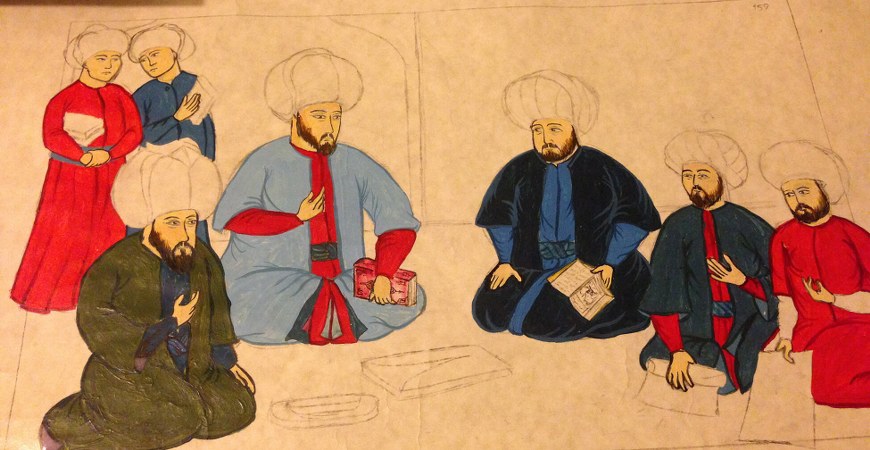
The Ashtarkhanids, also known as the Janids, were an Uzbek dynasty whose rule played an important role in the history of Central Asia. They ruled the Bukhara Khanate from 1599 to 1753 (or 1785), leaving a significant mark on the political, cultural and military life of the region. This dynasty replaced the Sheibanids and had deep historical roots going back to the descendants of Genghis Khan.
The origin of the dynasty
The Ashtarkhanids are descendants of Tukai Timur, the thirteenth son of Jochi, the eldest son of Genghis Khan. Their origin is connected with the Astrakhan Khanate, which was one of the state formations of the Golden Horde. After the fall of the Astrakhan Khanate in 1556, when it was annexed to Russia, one of the Astrakhan princes, Jan (or Janibek Sultan), was forced to seek refuge. He found it in Bukhara, where he received protection from Abdullah Khan II, a representative of the Sheibanid dynasty.
Jan’s marriage to Abdullah Khan’s sister became an important political alliance that strengthened his position. As a result of this marriage, Baki-Mohammed was born, who became the founder of the Ashtarkhanid dynasty. After the suppression of the Sheibanid line, Baki Muhammad was elected Khan of Bukhara in 1599. The name of the dynasty «Janids» comes from the name of his father, Jan, which emphasizes the continuity and family ties with the Astrakhan khans.
Political and military activities of the Ashtarkhanids
The Ashtarkhanid rule spans more than a century and a half and is characterized by both internal and external challenges. The main features of their rule include the fight against separatism, opposition to external threats and attempts to strengthen the central government.
The fight against separatism
One of the main problems faced by the Ashtarkhanids was the desire of local feudal lords for independence. The Bukhara Khanate was a complex structure where various regions often tried to get out of control of the central government. The khans of the dynasty were constantly forced to suppress rebellions and strengthen their influence on the periphery.
External threats
The geographical position of the Bukhara Khanate made it vulnerable to raids by neighboring peoples. The Ashtarkhanids repeatedly repelled attacks by nomads such as Karakalpaks, Kazakhs, Kirghizs and Kalmyks (Oirots). These conflicts depleted the resources of the state, but also contributed to the strengthening of the khanate’s military power.
The Wars for Balkh
A special place in the history of the Ashtarkhanids is occupied by the wars for control over Balkh, a strategically important region on the territory of modern northern Afghanistan. These territories were contested by the Mughals, which led to long and debilitating conflicts.
Vassalage to Iran
In the second quarter of the 18th century, the Bukhara Khanate became a vassal of Iran, ruled by Shah Nadir. It was a difficult time for the dynasty, as the influence of Iran limited the khanate’s independence. However, after the death of Nadir Shah in 1747, Bukhara was able to regain its independence.
Famous representatives of the dynasty
Among the Ashtarkhanid khans, there are several outstanding rulers, each of whom contributed to the development of the khanate.:
- Imam kuli (1611-1642) was one of the most successful khans, who strengthened the central government and actively resisted external threats. Nadir Muhammad (1642-1645) continued the policy of his predecessor, but faced increasing separatist tendencies.
- Abd-al-Aziz (1645-1680) — known as the patron saint of science and culture, under whom literature and art actively developed in Bukhara.
- Subhan-kuli (1680-1702) — showed interest in medicine and astrology, and also supported scientists and poets.
- Ubaidullah II (1702-1711) — his reign was marked by increased external conflicts. Abu al-Faiz (1711-1747) was the last significant representative of the dynasty, under which the khanate was experiencing a crisis due to Iranian influence.
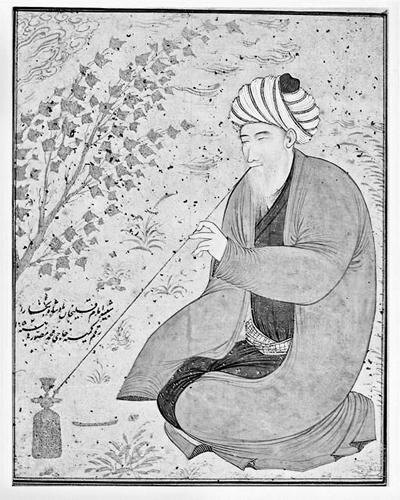
Muin Musavvir. Imamkuli Khan. The thumbnail. Between 1642 and 1643
Cultural heritage of the Ashtarkhanids
The Ashtarkhanid period was a time of flourishing science, art and architecture. Bukhara remained an important cultural center where Islamic theology, literature, and medicine developed. The khans of the dynasty actively patronized scientists and poets, which contributed to the preservation of the rich cultural heritage of the region.
The decline of the dynasty
By the middle of the 18th century, the Ashtarkhanid dynasty began to lose its influence. Internal conflicts, weakening of the central government and pressure from external enemies led to a gradual decline. In 1753, power passed to the Uzbek Mangit dynasty, although individual representatives of the Ashtarkhanids retained their influence until 1785.
Conclusion
The Ashtarkhanids played an important role in the history of Central Asia, leaving a significant legacy in the political, cultural and military spheres. Their rule was not easy, but it was thanks to their efforts that the Bukhara Khanate was able to preserve its identity and become one of the key centers of Islamic culture. The history of this dynasty is a story of struggle, achievement and overcoming difficulties, which is still of interest to historians and researchers.