
Quarantine in Europe began to be applied in the 14th century during the plague epidemic, which affected the entire continent. The Ottoman Empire turned to the practice of quarantine rather late. The first quarantine was applied by the Ottoman Empire only in the 19th century, and then not on its own initiative. The first quarantine was carried out in 1831 during the cholera epidemic during the reign of Mahmud II. The disease manifested itself in Russia, the ambassadors of England, France and Austria demanded that ships arriving in the Ottoman Empire from Russia be quarantined. Mahmud II consulted with the officials and decided that it was worth a try.
Not everything went smoothly with the introduction of quarantine, the people resisted as much as they could, considering it to be contrary to Islam, an unclean product of the West. Ordinary believers could not accept doctors examining the dead, especially women, and burying them in lime. To change public opinion, Mahmud II ordered a book from Hamdan B. Osman about the benefits of quarantine. The book was first written in Arabic, then translated into Turkish. The author used the term «tefrid-i mesra» (isolation of patients) to refer to quarantine.

Decree of Mahmud II on the application of quarantine to ships entering the Ottoman Empire from Russia, India and Persia. 1831
The word quarantine is of Italian origin. It is based on the word “quaranta”, which means 40. During the plague epidemic that struck the entire European continent in the 14th century, people who could be contagious to others were kept in isolation for 40 days. The Ottoman language was resistant to European borrowings. Although the quarantine procedure began to be applied, the word «quarantine» itself was not used in Ottoman, the term «usul-i tehaffuz» was used — a safe regime.
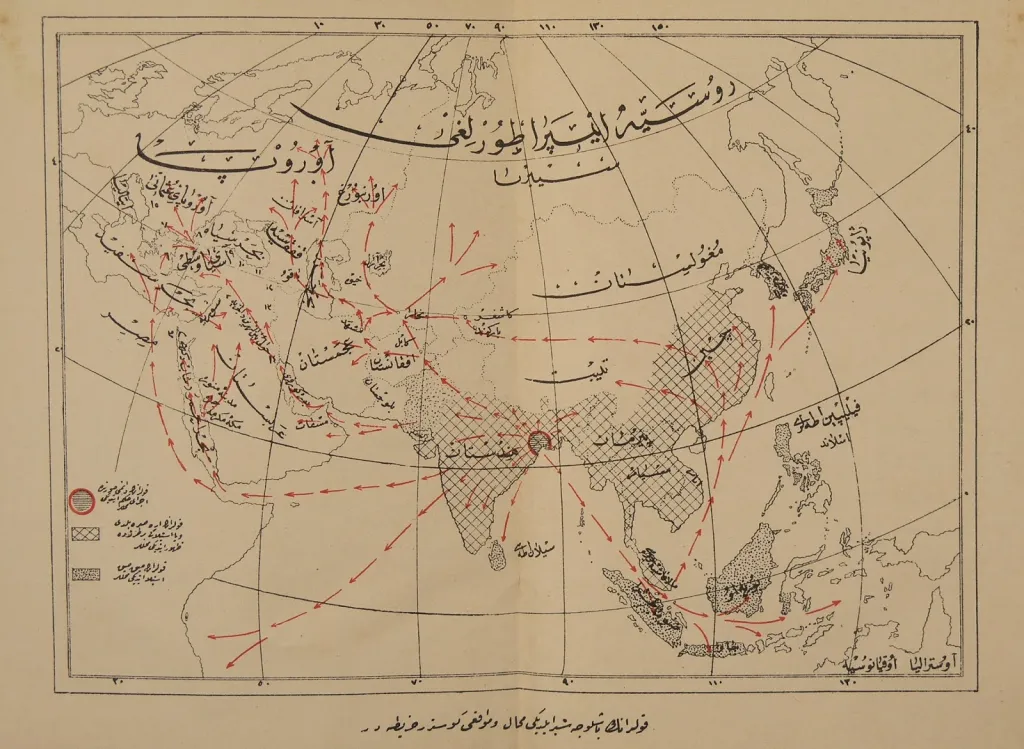
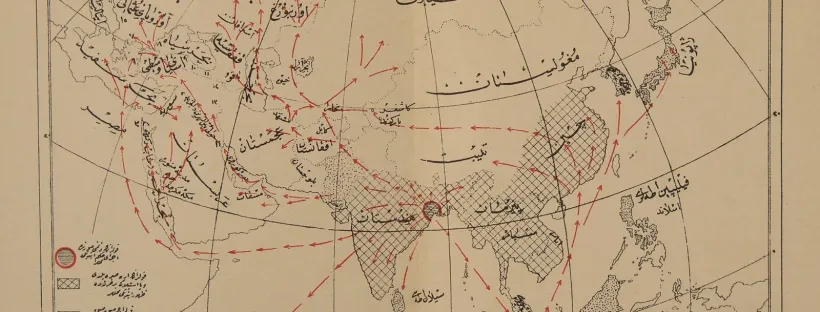
The Ottoman map of the spread of cholera in the world
Sheikh Ulislam issued a fatwa that the quarantine did not contradict the norms of Islam, and a long article explaining the benefits of quarantine was published in the Takvim-i Vekayi newspaper. The chief physician of the palace prepared the Procedures that needed to be followed, and a person responsible for observing the regime was also appointed. The ships were kept in quarantine for 5 days — the «Islamic ships» that arrived via the Black Sea had to wait in the Main Port, all other ships anchored in the port of Istinya. At the same time, plague patients were quarantined in Maltepe Hospital and in the Maiden Tower.
Quarantine began to be introduced more systematically in Canakkale in 1835. Due to the cholera that spread throughout the Mediterranean, a quarantine camp was set up in Canakkale, and ships bound for the Marmara Sea and Istanbul were delayed here. Special certificates were issued to captains of ships waiting in quarantine. Quarantine points have been deployed in Istanbul. During the quarantine exercises, it was determined that each ethnic group needed its own hospital, so Jews and Karaites who did not have their own hospitals were allowed to build them.
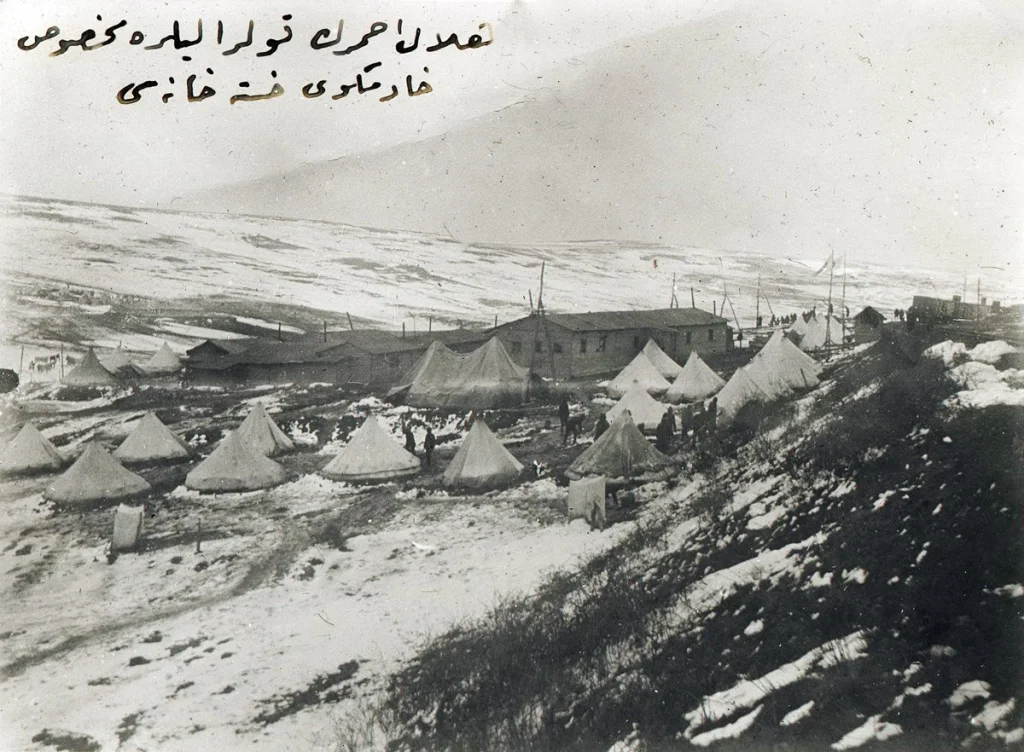
Photo caption: Red Crescent Hospital in Khadymkei for cholera patients
In 1839, the Sanitary Commission issued a 26-point Order on quarantine measures in ports, which specified in detail how ships should behave in ports, what ships suspected of transporting infected people should do, and general quarantine rules.
The doctors wore special oilcloth clothes with a white cloth «brooch» on the collar. A stick was also included in the uniform to keep anyone away from him.
Despite all the measures taken by the state and the application of quarantine for almost 10 years in a row, the people could not come to terms with some medical requirements. A sad example of lynching occurred in Amasa in 1840, where Dr. Paldi served as the doctor in charge of quarantine. Goaded by the mullah and the imam at prayer, the crowd leveled the quarantine medical center and, bursting into the church where Paldi was trying to hide, tore him to pieces. His widow and child were given a maintenance allowance of 250 kurush by the state. Two instigators got off with a three-month exile in Gelibola.
Quarantine was applied to everyone, but the conditions of detention were different. In 1843, Prince Albert, the brother of the Prussian king, who arrived in Istanbul, was given a mansion in Yosilkei to wait out the quarantine. The German ambassador, who returned to Istanbul, appealed to the authorities with a desire to isolate himself. His request was granted, and a four-room barracks was built for him on a hill on the outskirts.
In 1851, three diseases requiring quarantine were identified in Paris – plague, cholera and yellow fever; the duration of quarantine for all countries was set at 15 days.
The Urla Quarantine Island was founded near Izmir, where ships bound for the Ottoman Empire stopped. Crews, merchants and travelers were checked by a team of doctors, disinfected, and if any symptoms were detected, they were sent to the infirmary here. Disinfection devices are still safe and sound. Urla is not the only island in the world that has been used for such purposes, but it is the only one that has survived. It is planned to be restored and opened as a museum.
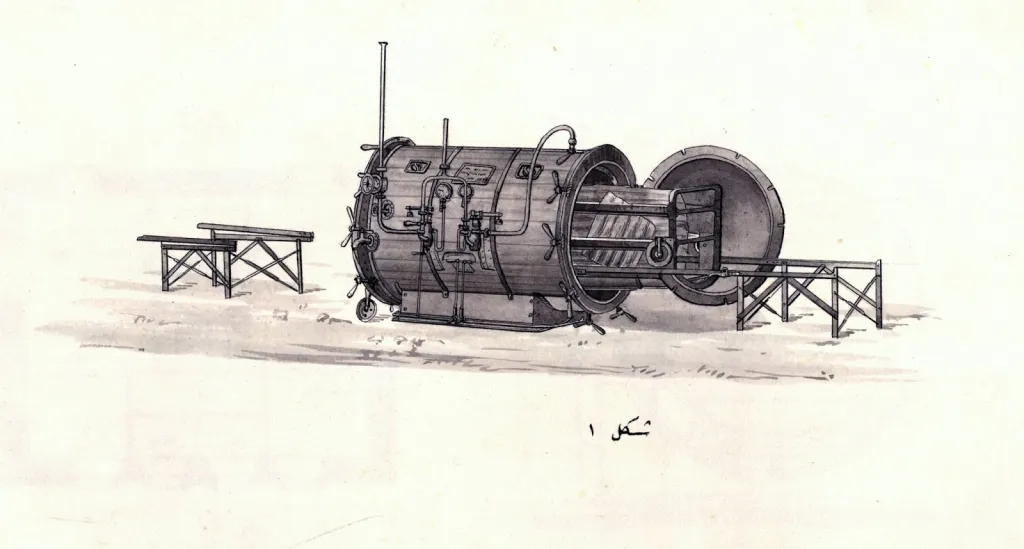
The scheme of the disinfection device in the Url
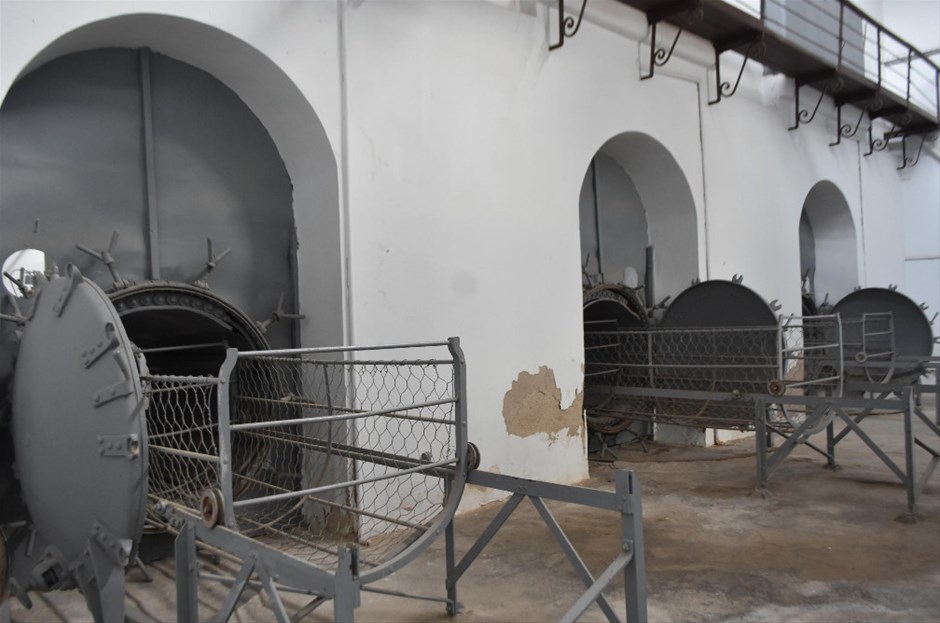
Disinfection devices in the Url. 2020 y.
Urla Quarantine Island