
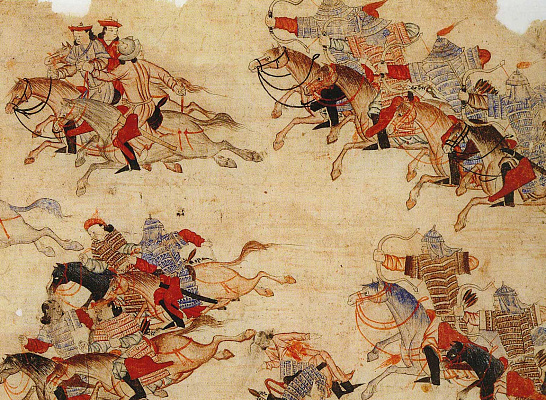
In ancient times, many nomadic tribes lived in the vast steppe expanses of modern Mongolia and the northern regions of China. Each of them suffered its own fate. Some gained power, others became the basis for new nationalities, and others simply mixed with neighboring ethnic groups.
The Xunyu (also called Hunyu) belonged to such warlike nomads. They became one of the most ancient peoples, referred to in Chinese sources as the ancestors of the Xiongnu, the great conquerors of the past. What does the history of Xunyu reveal to us? Where did these people disappear to?
Information from ancient times
There are very few references to the Xiongyu themselves, but information about them can be found in the context of the Xiongnu origin. In his “Historical Notes” (“Shi Tzu”), Han historian Sim Qian writes that after the collapse of the kingdom, the prince of the Xia dynasty and his subjects went to the northern lands.

There, in the harsh steppes, they mixed with the Xunyu people who ruled in these parts. From these data alone, it can be understood that by the 18th century BC, the Xunyu were entering their heyday, asserting power in the steppes.
Most ancient Chinese historians considered the Xunyu to be the forerunners of the Xiongnu tribes, who became known as the warlike conquerors of new lands. A number of ancient scholars claim that the Xiongyu themselves were the Xiongnu, but their early name was used.
New studies of ethnogenesis
But, as you know, the research of the distant past is very different from the conclusions of historians of past centuries. In the case of Xunyu, little has changed. In the 19th century, the Chinese historian and philologist Wang Gouwei conducted a detailed study of the inscriptions on bronze, various features of the culture of the Xunyu and a number of neighboring tribes.
His research became the final argument in favor of the theory that the nomads were the ancestors of the Xiongnu. Wang Guowei argued that the Xiongyu, Zhu, Di, and Hu formed different parts of a single ethnic group, which later history would know as the Xiongnu.
Historian N. Ya. Bichurin in his writings writes:
“Hunyu, Xianyun, and Xiongnu are three different names for the same people, now known as the Mongols.”

But how did the Xunyu themselves appear? Here, oddly enough, most historians unanimously assert that the most logical is the Turkic theory of origin. Here again, we can refer to the ethnogenesis of the Xiongnu. The famous historian S. G. Klyashtorny considered it indisputable that these nomads belonged to the Turkic peoples.
Modern researchers know very little about Xunyu. Remarkably, the opinion of them as a people has hardly changed over several millennia. Both historians of Ancient China and experts of our time consider them to be the ancestors of the Xiongnu people.
This means that it is incorrect to say that the Xunyu have disappeared, because their traits have manifested themselves in other tribes. Moreover, the followers of Xunyu became known as powerful conquerors who managed to conquer a significant part of the lands of Asia.