
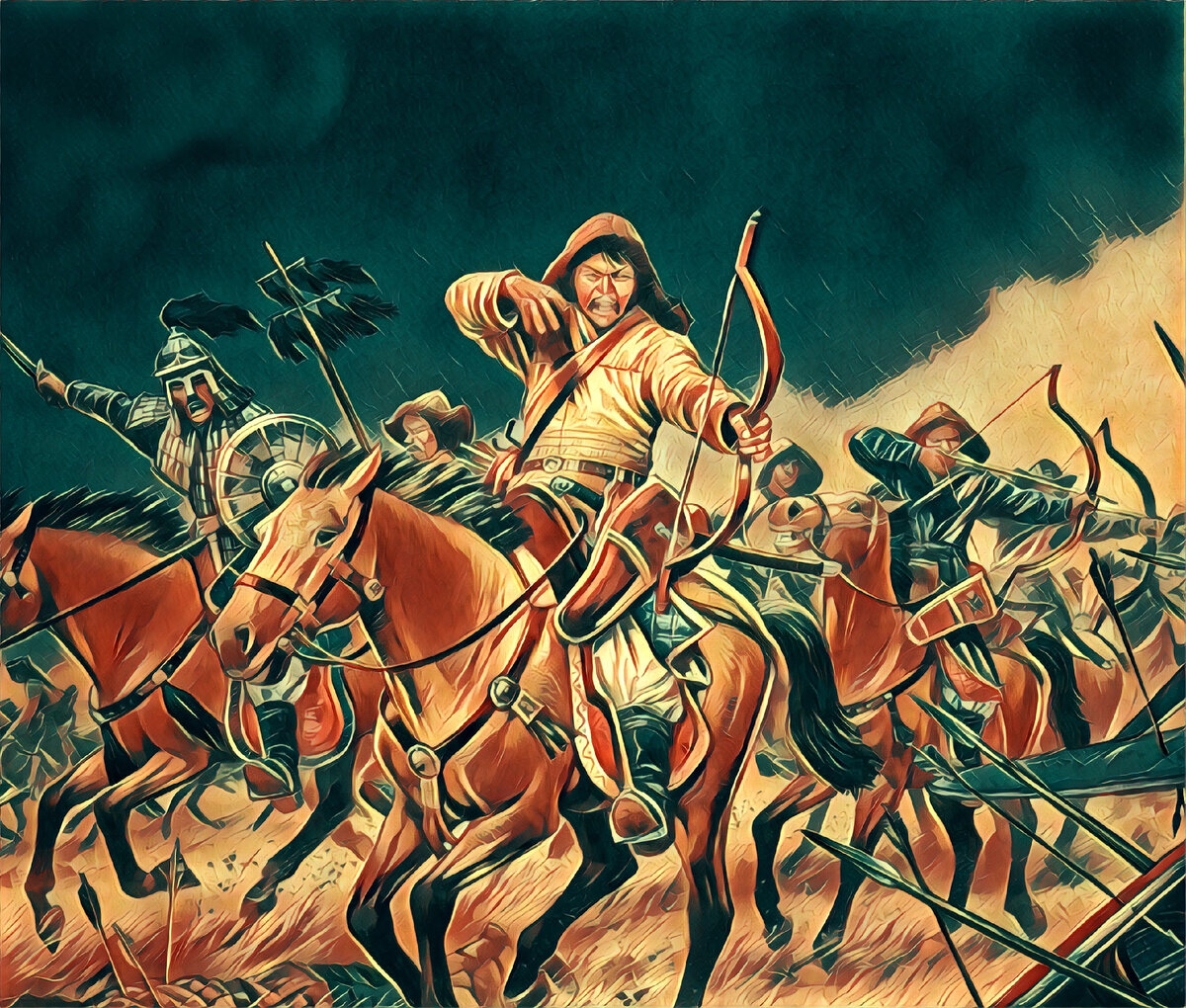
There are too many supporters of alternative history in our time. However, they did not appear yesterday or today – there was no Internet before, so the «alternative scientists» were sitting in their rooms, and they were composing all sorts of pseudoscientific hysterical facts without mass publicity. Let’s just accept the fact that there was a Mongol-Tatar invasion of Russia, and the argument of the «alternatives» that such a huge army simply could not overcome several thousand kilometers due to lack of food does not stand up to criticism!
Principles of nutrition of the Mongol-Tatars
They are nomads to the core, they have never sat still, their lives are based on constant movement from one land to another. Well, if that’s the case, then their whole way of life, including the issue of food, should be built very «mobile», and in such a way that:
-There were enough food supplies for many months;
-the food would be very high in calories;
-the products would not take up much space.
The best option is to take an entire city with you, which, together with the army, would move across the steppes. They were the army of Genghis Khan and Batu.
These armies had kitchens with them, live supplies of provisions, that is, cows, sheep, and horses (especially a lot, the entire gastronomic culture of the Mongol-Tatars was built on them, and even the modern Mongols are based on them). Well, if you have a whole city with relatively complete cooking facilities, then there are no problems – you can travel huge distances without damage. In addition, these nomads are bandits who were happy to plunder towns and villages they encountered along the way, and this is an additional source of food.
The rear of the Mongolian army
Food for Batu’s army
So, the concept is clear – a lot of calories, little volume and weight. They fit this description perfectly.:
kurut;
Bortz.
Kurut is a kind of cheese made from any milk, whether sheep’s, horse’s, or cow’s. In a special way, the «billet» was fermented, molded into small balls, and then dried in the sun. Hard as a stone, this «almost cheese» could be stored for decades, as long as there was no direct contact with water. If necessary, the balls can be chewed in their pure form, or boiled in water, making a nutritious broth.

Bortz is something like meat chips, which can be made from any meat, even from a rat (by the way, they were also eaten in particularly difficult times). The product is cut into thin strips and dried in the sun. That’s it, the treat is ready! It doesn’t taste like much, but from our point of view, for the Mongol–Tatars, it was a real delicacy that took up little space, weighed almost nothing, and was high in calories. You can eat it right like that, you can cook the broth together with the kurut.

Both were produced right on the march – the troops had thousands of cattle with them!
Now let’s remember that we are talking about the campaigns of Batu, which began a decade after the conquering «travels» of Genghis Khan. The Mongols have already managed to get acquainted with the ways of preserving the food of other peoples, and also learned how to cook many dairy dishes, including cheeses, cottage cheese and fermented baked milk. After all, everything can be made from horse or sheep’s milk, so the Batu Horde’s diet was full of vitamins, fats, carbohydrates and much more. The main thing is to take everything with you, and if there are problems, then you can rob someone. After all, every warrior had to forage for himself, the Khan owed him nothing!
When food ran out far from the main camps, the Mongol warriors bled their horses – they drank it in small portions, and they could live like this for up to a week, and during that time they would find normal food.
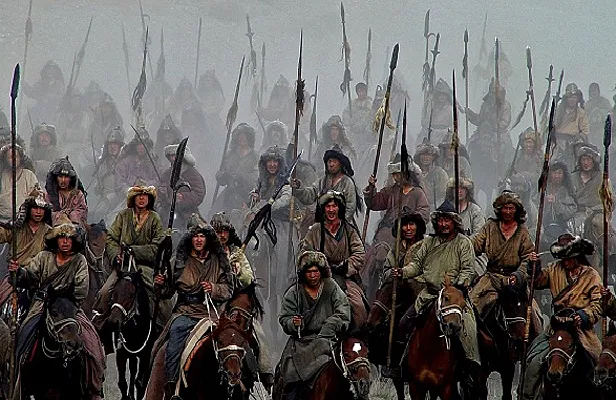
The Mongolian Army (if anyone knows the artist, write in the comments, you can’t find the caption on the paintings)
What were the horses fed
Horses are the main value of the Mongol-Tatars. If a warrior remained in the steppe without a horse, even surrounded by tribesmen, his death became a matter of time. Therefore, you need to take care of the cattle, that is, feed them in a timely and satisfying manner. But there is no need to compare Mongolian horses with modern pampered stallions and mares. They could eat anything, regardless of the thickness of the snow in winter and the heat in summer.
For example, in the winter steppes, horses calmly dug out dry grass, roots and other delicacies from under the snow, even moss, and ate them with pleasure, not even shying away from rot. In fact, it was possible to feed such an animal, which, by the way, is small in size, therefore, not very voracious, without much difficulty. This feature of horses has developed over the centuries of nomadic life – the tribes that Genghis Khan organized at one time moved from one pasture to another for centuries, so the animals learned to eat enough for the future and live on forage for months.
Interesting! In Russia, Mongolian horses enjoyed eating the thatched roofs of peasant houses, which made life much easier for their owners.