
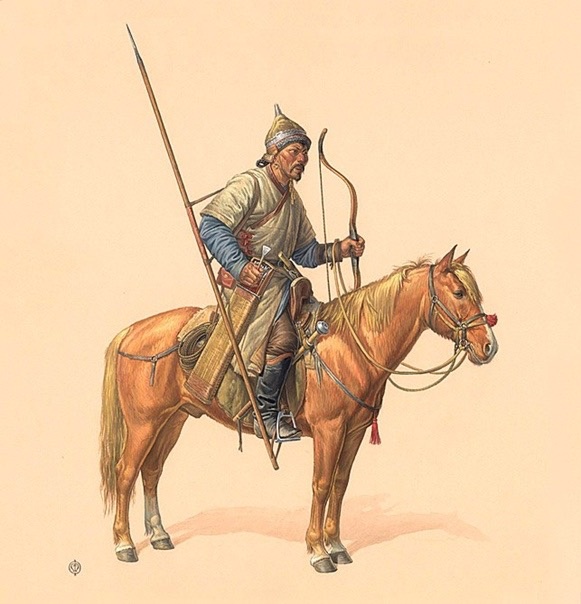
Researchers believe that “massagetes» is a collective name, and it is difficult to argue with this. In ancient times, the best solution to the problem, the opportunity to fight back against enemy tribes, was the union of several nationalities. In the case of massagets, we observe this phenomenon. They included all the Iranian nomadic peoples who inhabited the territory of Central Asia.
Close relationships existed between the Massagetian and Saka tribes, and the largest number of references to them are found in ancient sources. The Massagetes are no longer spoken of in the present tense, but their descendants still inhabit a number of countries today. Who were these people? What do the ancient sources tell us about the Massagetae? Can the tribes be considered extinct?
Massagetes are “fishy” people
Getting to know the people, first of all, you are interested in their name. There are many versions regarding the ethnonym ”Massaget», but scientists still cannot agree on one. Viennese professor Wilhelm Tomasek pointed out in his works that the name of these peoples may originate from “masio”, known from Avestan sources as “fish».
The same opinion was expressed by Strabo, who in his geographical sketches indicated that most of the Massagetes live in a swampy area, and fish is the main food. Interesting details can also be found in the notes of Flavius Arrian, an ancient Greek scientist. During his travels, he visited the land of the Massagetas, after which he noted that in this area “even mutton had a fishy taste.”
The “Soviet Historical Encyclopedia” expresses a completely different version of the appearance of the ethnonym. According to historians of the last century, the names of the peoples contain the bases “mas-” and “sa-”, which could mean that the tribes belonged to the great Saka horde.
Warlike tribes
As ancient historians described in their writings, most of the Massagetes lived in the territories from Transcaspia to Amu Darya. The famous Greek historian Herodotus points out the following: “They say that the Massagetae are a large and powerful tribe.” He also pays attention to the good armament of the tribes.
Herodotus wrote that the Massagetes are excellent with spears and arrows, inseparable from their bows. They cast many objects from copper or gold (which indicates the development of metalworking and mining), and the most common occupations are cattle breeding and fishing.
Herodotus repeatedly compares the Massagetes with the Scythians, which implies a close kinship of the nomads. The historian noted that the Massagetian tribes were excellent warriors who were able to fight both in cavalry and with the use of infantry alone.

Queen Tomiris with the head of Cyrus the Great
Historical facts show that the Massagetes were warlike tribes who were not afraid to engage in confrontation with the most powerful opponents. These nations went to war with the greatest military leaders of the past — Darius, Cyrus, Alexander the Great.
The merit of the nomads was the creation of the Parthian and Kushan kingdoms, which appeared on their lands in the III-I centuries BC. Their rulers actively used the military force of the nomads in the fight against the Indians and Persians.
Gradually, the borders of the kingdoms expanded, but the warriors themselves, going to distant lands, gradually mixed with the local population. This caused changes in the culture of the Massagetes, which invariably acquired borrowings from the customs of other tribes.
How did the Massagetes live?
Procopius of Caesarea described the Massagetae in this way, mentioning some similarities between them and the Slavs.:
«In ancient times, both of these tribes were called spores («scattered»), I think because they lived occupying the country of «sporaden», «scattered», in separate settlements. That’s why they have to occupy a lot of land.”
At the same time, ancient authors noted that the Massagetian communities terrified neighboring peoples. The reason was probably the belligerence and rebelliousness of the tribes. The Latin writer Hieronymus of Stridon reported that hordes of Huns were heading from the region where the “incredible, terrible” Massagetes lived.
If we talk about the lifestyle of the Massagetes, there is not much information, and most of it can be found in the records of Herodotus. Their customs and principles resembled Scythian ones, which is not surprising, because both tribes represented warlike nomads.
In his “History” Herodotus notes that the Massagetae were not engaged in agriculture, did not grow bread, but were excellent cattle breeders. They moved their herds from place to place, depending on the season, in order to find the best pastures.
Nomadic principles and customs
The main deity of the Massagetes was Mitra or Surya, known in a number of religions as the Sun god. People sacrificed horses to him because they believed that the sun, like any horseman, needed horses to carry him across the sky every day.
However, some of the mores of the Massagetae are shocking, both to ancient authors and to modern people. The same Herodotus writes the following:
“If someone among them lives to a ripe old age, then all the relatives gather and kill the old man as a sacrifice, and the meat is boiled together with the meat of other sacrificial animals and eaten. To die like this is the greatest bliss for them.”
However, other historians do not have confirmation of such data, and therefore this information can only be considered an assumption or a misinterpretation, which is often found in the Hellenic writer.

Today, massagetes are spoken of only in the past tense. But why? These peoples disappeared over the centuries, having dissolved with other tribes, but they laid the foundation for the emergence of new nationalities. According to most historians, today a number of ethnic groups of Central Asia can be considered descendants of the Massagets.
As noted by the Soviet historian S. P. Tolstov, the Massagets can be considered the progenitors of such a people as the Turkmens. So, one should not think that these powerful nomads have disappeared without a trace, remaining only in history.