
Western affairs
It is not known from which Xiongnu family the son of Mode, Laoshan, came from on his mother’s side. It doesn’t matter- the main thing is that he was Xiongnu, not Chinese on his mother’s side. He could well have been Maude’s brother, since the latter, according to the law of amangery, took his stepmother as his wife. And although one of her sons was killed by Maude along with his father, the others could still be alive.
In 174 BC, Mode left Laoshan a huge empire, the main foreign policy tasks of which the second Shanyu completely solved. Laoshan now faced the task of strengthening the state and maintaining the status quo.
One of the main tasks was to finally resolve the issue with the Yuezhi (Tokhars), who, having lost East Turkestan, gained a foothold in the Semirechye region. Laoshan solved this problem with the help of the Usuns, who ousted the Yuezhi from Semirechye. In 165 BC, the Yuezhi went to Central Asia, where they conquered the principalities — fragments of the former Greco-Bactrian kingdom.
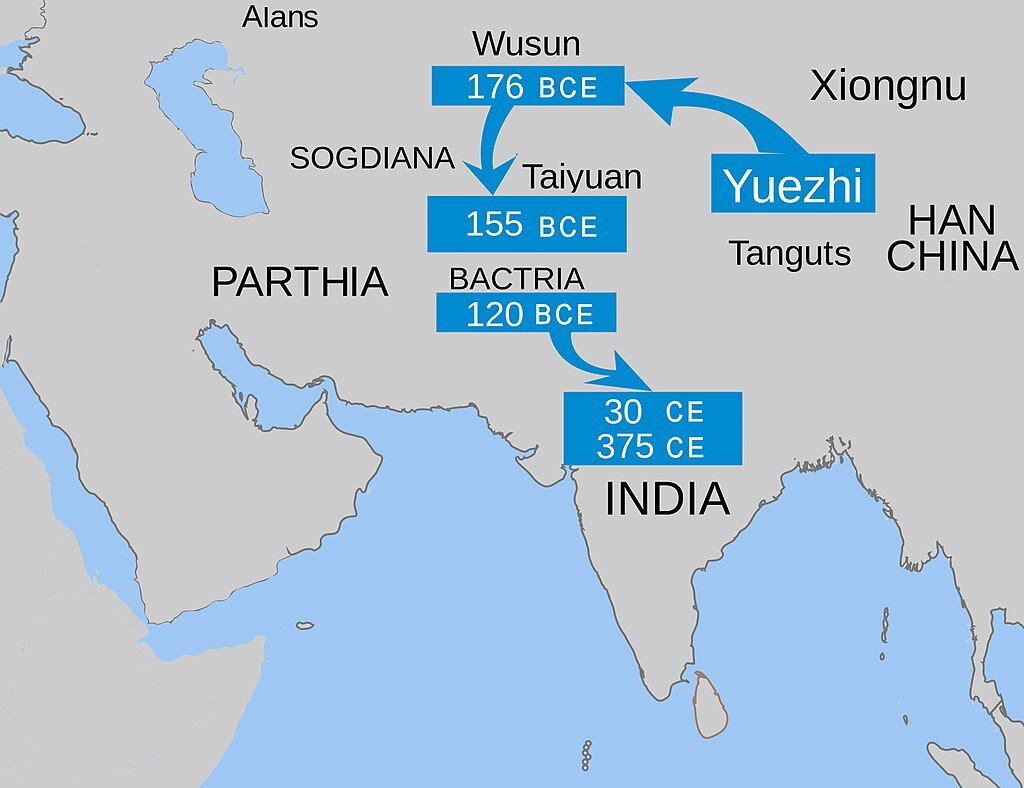
The migration of the Yuezhi across Central Asia from 176 BC to 30
AD did not leave all of them — some of the Yuezhi remained in the Semirechye and merged with the Uisuns, passing on to this people the hatred of the Xiongnu. But under Laoshan, this hatred found no outlet, as the Xiongnu were as strong as ever.
Kangyu and Sogdians became the western neighbors of the Uisun Gunmo (ruler). These peaceful peoples did not seek war, which greatly contributed to the strengthening of the Uisuns, who, having received an excess of warriors from the Yuezhi, began to gradually prepare for confrontation with their former Xiongnu allies.
The Inner life of the Xiongnu under Laoshan
While Laoshan was solving the problem with the Yuezhi, the Chinese penetrated deeper and deeper into the Xiongnu community. They penetrated in the form of the fact that ordinary pastoralists began to actively use the benefits of Chinese civilization. Chinese sweets and rice appeared on their tables instead of coarse meat and dairy food, and the nomads’ wives increasingly wore silk robes instead of coarse sheep’s wool. And this contributed to the fact that the nomads began to depend on these goods and were often willing to do anything to get them.
But China was growing stronger under the Han Dynasty, and there were fewer and fewer opportunities to take away these things.
At the same time, all these things were needed by Shanyu, who paid with them with his bureaucratic apparatus (fugitive Chinese officials who established a bureaucratic system began to serve him).
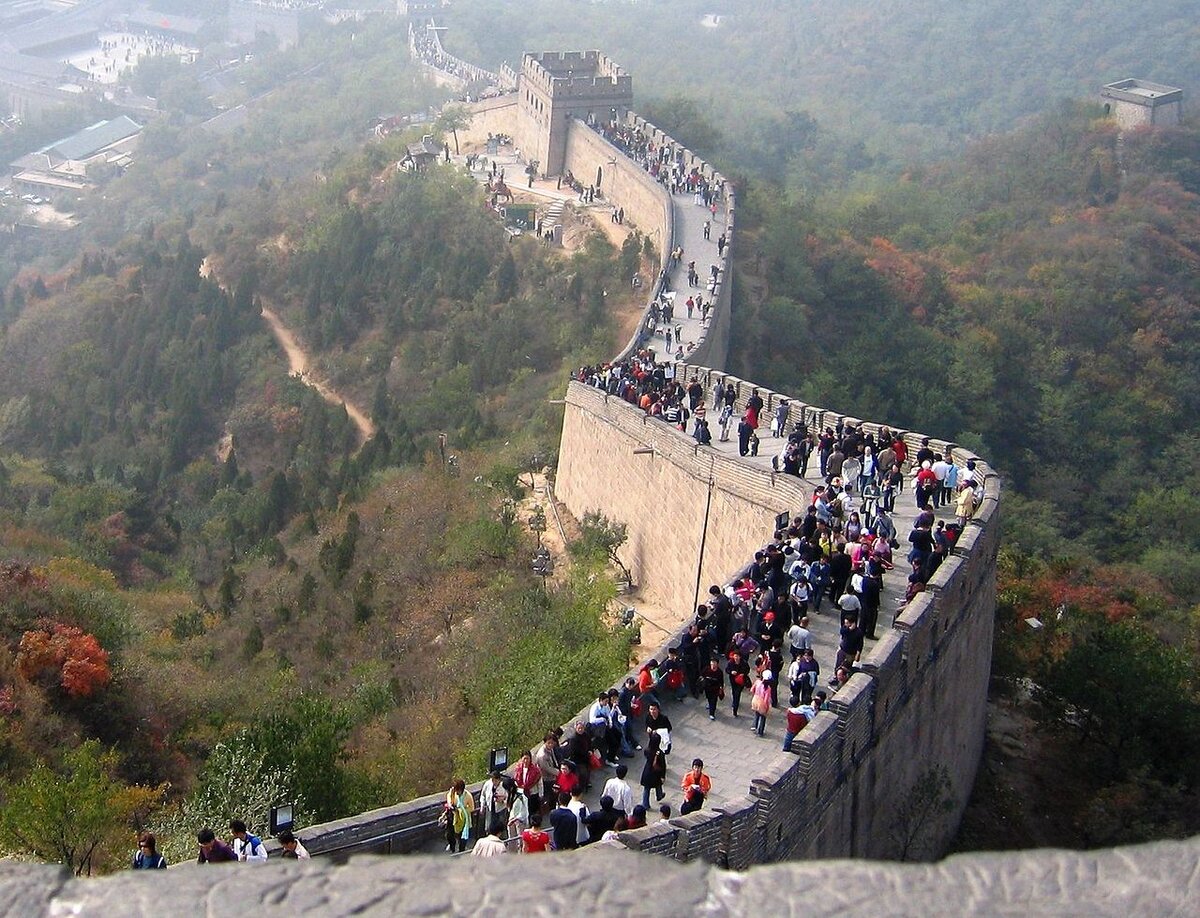
In order to feed the state apparatus, Laoshan went to unheard-of lengths — he taxed all the nomads and demanded that the Chinese authorities allow direct barter between the nomads and the inhabitants of China. If the nomads somehow agreed with the first, then the second was met with resistance from the Chinese authorities, who did not allow not only trade between the Chinese and the nomads, but even ordinary contacts (and then why was the Great Wall built?).
Xiongnu Raids
Having been denied the opportunity to purchase silk and rice for the surplus of the nomadic economy, the Xiongnu began raiding the Chinese in 166.
They were actively helped in this by the local working Chinese peasantry, who so hated their superiors and his minions from Zhongdi (they guarded the wall) which reported all the movements of the Han troops to the Xiongnu patrols.
The wise Chinese emperor Wen-di, who did not have the opportunity to open free trade with the Steppe (he would have been killed by his aristocrats, who received super profits from the smuggling trade), made concessions and agreed in 162 BC to pay tribute to the Xiongnu in silk and rice.
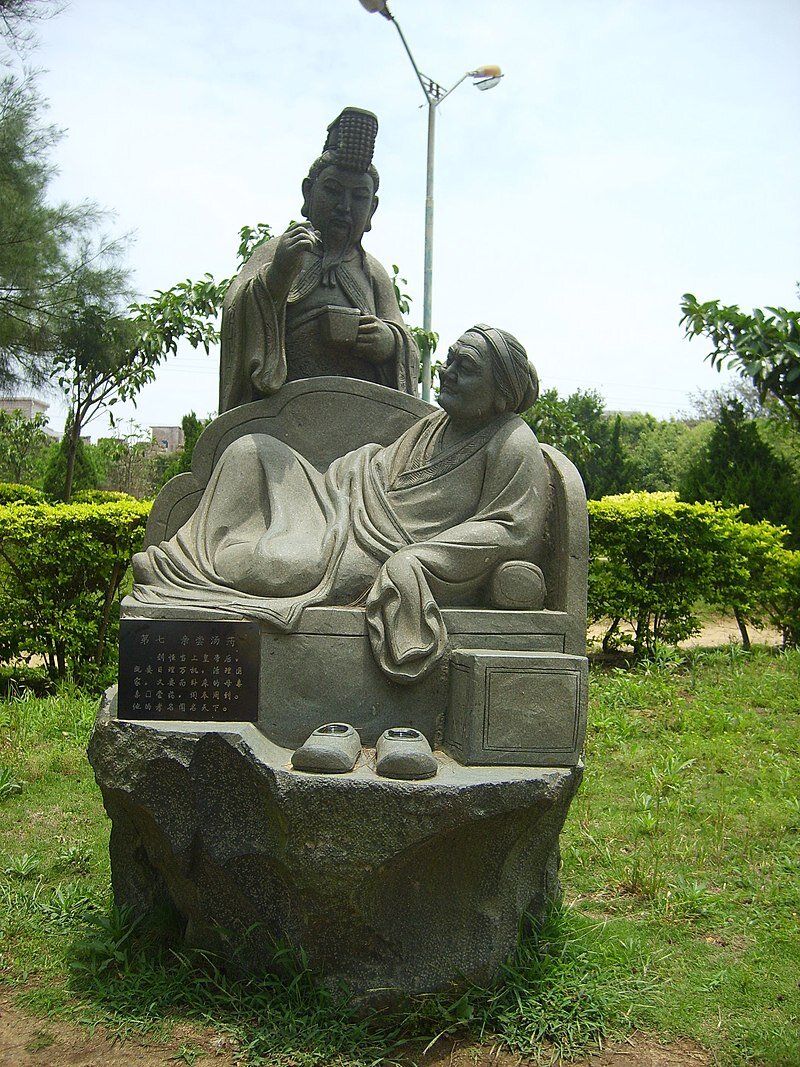
Liu Heng listens to his mother as a model of filial piety
Laoshan died in 161 and his son Junchen became the new shanyu.
He immediately took the bull by the horns and, taking advantage of the uprisings in China, contacted their leaders and invaded Chinese lands. This had an effect in 152 BC, the Chinese Emperor Jing-di married a Chinese princess to Shanyu, and also took the unprecedented step of allowing direct barter between nomads and Chinese peasants. This was a victory not only for the Xiongnu, but also for the Chinese people, who received the right to sell their surplus labor.
Donghu and Dingling
After the defeat of Donghu in 209, they even changed their ethnonym to Wuhuan. The Donghu were less organized than the Xiongnu and lacked the principle of tribal organization. The Donghu, as well as their neighbors, the Xianbis and Toba, lived in villages (camps), which were organized in a certain nomadic territory by living together not with relatives, but with people who needed each other — artisans, nomads, shepherds and warriors of different blood and language. This seriously distinguished the organization of the Wuhuans (and later the Mongols from other steppe peoples) from the Xiongnu.
The undoubted advantage of the Donghu (which would later help them take their place in history) was their elective democracy, when the Khans (military leaders) were chosen by the kurultai (and not by origin like the Xiongnu). But at that time, this did not give priority over the Xiongnu, who were united by inter-tribal discipline.
The European-looking Dinglins in Transbaikalia and Pribaikalye, who had long-standing contacts with the Xiongnu, did not become their vassals and most likely complemented their civilization. They were miners and blacksmiths who forged sharp swords for the Xiongnu and beautiful jewelry for their wives. The Xiongnu had no power over them, and most likely they were allies.