
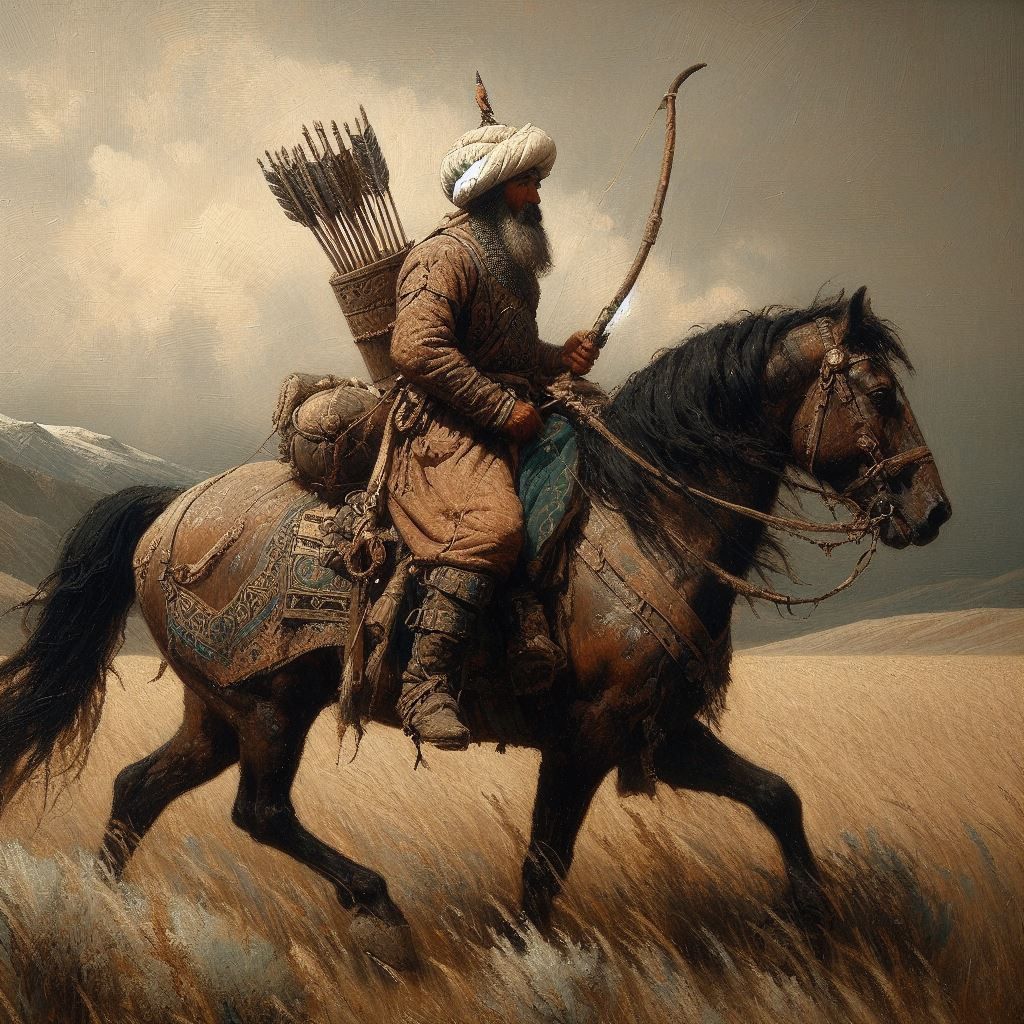
The greatest joy for a man is to defeat his enemies, drive them before him, take their possessions, see their loved ones weep, ride their horses, and hold their daughters and wives in his arms.
Many have heard this quote from Genghis Khan, and many, no doubt, have since felt sympathy for his innocent victims. But our heroine today was far from innocent. So much so that other words of the great Mongol Khan are more fitting for her: “I am the punishment of God. If you have not committed mortal sins, God will not send you punishment in the form of me!”
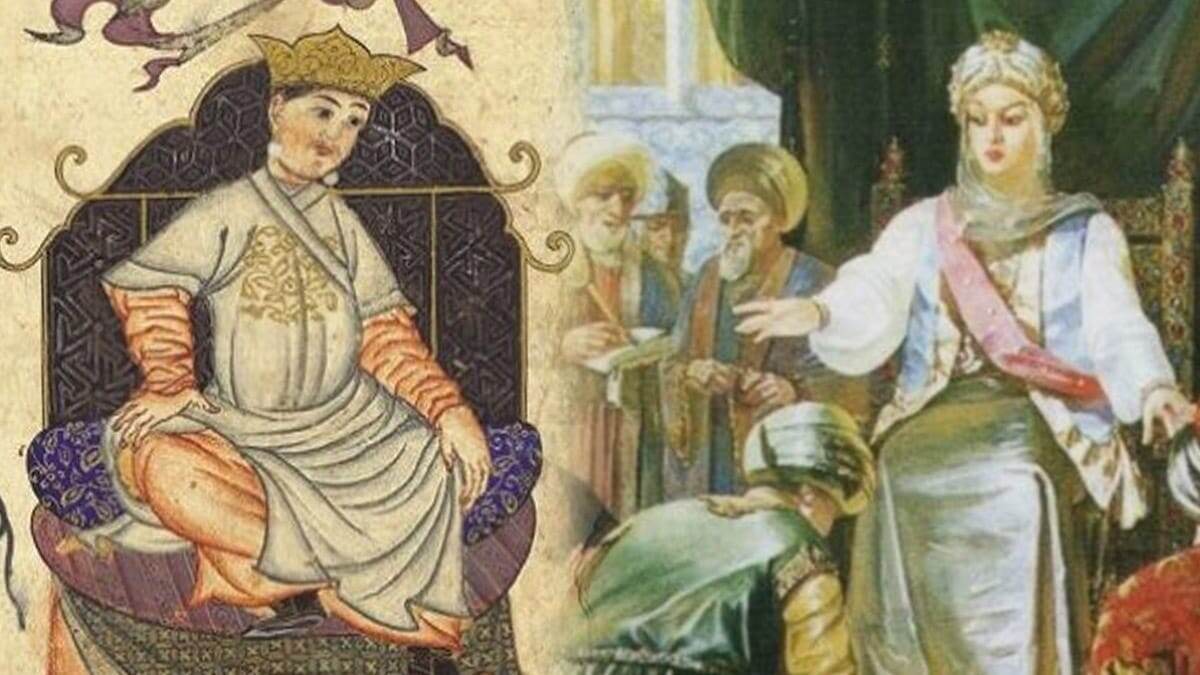
Meet Terken Khatun—mother of the Khorezmshah Ala ad-Din Muhammad II and grandmother of the Khorezmshah Jalal ad-Din. She was the daughter of a powerful Kipchak khan and came from either the Kangli or Bayandur tribe. After her marriage to Shah Ala ad-Din Tekesh, who transformed Khwarezm from a regional power into the strongest Islamic state, many of her relatives entered his service.
Because her kinsmen held important military posts, Terken-khatun was the second, and perhaps even the first, most influential person in the country. At the very least, she had her own administrative apparatus. And if both she and the shah issued decrees, the one issued last was the one that was carried out.
The proud Kipchak princess was fiercely at odds with Ay-Chichek—the Turkmen wife of her son and mother of the crown prince Jalal ad-Din. To a certain extent, her behavior undermined the stability of Khwarezm’s political system and negatively affected the sovereign’s authority. Shortly before the Mongol invasion, she demanded that the eldest and most warlike of the Khwarezmian princes be stripped of his claim to the throne and receive only minor lands in Afghanistan as his fief.
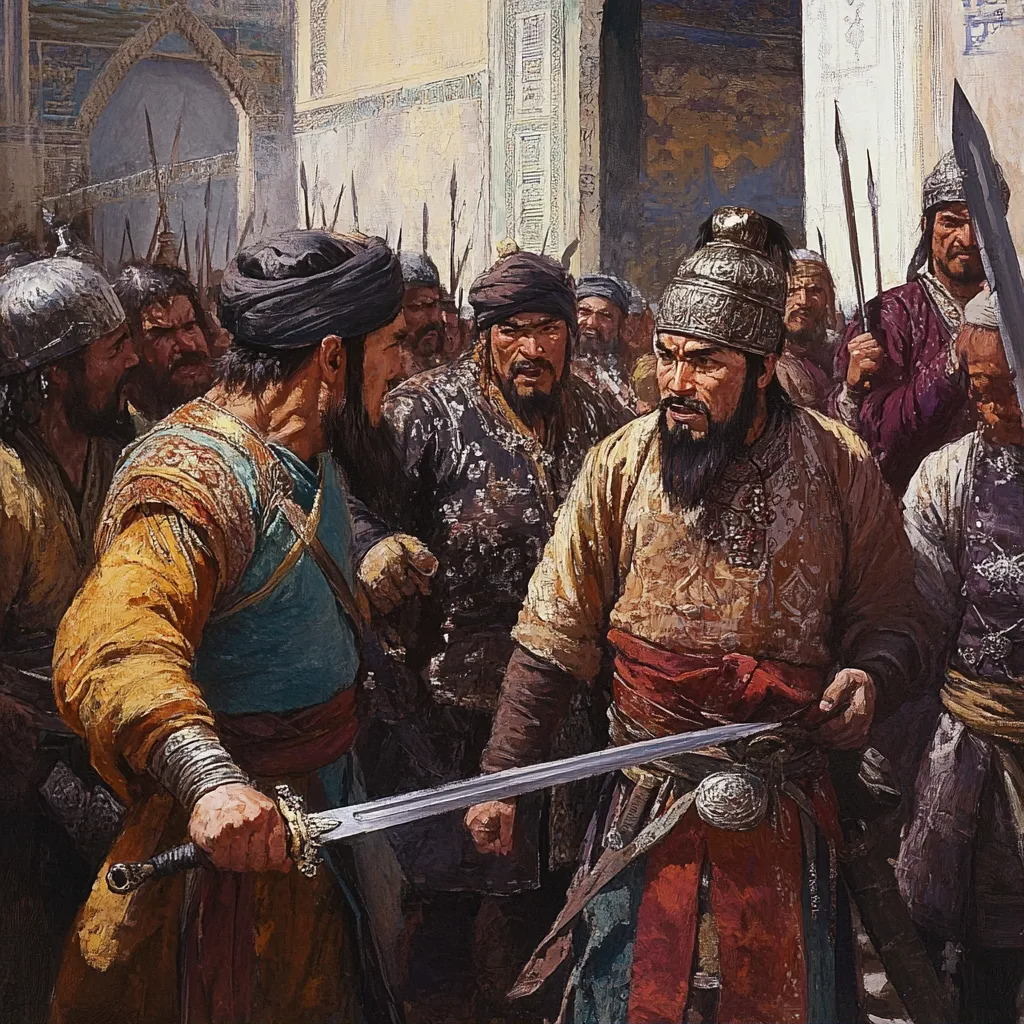
However, this woman definitely had balls. And not just any balls, but cast-iron ones weighing a pood. When her son, the Khorezmshah, abandoned everyone and fled to die on a deserted island in the Caspian Sea, the old khanum remained in the capital and maintained a remarkable composure. She even tried, little by little, to rule the country, until the Mongol advance rendered her attempts to restore order completely pointless.
Then Terken-khatun left the capital, Urgench, leaving behind no one capable of governing the people or organizing a defense. In addition to her numerous young grandsons and granddaughters, she took all the wealthy people who were able and willing to leave. However, as the caravan moved through the Karakum Desert, many fell behind or abandoned their honestly acquired possessions…
Before departing, the wicked old woman did something for which many of her contemporaries cursed her: she ordered that several dozen princes, who were being held hostage in Khorezm, be sent to their deaths. Among them were the sons of Togrul ibn Arslan-shah—the last ruler of the Seljuk dynasty of Iraq.

Only Umar Khan—the son of the leader of the Turkmen Yazir tribe—survived. He knew the desert routes well and managed to guide the caravan of refugees through it. But as the Khorezmians passed through the lands of this clan, Terken-khatun began to suspect that the young prince might escape. Or, worse still, that he would organize an ambush—after which Umar was beheaded.
The fugitives took refuge in the castle of Ilal—the most fortified place in Mazandaran, a mountainous region south of the Caspian Sea. They stayed there for about a year, until it became clear that the Khorezm Shah Ala ad-Din Muhammad had been defeated and had died of illness on an unknown island.
Her courtiers advised her to go to her own grandson, Jalal ad-Din, who was still continuing the resistance. But the khanum replied to them thus:
“Away with him, may he perish entirely! How can I stoop so low as to become dependent on the mercy of the son of Ay-Chichek—that was the name of Jalal ad-Din’s mother—and [be] under his protection, especially after my own sons, Uzlag Shah and Ak Shah?” Even captivity under Genghis Khan and my current humiliation and disgrace are better for me than this!
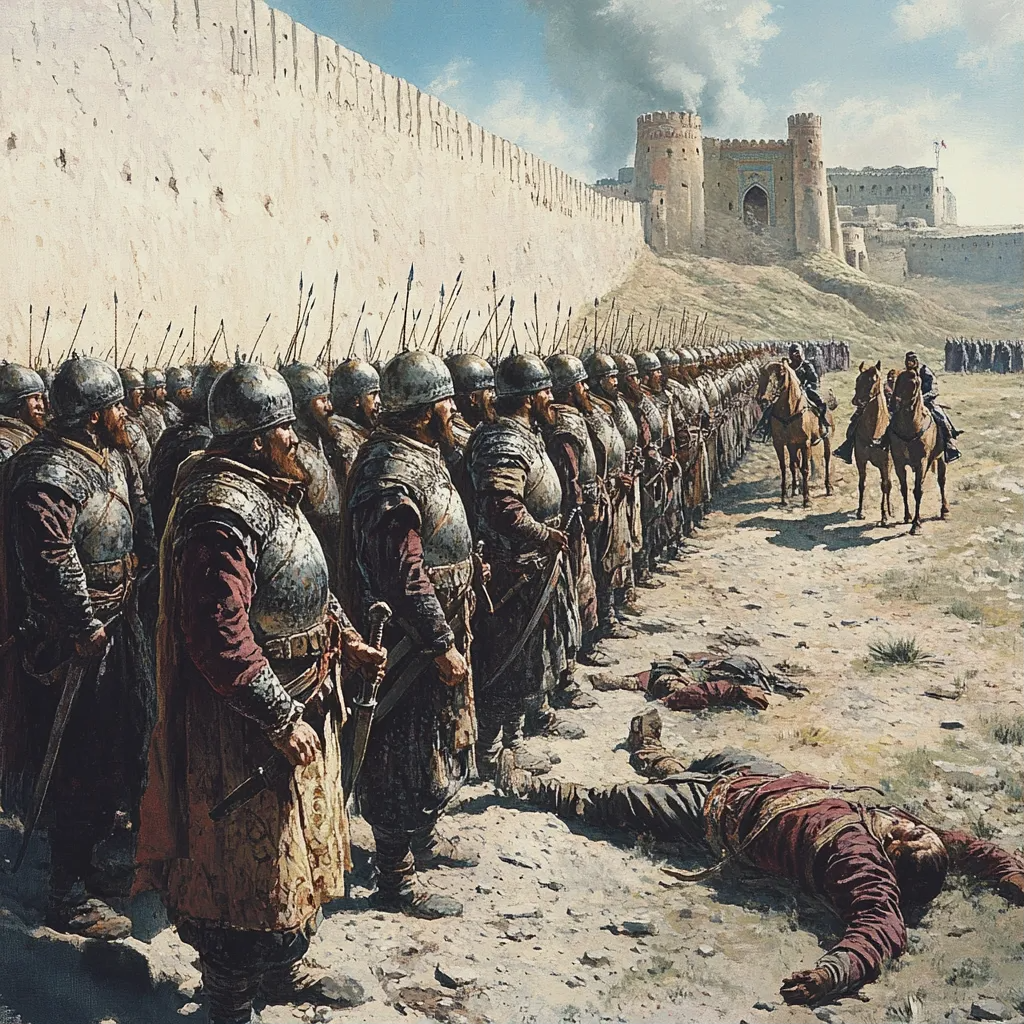
In the end, the fortress of Ilal was besieged by a force under the command of Subudai—one of the finest commanders of the Mongol Empire. Since the Tatars feared not so much resistance as the flight of such high-ranking enemies, they erected wooden walls around the fortress.
However, they were unable to defeat the desperate Khorezmians by force of arms. But Allah had turned away from the Muslims at that time: on the coast, where it usually rains constantly, a drought began that lasted four months. And the defenders of Ilaal were forced to surrender.
All the sons of the Khorezm Shah, the grandsons of Terken-khatun, were immediately sent to their deaths—the new rulers of Central Asia had little use for rivals for power. They spared the last one, to whom the old khanum had become most attached during the siege. Later, the conqueror of the universe ordered the prince to be put to death right before his grandmother’s eyes.
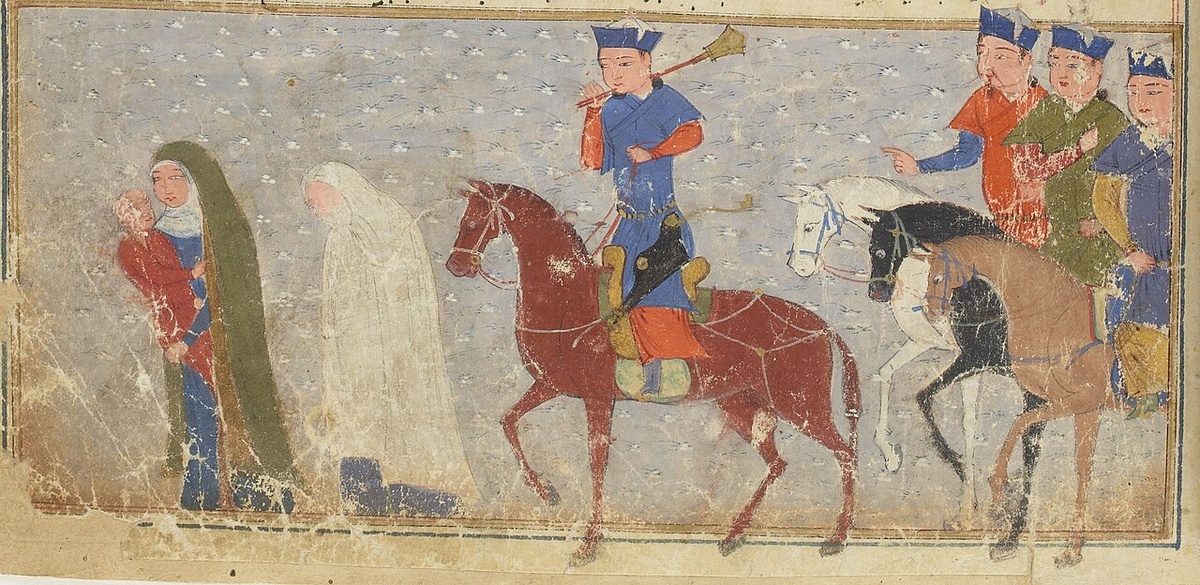
At the same time, the women of the Khorezm Shah’s family were spared that day. The most noble among them were taken into the harems of the Mongol aristocracy, while the princesses went to Genghis Khan’s sons. Khan-Sultan, the only daughter of Ala ad-Din Muhammad mentioned by name, became the wife of Jochi—it was to him that Khwarezm was transferred.
A certain eunuch, who had remained with the khanum and had even accompanied her to Mongolia, later reported to Jalal ad-Din on her fate. Muhammad al-Nasawi, the personal secretary of the new Khorezm Shah, recorded these events in his notes. The servant repeatedly urged the wicked old woman to flee to her only living grandson. But she refused, harboring a deep hatred for him.
In the end, the eunuch fled to his homeland on his own. And he recounted that Terken-khatun’s situation in Mongolia was extremely dire. She was there either as a servant or as a curiosity and a freeloader. At the very least, the old woman was forced to go to “… Genghis Khan’s dining table and bring back a little something, and that food lasted her for several days.”
Nevertheless, this proud woman outlived both her son and her grandson, and passed away after the death of the great khan in 1233.