
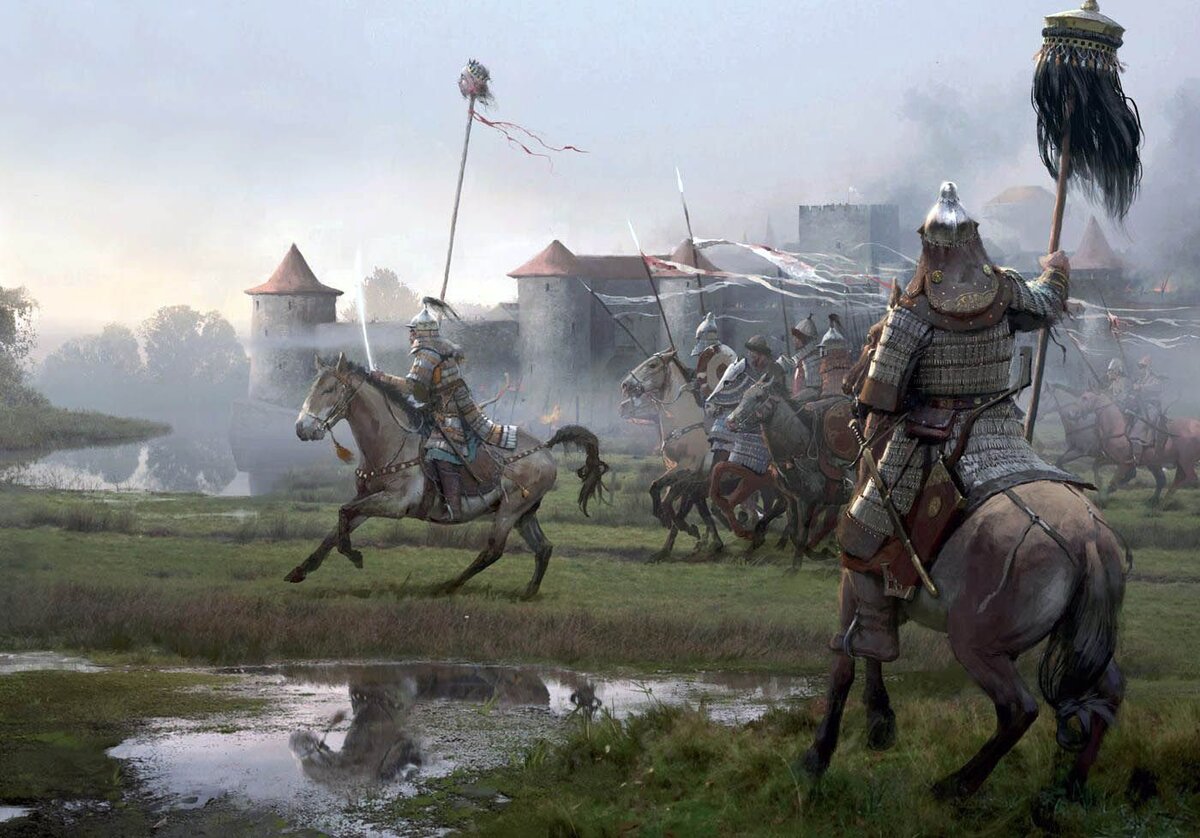
Florentine monks who arrived in the 15th century on a diplomatic mission to the Grand Duchy of Lithuania looked upon the mounted warriors with barely concealed astonishment. Slanted eyes, an incomprehensible language, prayers to a foreign god—and yet they stood in the front ranks of the Catholic princes’ army.
“What kind of Scythians are these?” the Florentine envoys wondered.
They were Lipka Tatars. Muslims serving Christian rulers. Descendants of steppe conquerors who became the elite of European cavalry. And it is thanks to them that the Polish national headdress traces its history back to the Mongolian steppes.
The story of how a remnant of the Golden Horde became a European people begins with a defeat.
In August 1399, on the banks of the Vorskla River, not far from present-day Poltava, two armies clashed. On one side stood Vytautas the Great, one of the most ambitious rulers of medieval Europe and Grand Duke of Lithuania. On the other were the troops of Temnik Yedigei, the de facto ruler of the Golden Horde.
Between them, acting as Vytautas’s ally, stood Tokhtamysh—the legitimate khan, a direct descendant of Genghis Khan, a man of reputation and ambition, but without a throne. It was he who burned Moscow in 1382. It was he who was now attempting to regain power over the Horde with Lithuanian assistance.
The deal was simple: Vytautas supports Tokhtamysh—Tokhtamysh gives the Lithuanians all the Russian lands still controlled by the Horde. In effect—half of Eastern Europe.
Yedigei routed them.
After a crushing defeat, both allies retreated. But a portion of the Tatar army—exhausted, with no prospects, and having soberly assessed their khan’s chances—made a different decision. They did not return to the steppe. They stayed.
And it was one of the smartest choices in their history.
Tokhtamysh continued to fight for the throne for several more years and, around 1406, lost his life in yet another defeated battle. By that time, his former warriors had already received land, homes, and privileges in the Grand Duchy of Lithuania.
It must be said that they did not arrive in a vacuum.
As early as the 13th century, Polovtsians and Tatars had been settling in Lithuanian lands. There were “Lviv Tatars,” and there were separate clan communities—they gradually merged into a single community, which would later be called the Lipka Tatars. Tokhtamysh’s warriors in 1399 are generally considered the last and most significant wave of this migration.
The Lithuanian princes knew how to value good soldiers. The Tatars were not oppressed, not forcibly baptized, and not prohibited from building mosques. They were given land and exempted from taxes. In return—loyal service.
And the Tatars served.
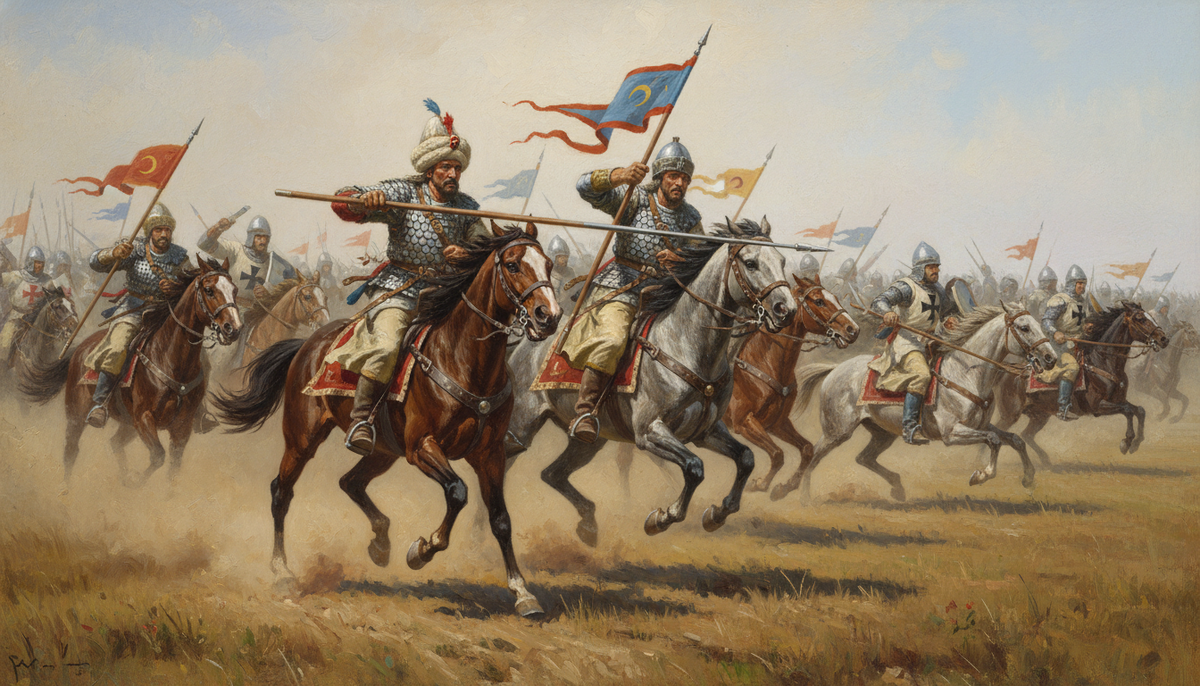
The most telling example is the Battle of Grunwald in 1410. This battle, which broke the back of the Teutonic Order, was made possible in part by the Tatar cavalry. At the decisive moment, it flanked the crusaders. The German knights, accustomed to head-on clashes, found themselves surrounded. Historians describe what followed as one of the greatest defeats of chivalry in medieval Europe.
The flag of the Teutonic Order fell. And among those who brought it down were the descendants of Genghis Khan.
Over time, the Lipka Tatars emerged as a distinct ethnographic group. They themselves insisted on their distinctiveness—claiming, so to speak, that they had no connection to the Crimean, Volga, or Siberian Tatars. “We are our own people,” they said. Researchers disputed this and convincingly demonstrated that the Lipka Tatars’ gene pool is closest to that of the Volga Tatars and the Nogais of the North Caucasus. After all, a fragment of the Golden Horde is still a fragment.
But what happened to the language—that is a separate story.
There were many men among the settlers. There were almost no women. Steppe tradition did not allow for taking families on military campaigns. And the Tatars had to take local women as wives—Belarusians, Poles, and Lithuanians entered Tatar homes.
The language faded away. In some places, it gave way to Belarusian; in others, to Polish. But a strange artifact remained: some communities recorded the Belarusian language using the Arabic alphabet. This was called a “kitab”—literally, “book.” Belarusian text written in Arabic script. There was probably nothing like this anywhere else in Europe.
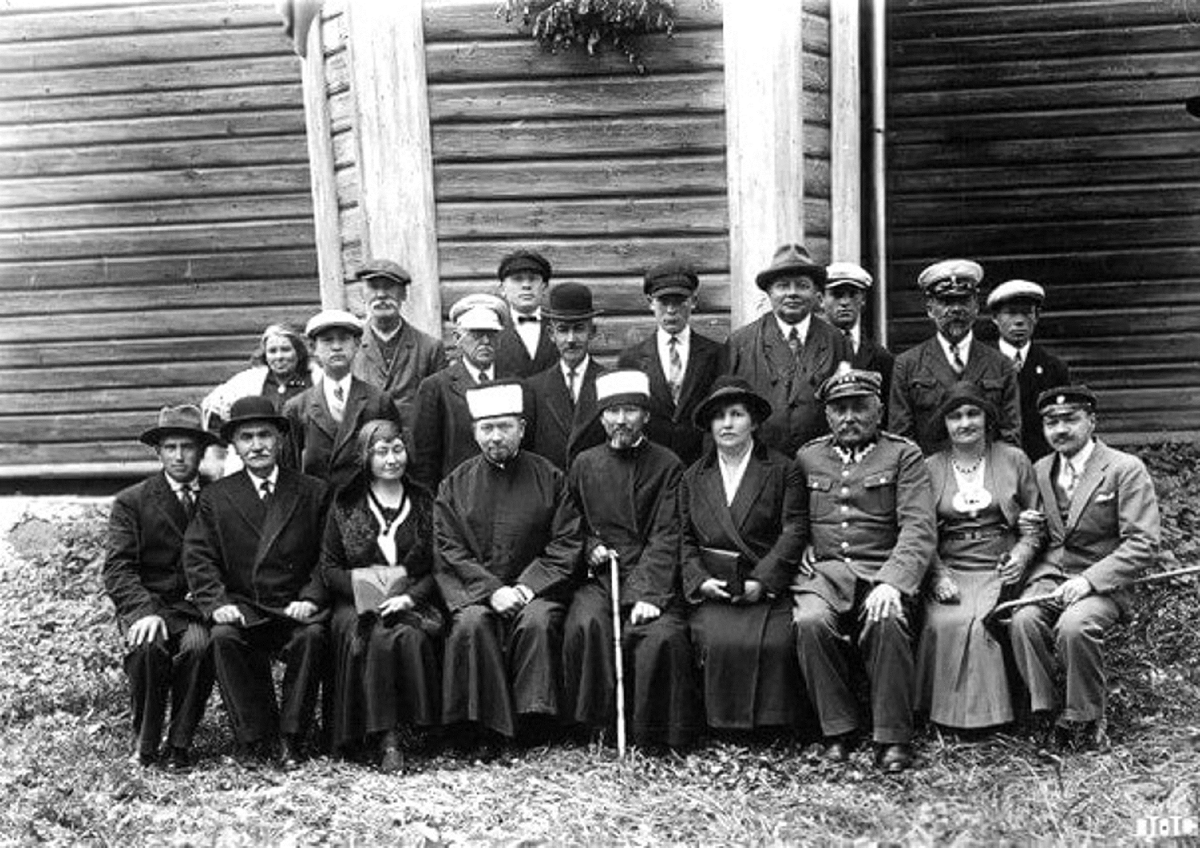
They preserved their faith. Sunni Islam—despite all the pressure from the surrounding Catholic culture—was passed down from generation to generation. Moreover, contrary to the stereotypes of the era, Tatar Muslims had the right to marry Christians and enjoyed full civil rights. A rarity for medieval Europe with its religious wars.
Within the community, a distinct hierarchy was also maintained. Bekes, oglans, sultans—the Tatar aristocracy was equated in status to the szlachta, though without the right to participate in political decisions. Ordinary Tatars served on equal footing with the Cossacks.
It was from this military caste that the ulans emerged.

Light cavalry armed with lances—that is what they were. Fast, agile, deadly. The word “ulan” itself, according to one version, comes from the Mongolian “ulaan”—“red,” in the sense of “brave,” “warlike.” According to another version, it comes from the Turkic “oglan,” meaning “young man” or “warrior.” Both versions, however, lead back to the same steppes.
The ulans also wore a distinctive headdress—a cap with a four-sided top. To this day, you can still see such caps worn by the Kalmyks.
It was from there—from the Mongolian steppes, via the Tatar horsemen—that the Polish confederate cap originated, a national symbol that many consider a purely European invention. This is not the case. It has a steppe past.
By the time of the Napoleonic Wars, Uhlan regiments made up the bulk of the Polish cavalry. Of the 16 cavalry regiments of the Duchy of Warsaw that fought against Russia in 1812, 10 were Uhlan regiments. The tradition brought by a few hundred weary Tatar warriors after their defeat on the Vorskla River gave rise to an entire military institution.
A people born of defeat proved surprisingly resilient.
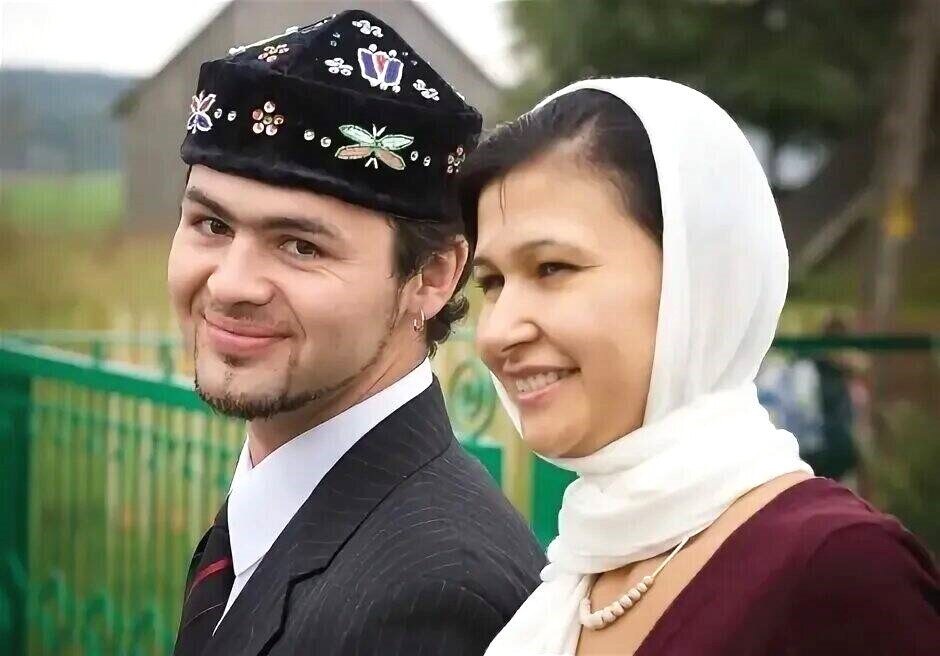
By the beginning of the 21st century, about 12,000 people identified themselves as Lipka Tatars. Most live in Belarus, fewer in Poland, and very few in Lithuania. They pray in mosques, preserve family traditions about their steppe ancestors, and are not particularly surprised when historians tell them that the Polish military cap originated in the Mongolian steppes.
Incidentally, the origin of the word “Lipka” remains unknown to this day. One theory suggests that “Lipka” is the Tatar name for Lithuania. Another suggests it is simply a nickname that evolved into an ethnic designation. Neither has been definitively proven.
These people reached us without a language, almost without a name—and yet they reached us. Perhaps this is the answer to the Florentine monks’ question. Those very “slant-eyed Scythians” turned out to be tougher than they looked.