The role of individuals in history is usually downplayed. It is traditionally believed that rulers have little influence on the course of historical processes. However, anyone who studies these processes begins to understand that the role of individuals is enormous and that sometimes it is a particular ruler who changes entire anthropogenic landscapes.
This can be fully attributed to the personality of the Han emperor Wu Di.
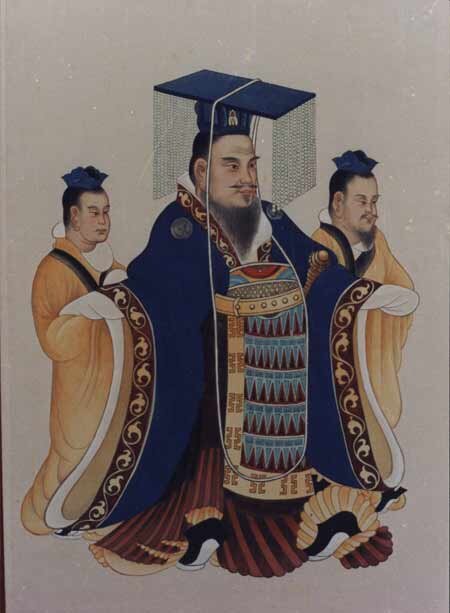
Wu Di (August 27, 156 BC—March 29, 87 BC) was the seventh emperor of the Western Han dynasty in China, ruling from 141 BC to 87 BC. During his reign, Han China dramatically expanded its territories.
Wu Di was a supporter of Confucianism, which prepared people not to merge with nature (as Daoism did at the time) but to serve the state system. He was able to bring Confucians into the bureaucracy by introducing mandatory examinations for government positions. In these examinations, candidates from scholarly families (mostly Confucians) easily outperformed the aristocratic youth, and commoners gained the opportunity to manage the state apparatus.
The aristocracy (the princes-wans) was pushed aside, and the state apparatus, formed from capable officials, immediately implemented a series of reforms: a monopoly on salt and iron was introduced, taxes were increased, and punishments were tightened. Tax revenues began to support a large army, which needed work.
Work was found in the form of paving and securing the Great Silk Road.
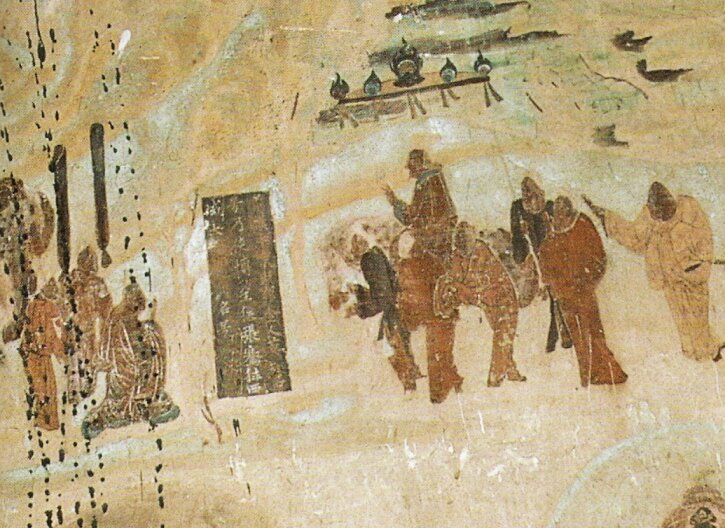
In 139 BC, Wu Di sent the famous explorer Zhang Qian to the West, who found the Yuezhi in Bactria, who had previously actively traded jade with the Chinese.
Zhang Qian’s embassy. Fresco from the Temple of a Thousand Buddhas.
The scout failed to negotiate new jade supplies with them, but he did scout out routes for transporting Chinese goods to Europe (does this remind you of anything from the present day?). Returning to China in 126 BC, Zhang Qian presented a report to the emperor in which he described
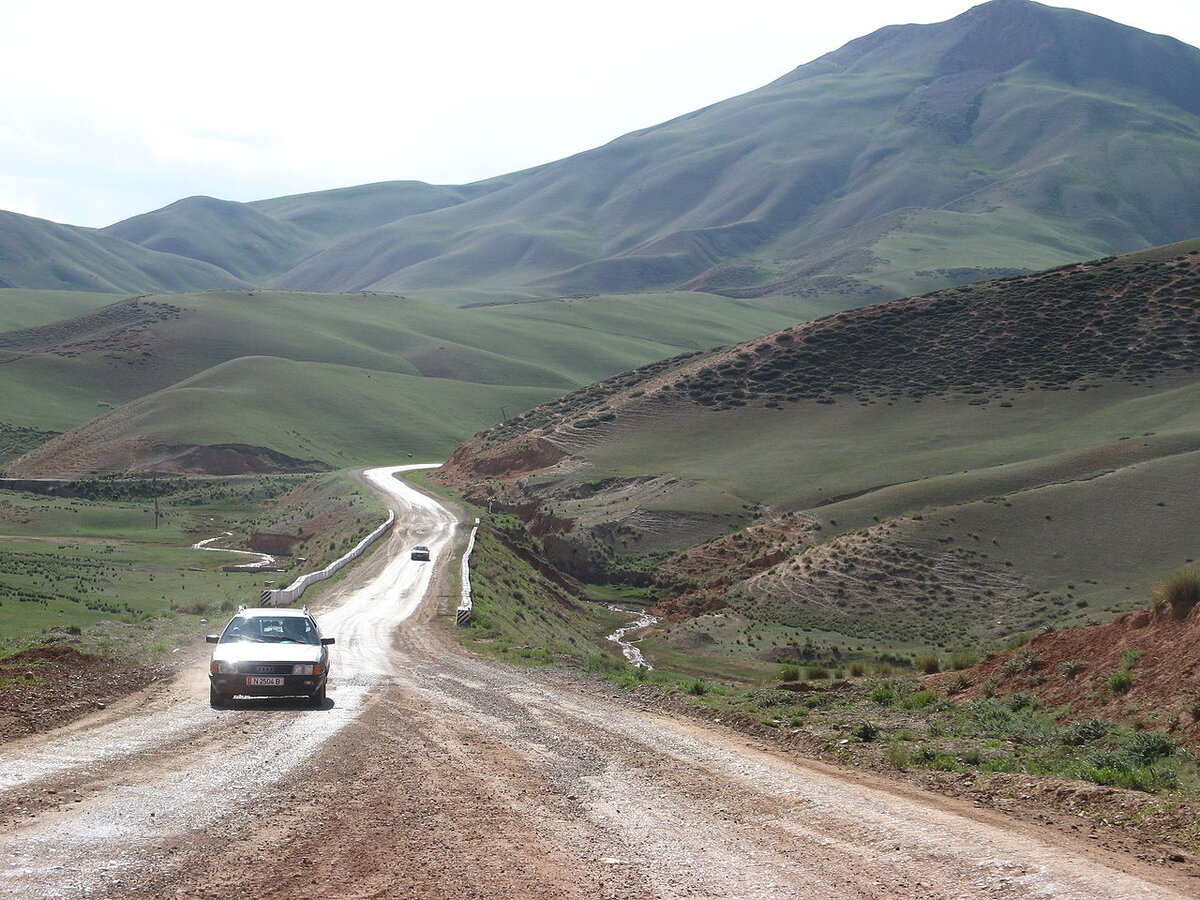
that convenient routes ran through the same places as today — the village of Druzhba in the Almaty region of Kazakhstan and the Torugart Pass in the Naryn region of Kyrgyzstan. Zhang Qian also learned about the market for Chinese goods, which (especially silk) were highly valued in Europe, where they were sold by Sogdian merchants via Iran.
Torugart Pass Wu Di was extremely interested in this information, and a plan began to form in his mind to create a completely Chinese trade route that would bring income only to the Emperor of the Celestial Empire. Indeed, this route is comparable in profitability to modern oil and gas supplies to Europe from the Middle East and Russia.
The emperor immediately set about implementing this plan. First of all, every year, 5-10 state caravans with Chinese goods began to be sent from the Celestial Empire. Most of these caravans did not reach Europe and were mercilessly robbed by nomads on the way or were not allowed to pass by Parthian customs officers.
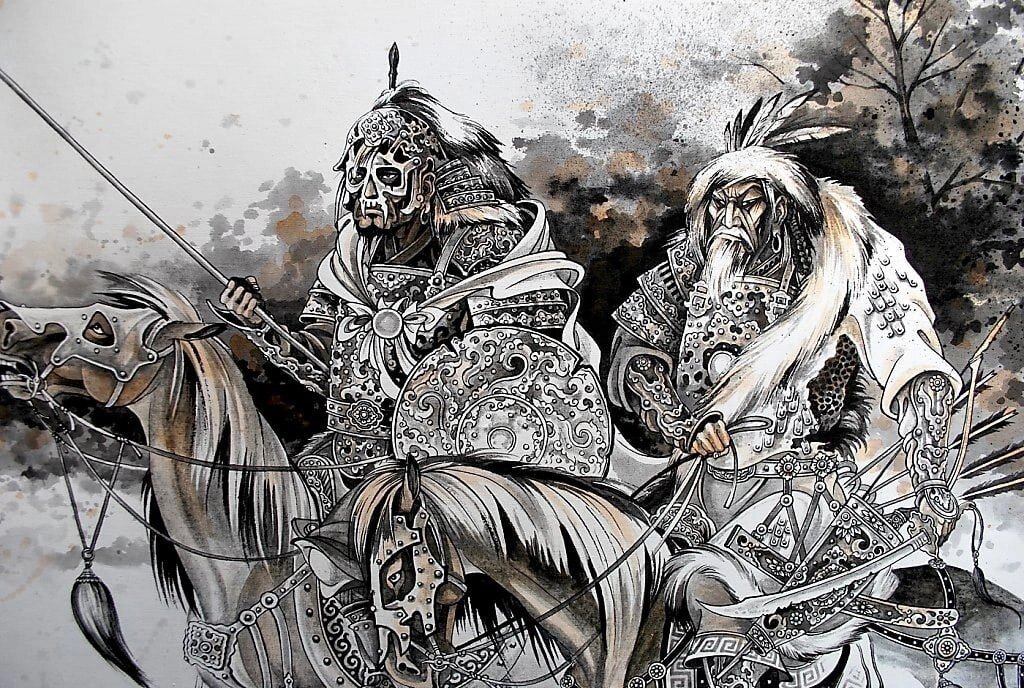
But even the few who made it to Europe and then returned confirmed the profitability of this trade route. Then Wu Di decided to conquer the entire route from China to Central Asia so that Chinese goods could freely traverse the most difficult part of the journey through deserts and mountain peaks. The main obstacle to the realization of his plans was the Xiongnu.
While Laoshan’s son, the warlike and talented commander Junchen, was alive, the Xiongnu were doing well. Under his leadership, they defeated the Chinese, even though the latter were many times more numerous. His only mistake was that in 127, in exchange for territory north of the Great Wall, he left Ordos (now Inner Mongolia), which became Wudi’s base for advancing westward.
After Junqian’s death, his brother Yizhise became shanyu in 126, even though he had no right to the throne—the son of the previous shanyu, Yubi, was supposed to become shanyu. As a result of the civil war, Yubi fled to China and thus became the first political refugee from the Xiongnu. This would later become widespread, contributing to the collapse of the Xiongnu state.
Taking advantage of the internal strife, Wudi decided to put pressure on the Xiongnu, and by 119, his commanders were able to push the nomads so far that they left the border areas with China and went beyond the Gobi Desert, so frightened were they by the Chinese cavalry.
In this way, the Wudi was able to accomplish his main task: to clear the Chinese frontier of nomads. The rest was a matter of technique: fortresses were built in the conquered areas, canals were dug to irrigate agricultural land, and Chinese peasants were resettled there as military settlers. The region began to settle down and acquired the anthropogenic landscape that characterizes Western China (Gansu Province) today.
Thus, the Chinese established their first outpost on the emerging Great Silk Road. This significantly reduced the cost of transporting caravans, allowing them to reach the regions of modern-day East Turkestan unhindered, which became the next target of the Han dynasty’s ambitions. However, they were not yet able to conquer it, as the Chinese were embroiled in protracted wars in Indochina with the Tibetans and Koreans, and there were several devastating floods of the Yellow River.