
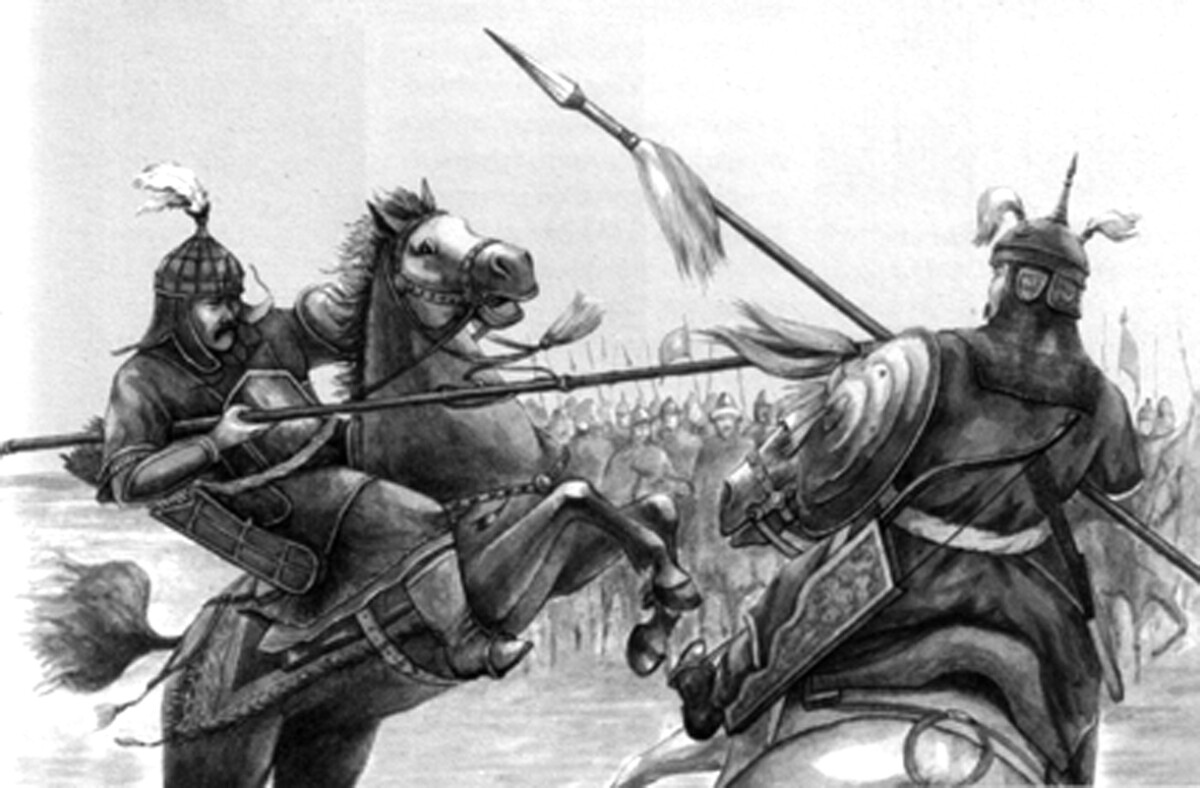
To the West
In the Fergana Valley (known as Dayuan in ancient times), special horses adapted for use in the steppes and mountains have been bred since ancient times (and continue to be bred today). The Chinese of the Han dynasty knew this, as they desperately needed a solid base for their growing cavalry.
Chinese missions were sent to the Davan people to obtain these horses. But the Fergana people were not particularly eager to supply the Chinese cavalry with their horses.
Then the Chinese decided to use the Uisu as intermediaries.
One of the Uisu principalities was then in the Turfan Valley (modern Xinjiang) — the principality of Chesi. They decided to start with it, conquering it in 108 BC. This created a stronghold on the way to the main Wusun possessions in Semirechye and Central Asia.
Shan Yue Wushilu
After the death of the diplomatic Wuwei, the charismatic Wushilu became Shan Yue in 105 BC.
Uwei was a fan of the old Xiongnu traditions and opposed the dominance of Chinese goods and lifestyle. However, he was born in the wrong time — there were too many among the Xiongnu who could no longer do without sweet rice and soft silk. Therefore, Ushilu died suddenly in 102 BC.
The first Chinese campaign to Central Asia
U-di, a man of action, began to prepare a campaign against Davani (Fergana). In 104, several tens of thousands of Chinese soldiers set out on a campaign from Chesh. But the campaign was poorly organized, and the Chinese soldiers began to suffer from hunger. However, they still reached Uzgen (now Kyrgyzstan), which they stormed, slaughtering the entire population. That was the end of their success, and the Chinese, dragging their feet from exhaustion, returned to Chesh in 103. Most of the soldiers died of hunger on the way.
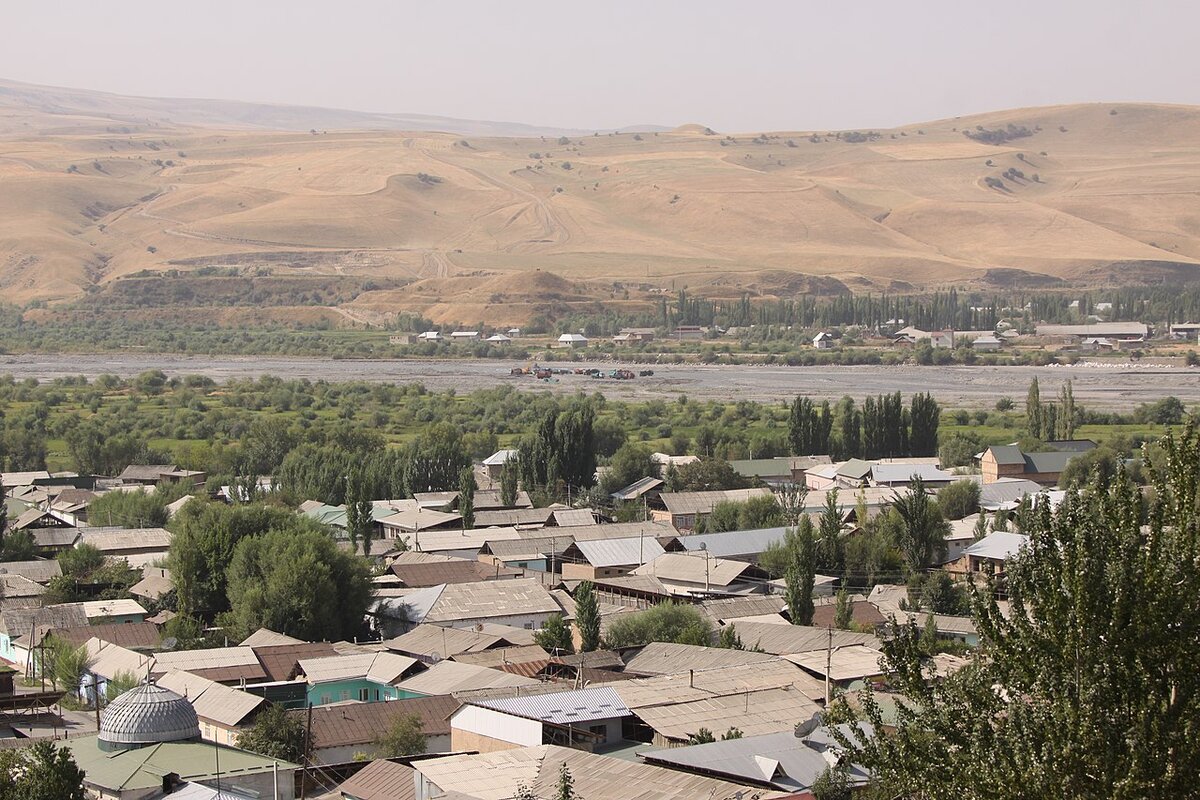
Uzgen (Kyrgyz: Өзгөн) is a city in the south of the Kyrgyz Republic, the administrative center of the Uzgen district of the Osh region.
Preparations for the second Central Asian campaign
In 102 BC, a 60,000-strong Chinese army left Chesh, carrying supplies and everything necessary on more than 10,000 oxen, 3,000 horses, and 1,000 donkeys.
The Xiongnu tried to prevent this campaign by attacking Chinese lands. But the 180,000-strong Chinese army that opposed them did not allow them to run wild.
The campaign
The Dawan aristocracy did not attach much importance to the Chinese preparations:
“China is far from us,” they said, «in the north they are threatened by Hun raids, in the south there is a shortage of grass and water, and on top of that, due to the sparsely populated areas near the road, some parts need food supplies. The Chinese envoy has an entourage of several hundred people and always suffers from a lack of food, so that more than half of the people die of hunger. How can a large army get here?» — N.Ya. Bichurin (Iakinf), Collection of information about the peoples who lived in Central Asia in ancient times, vol. II, Moscow-Leningrad, 1950, vol. II, p. 162
The Dawan people were worried for nothing. The Chinese managed to reach them and besieged their capital, Kushana. After negotiations, the Dawan people were forced to hand over their argamaks to the Chinese, who received several dozen stallions and 300 mares. Thus, the Chinese achieved their goal of obtaining pedigree horses.
These campaigns marked the beginning of the Han Empire’s penetration into Central Asia. In the future, this region will always be (and remains) in the sphere of the Celestial Empire’s long-term foreign policy priorities.