
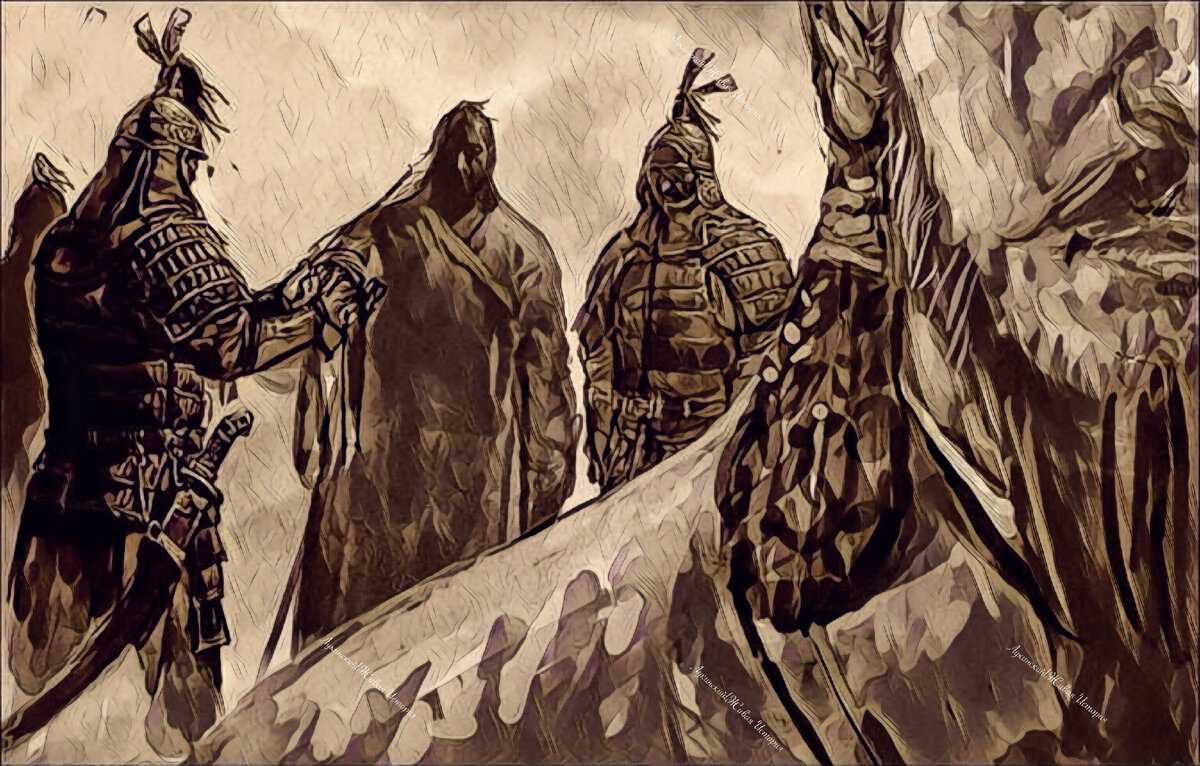
Xiongnu failures
Due to the systematic and energetic activities of the Han Emperor Wu, the Xiongnu suffered more and more defeats and became disbelieving in their own strength, which is worse than losing the war.
In 101 BC, the Xiongnu Shanyu Xulihu did not dare to detain the Chinese troops who had weakened after marching into Central Asia. But it was necessary — they were bringing Davan horses with them, which would become a repair base for the Chinese cavalry. Shanyu’s indecision cost him his nerves, which turned into death for him (as all diseases are known from nerves).
The son of such an indecisive ruler was not elected, and in the same year 101, a noble Xiongnu from the eastern royal branch, Juidihou, was elected by vote.
Juidihou was a man of determination and discretion. He perfectly understood the internal situation in the Xiongnu state.:
There were two camps among the Xiongnu — some wanted close relations with China and these were the original nomads, while others sought confrontation with China — and these were refugees from China of Chinese and Xiongnu blood, who understood that if the Xiongnu submitted to the Chinese, they would face extradition and a painful death with all their neighbors.
Shanyu sided with the defectors and immediately decapitated a possible plot, executing the Chinese embassy and all those who had close contact with it.

Military operations
Juidihou turned out to be not only a wise ruler, but also a good commander.
Emperor Wu, angered by the death of the embassy in 99 BC, sent three Chinese troops to the eastern and western Xiongnu lands. But one detachment retreated with heavy losses, the second was lost in the steppe and barely crawled out, and the third was completely defeated. Moreover, his commander Li Lin was captured, took the oath to Shanyu and he was sent to rule the Yenisei Kyrgyz. Since then, the Chinese have always recognized his descendants as the official rulers of the Yenisei Kyrgyz.
In 97 BC, the Xiongnu defeated another Chinese army, which invaded the steppe in the old way — with columns of infantry under the cover of chariots. They were simply shot down like partridges and the Chinese fled with heavy losses. After this defeat, the Chinese commanders finally realized the need to form a highly mobile army.
The New Shanyu and the glorious victory of the Xiongnu
In 96, the talented Shanyu Juidihou died. His eldest son, Hulugu, was appointed in his place. He had to fight against the new Chinese army.
For ten years, the Chinese have been breeding offspring from Davan horses. It is impossible not to pay tribute to the hard work and skill of the Chinese people, who, having engaged in unusual horse breeding, were able to breed numerous offspring of mountain horses in other climatic conditions.
Thanks to the persistence of Chinese horse breeders, a repair base for the Chinese cavalry was established by the year 90. This made it possible to supply 140,000 Chinese cavalrymen with war horses along with clockwork ones.
In the 90s, three Chinese mounted armies marched from different directions against the Xiongnu.
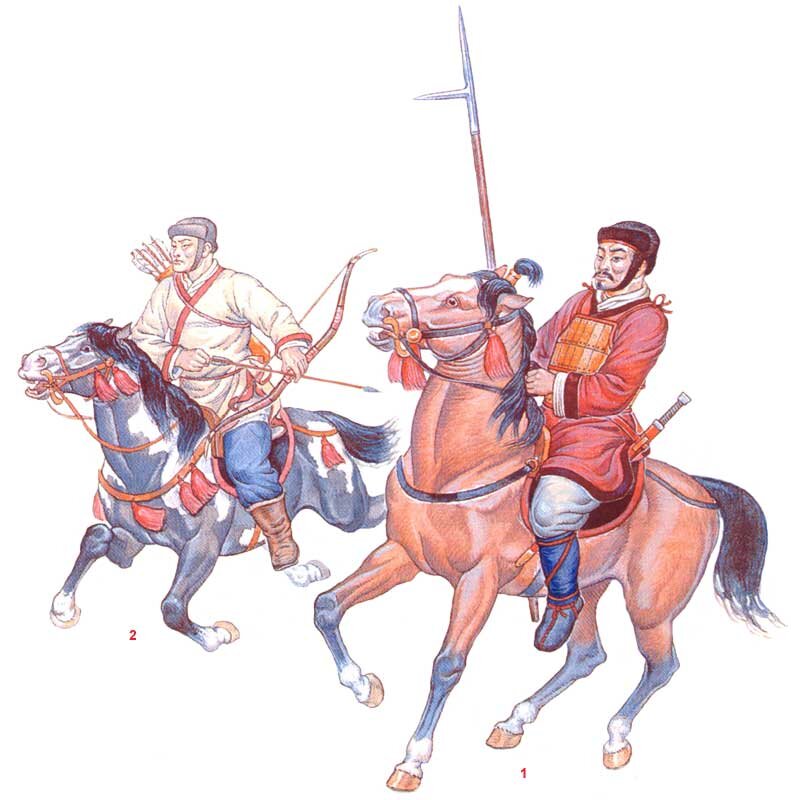
The Western army was able to achieve operational success by reconquering the principality of Cesi. The Eastern army wandered through the steppes and mountains of Manchuria for a month, found nothing and no one, and was forced to return to their homeland without a grain of salt.
The strongest central army of 70,000 cavalry and with the support of 100,000 wagons marched briskly to Selenga. Along the way, her wagon train fell behind and became easy prey for the nomads. After that, the Chinese had to retreat across the barren lands, losing men and horses. At one of the camps, the Chinese sentries did not notice how the nomads had dug a moat around the camp from three sides. Then the Xiongnu attacked the Chinese camp from one side and they were forced to surrender along with their commander-in-chief Li Guang-li.
It was a complete military rout of the Han Dynasty, which no longer had an army to resist the nomads. But the Huns did not invade the Celestial Empire, and their Shanyu Hulugu demanded from Wu di the resumption of free trade between the steppe and Chinese peasants. The Chinese also pledged to supply rice and silk annually to the Xiongnu court. Thus ended the inglorious attempt of Emperor Wu-di to finally defeat the steppe nomads.