
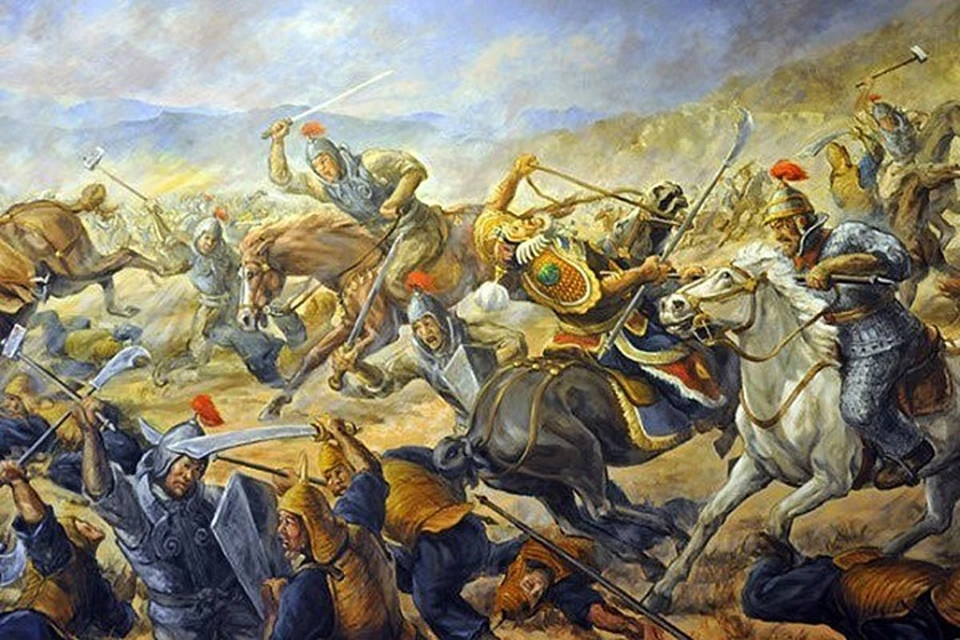
There were many glorious peoples who managed to make their mark on history: the Romans, the Byzantines, the Arabs, the Vandals, and many others. But historians have been particularly intrigued by the wild Iranian nomads, who managed to travel from Khorezm all the way to Africa, leaving traces of themselves throughout nearly all of Eastern and Western Europe.
The Alans, whose descendants include a number of Caucasian peoples living today.
There is no precise information on where exactly the Alans, an Iranian tribe that led a nomadic lifestyle, came from. According to the prevailing theory, they originally roamed Central Asia, somewhere in the territory of modern-day Uzbekistan. There, before the arrival of Turkic-speaking tribes (the future Uzbeks), the region was inhabited primarily by Iranian-speaking tribes, one of which was the Alans.
Since the image of a nomad has become ingrained in many people’s minds as that of a Scythian, the Alans were initially classified as belonging to that ethnic group. Although both peoples were Iranian-speaking, they were otherwise quite different from one another. The Alans should primarily be classified as Sarmatians. In addition to the aforementioned groups, the Aorsi and Siraki also belonged to this category. All three Sarmatian tribes were warlike nomads; unlike the Scythians, they were not particularly interested in wealth, but rather in the opportunity to fight and prove that they were the most formidable and powerful adversaries in the region. Their advance in search of the promised land led the nomads to the Black Sea region, where the vast expanse provided them with the necessary conditions for life.
So they lived in their nomadic settlements until, around 49 CE, a conflict broke out between related tribes. It is difficult to determine what caused their mutual hostility—as true barbarians, the Sarmatians did not know how to write, nor did they want to. After all, as you can imagine, writing wouldn’t help in battle. Nevertheless, based on scarce neighboring sources and archaeological research, we know that a battle took place in 49 AD, from which the Alans emerged victorious, since from that time on, they led the tribal confederation of the Sarmatian people.
Around the same time, a split occurred among the Alan groups themselves, and a portion of those dissatisfied (with something) migrated northward, to the steppes of the Northern Black Sea region, closer to the Scythians. This group would later be called the Roxolani—the fair-haired Alans. From that point on, these people acted as an independent unit, helping sometimes the Scythians, sometimes their Sarmatian kin.
All references to the Roxolani come from Strabo, who describes them during the conflict between the Scythian king Palak and Mithridates Eupator, in which the nomads supported their Iranian kin. The fate of that alliance did not end well for them. Mithridates routed the combined army. Later, they attempted to wage war against Rome and even managed to destroy two Roman cohorts when they invaded Moesia. Defeated by the Romans, the Roxolani would try once more to seize rich spoils, but fate was merciless to them. From that time on, the trail of the Roxolani is lost.
As for the other Sarmatian confederation, things went much better for them, albeit with mixed success. From the 1st to the 3rd centuries CE, the Alans (since they made up the bulk of the Sarmatian faction) roamed the Azov region and the Ciscaucasia, raiding Transcaucasia, Asia Minor, Crimea, and even distant Media—in short, not just a life, but a nomad’s dream. But sooner or later, all good things must come to an end. This was facilitated by the Huns, an even more savage nomadic tribe. In 372, the Alans were defeated by them. Some of the Alans joined the Huns, some went to the Caucasus, and others fled toward Western Europe, becoming part of the movement that went down in history as the Great Migration. Their route lay through Gaul and the Iberian Peninsula all the way to North Africa.
In 380, the Alans began serving in Gratian’s Roman army as auxiliary troops. They were settled in the territory of Pannonia. In 384, they fought in Gaul, and by 398, they were already in Northern Italy. But by 406, the Alans had joined forces with the Suebi and the Vandals and were themselves attacking Gaul. After crossing it in two years, the barbarian alliance descended upon Spain.
In 411, they divided Spain among themselves until they were driven out by the Visigoths. In 429, the Vandals and Alans crossed over to North Africa; within 10 years, they reached Carthage and established their joint kingdom, which lasted less than 100 years.
Decline
The Alans’ subsequent wanderings continued until the 14th century, when their newly formed principalities were finally destroyed, and they themselves were conquered, both in North Africa and in Western Europe, as well as in the East.
As for the group that migrated to the Caucasus after the Huns’ defeat, they were able to adapt to the rapidly changing world. Upon arriving in the Caucasus, they encountered the local indigenous people—the Kobans—and, having defeated and assimilated them, the Alans settled on the Caucasian plains.
In the 11th century, they were forced to flee to the mountains following the Battle of Manzikert, when the Turks routed the Byzantine army, in which Alan cavalry units had been serving. After this crushing defeat, the Alans decided to take refuge in the mountains—a tremendous tragedy for a nomadic tribe that had known nothing but open plains throughout its history. They were forced to completely change their way of life.
Dividing the mountainous territory into Western and Eastern Alania, the former nomads began to transform into mountain dwellers. Relations between Western and Eastern Alania grew increasingly strained, as the former looked more toward Byzantium, while the latter looked toward Persia. Although the nomads had become mountain dwellers, the Alan cavalry was still highly valued as excellent mercenary cavalry, and they were well paid for it. And the Great Silk Road, which ran through their lands, certainly brought in good profits. The Alans controlled the low mountain passes leading to Abkhazia, where goods were shipped by sea.
The Mongol Attack
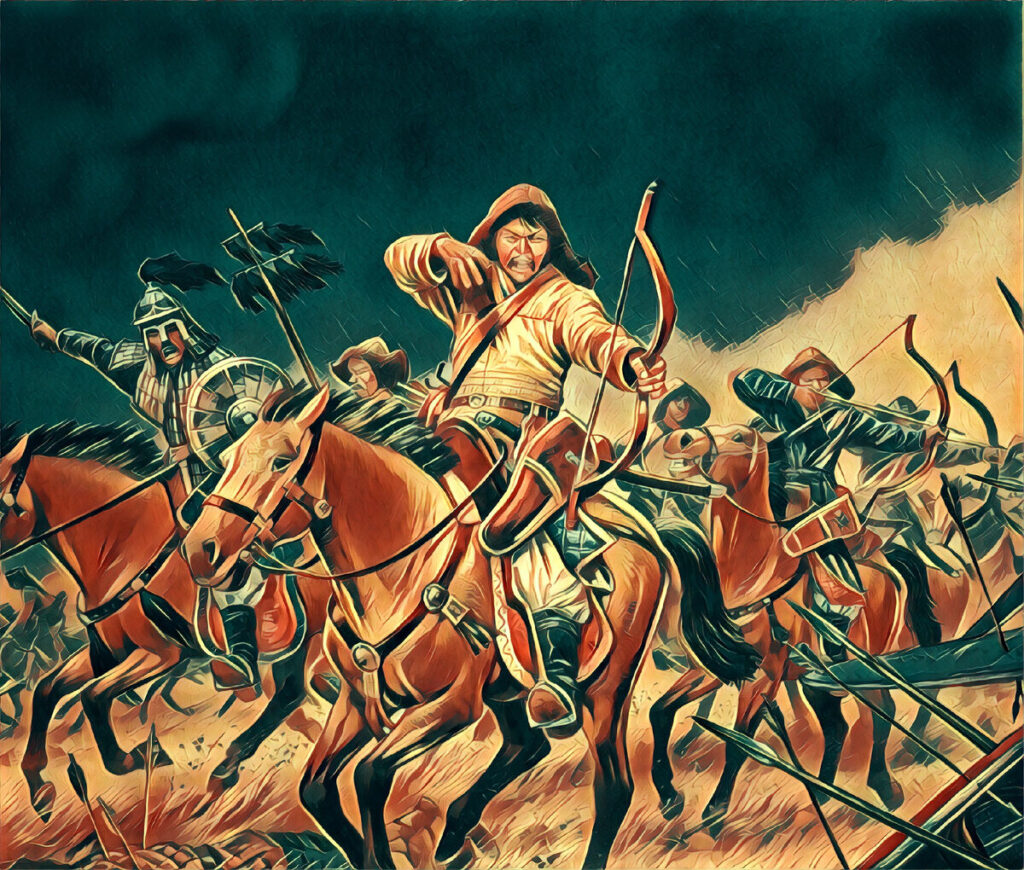
The decline of Alania began when Genghis Khan’s forces approached the borders of the Caucasus. Upon reaching Western Alania, the Mongols easily crushed the former nomads, and in their wake, the Polovtsians who had abandoned the Alans. The subsequent path of the Mongol vanguard is well known to all. Eastern Alania did not suffer this fate, which ensured its survival. And so it came to pass that in the territory of modern Karachay-Cherkessia and the upper reaches of the Kuban, the Alans ceased to exist; the area began to be occupied by the Polovtsians, whose descendants—the Balkars and Karachays—are alive to this day. As for the Western Alans, they fled to Eastern Alania (modern-day Ossetia), where they settled in the Digor Gorge, taking the name Digors.
And so ended the glorious and difficult history of the Alan nomads, some of whom were annihilated, while others became mountain dwellers who live to this day.
Although that is a completely different story…