
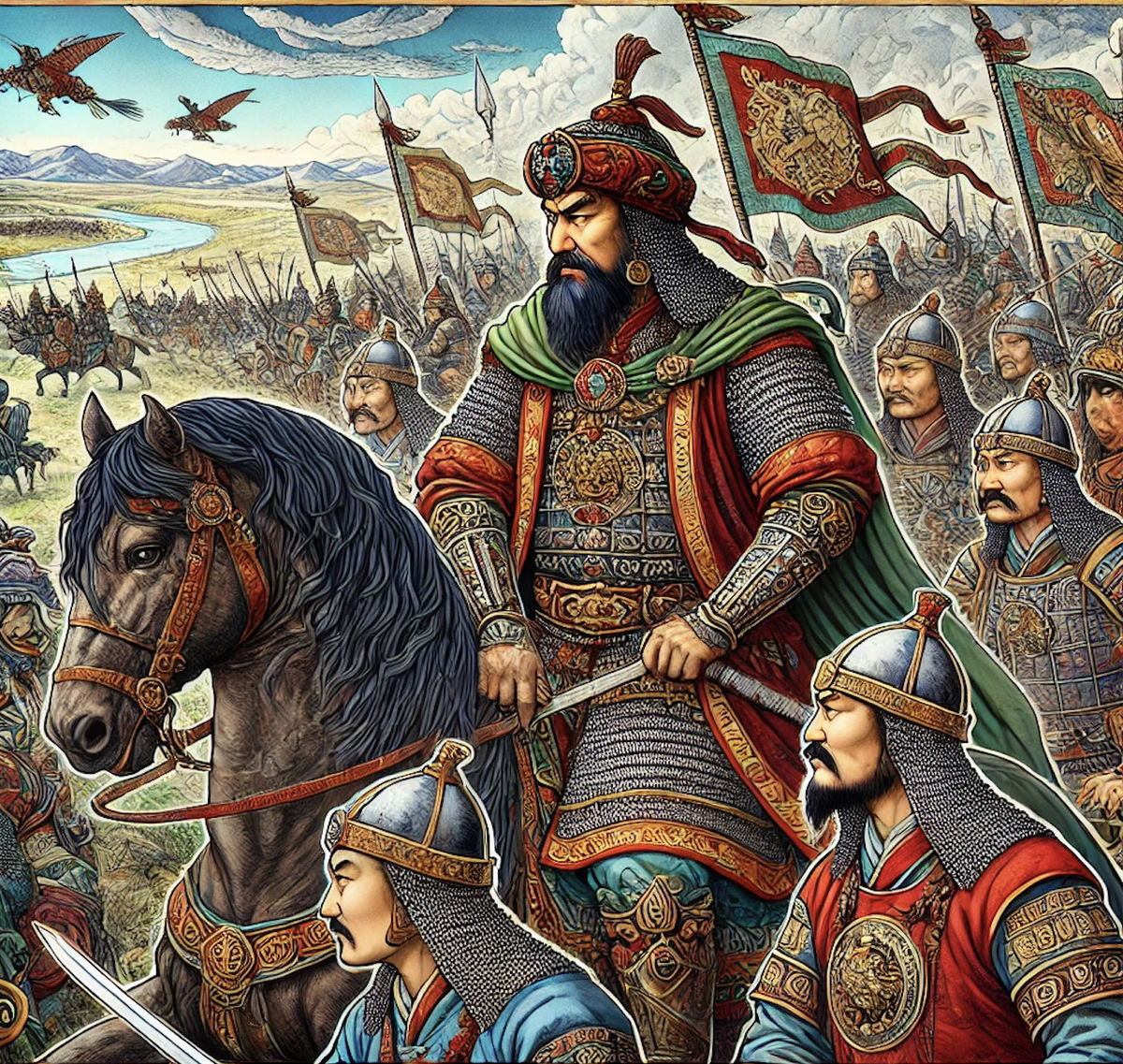
The tribal structure of the Turkic nomads, which remains a prominent feature among the Kazakhs to this day, can serve as a genuine chronicle of this people when properly interpreted. The Kazakhs are a fairly large ethnic group that has always occupied a vast territory. Consequently, their composition includes a wide variety of tribes.
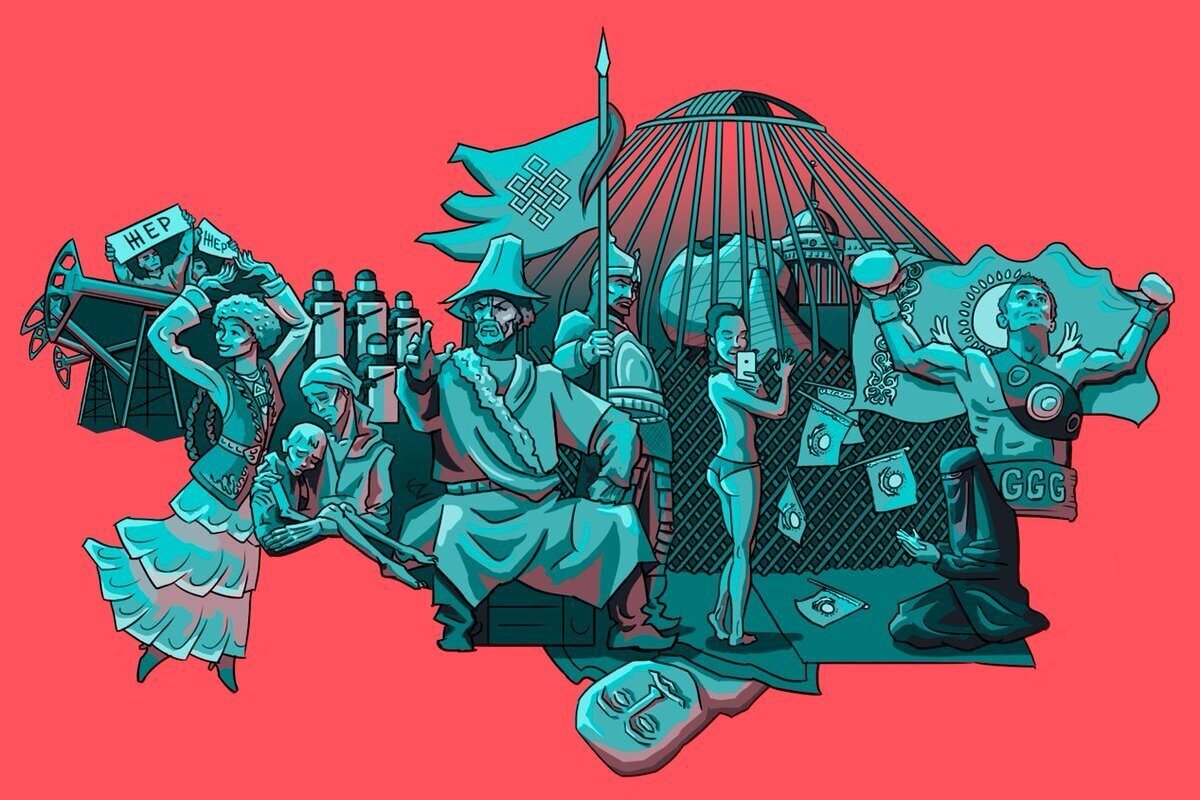
Among them, the Maskar clan has Magyar, i.e., Finno-Ugric, origins; the Suan and Sary-Uysun clans have Iranian, or more precisely, Scythian, origins; the Kanly clan has Oghuz origins; and the Naiman, Kerey, and Jalair clans are undoubtedly Mongolian. At the same time, the Kazakhs themselves currently speak the Kipchak language, which indicates that they are descendants of the medieval Polovtsians and the eastern inhabitants of the Golden Horde.
Let’s talk about them in more detail.
Modern Kazakhstan is a relatively enclosed territory, bounded on the west by the Volga River, on the north by Siberia, on the east by mountains, and on the south by the great rivers of Central Asia and the sedentary states along their banks. This open region, almost devoid of natural barriers, is poorly suited for agriculture and has always been the homeland of rugged nomads.
The famous Sintashta culture of Indo-European origin was marked by the domestication of horses and the creation of war chariots. Its successor, the Andronovo culture, was the homeland of the Indo-Aryan conquerors. But even after their departure southward, nomads of Iranian origin continued to live in the steppes. The Parthians, the Dahs, the Massagetae, and others dominated this region in ancient times.
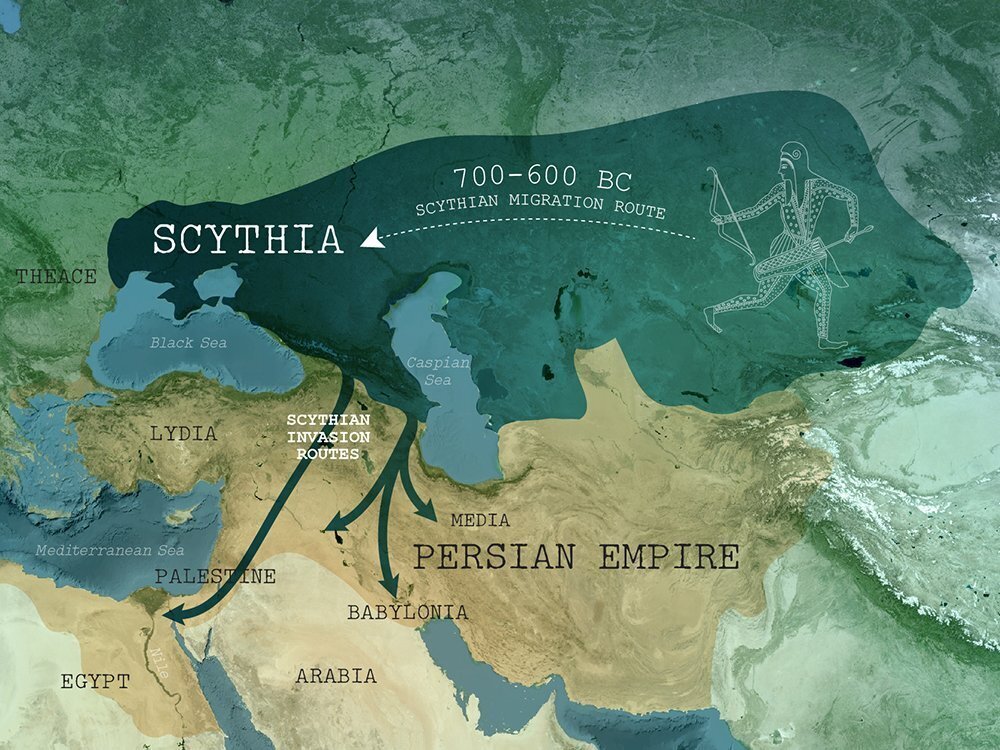
However, due to a combination of external and internal factors, Scythian society began to gradually decline in the first centuries of our era. Consequently, along with the expansion of the Huns, the first Turks arrived in this region no later than the 3rd century of our era. Later, the former vassals of the Hunnic Empire, who were previously known as the Dinlin and Tele, established the vast Turkic Khaganate, which extended its territory all the way to Eastern Europe.
Ultimately, southern Siberia and part of Kazakhstan came to be ruled by the Kimaks and their kin, the Kipchaks. Apparently, there were still many nomads of Scythian origin here at that time, since members of many modern Kazakh clans are genetically their descendants, just as they are descendants of other ethnic groups of the Great Steppe.
During the early Middle Ages, the Kipchaks steadily expanded their influence. Initially possessing a relatively small territory, they crossed the Volga in the 1030s and, in the following decades, drove the Pechenegs beyond the Danube. In Central Asia, they became one of the dominant groups in the Khwarezmian Empire, founded by the Oghuz Turks.
Then began the era of the Golden Horde. Clans of Mongol origin migrated westward, but they quickly became Turkicized. The Merkits, Kereits, Kidans, and other opponents of Genghis Khan settled in the Kazakh steppes at that time. They maintained relative independence from the western, main part of this empire. And many even remained pagans, despite the efforts of Uzbek Khan.
After a series of successive splits in the Jochi ulus, the Khanate of Abulkhair emerged in its eastern part, which historians also refer to as the state of the nomadic Uzbeks. Unfortunately, its ruler relied on the Nogais and the Muslim cities, while the nomadic population was dissatisfied. The opposition was led by the Chingizids Kerey and Janibek, who led their supporters to the southeast and proclaimed a separate steppe state. It was then that the modern name of the people—Kazakhs, meaning “free people”—was adopted.
At first, it was more of a political term referring to all nomads who had decided to support the new authority. But over time, it became an ethnic concept—after the territory and population of Kazakhstan were fully established in the course of protracted wars. Today, this is a people who speak the Kipchak (i.e., Polovtsian) language, with a Scythian substratum and a strong Mongolian influence. Anthropologically, they belong to the South Siberian race, intermediate between the Caucasoid and Mongoloid races. However, European features are considered more prestigious and tend to accumulate over time.