
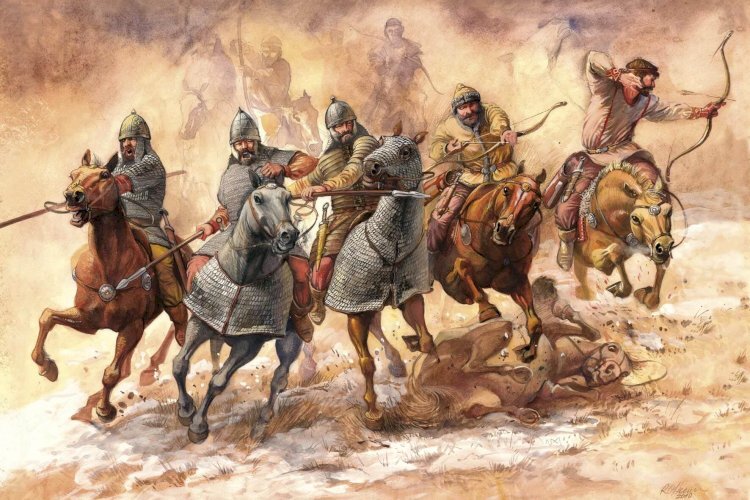
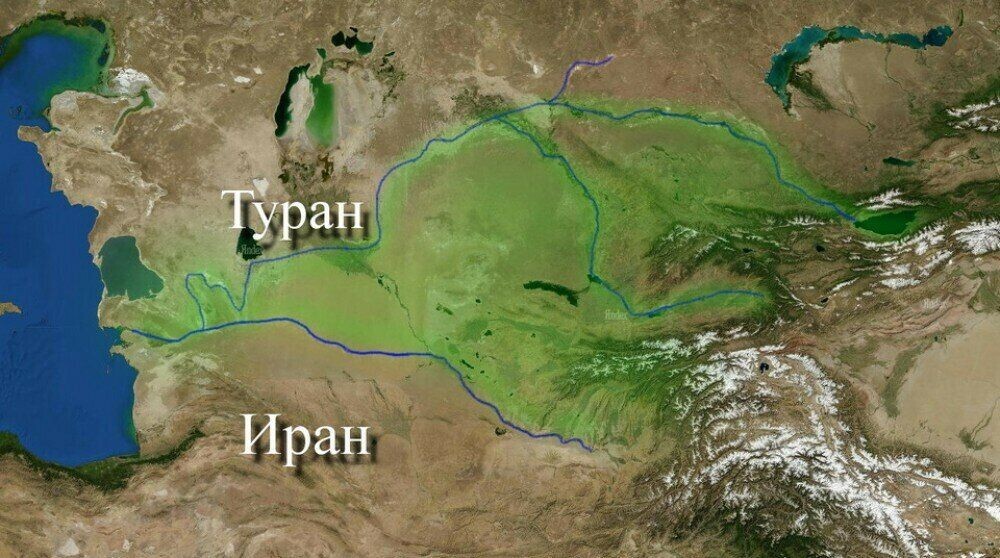
Iran and Turan—that is, the settled civilization and the nomads of the Great Steppe—had been at odds with one another for millennia. The former had the advantage of numbers, a developed economy, and a more balanced approach to warfare. The latter had their own strengths: devastating raiding tactics—that is, “small war”—powerful cavalry armies with stunning mobility, and a way of life that turned every man into a soldier.
Despite isolated setbacks, such as the death of Cyrus the Great, founder of the Achaemenid Empire, in the Scythian steppes, on the whole, the settled world prevailed over the nomads. For thousands of years, they appeared in Iran only as vassals, mercenaries, and slave soldiers. Even the Parthians liberated Persia from Alexander’s successors under the banner of Iranism, instantly renouncing their own religion and way of life. Consequently, they were forced to resist the attacks of the “wild” Scythians in exactly the same way.
But in the 11th century, everything changed. Where the tombs of ancient Iranian kings once stood, sheep now grazed. Where the Dekhanin had labored to grow grain, a nomad’s tent now stood. For many centuries, the settled inhabitants became slaves to the Turkic chieftains, to the point that the proud name “Pars” became a term of abuse on the lips of the herders.
How, then, did the Turks conquer Iran?
Given the size and demographics of the Iranian world, the nomads had to take the elephant one bite at a time. All invasions were repelled at one time or another, and so the Turkic conquest of the Persians began from within. Arab-Muslim expansion led to the exclusion of ethnic Iranians from military affairs. From then on, they were confined to the roles of farmers, scholars, and administrators.
The “swan song” of Iranian militarism was the rise of the Abbasid dynasty to the throne of the Arab Caliphate in 750. The new ruling house relied heavily on Persian soldiers, but understood well that continuing such a policy would lead to the disintegration of the unified Islamic state along ethnic lines.
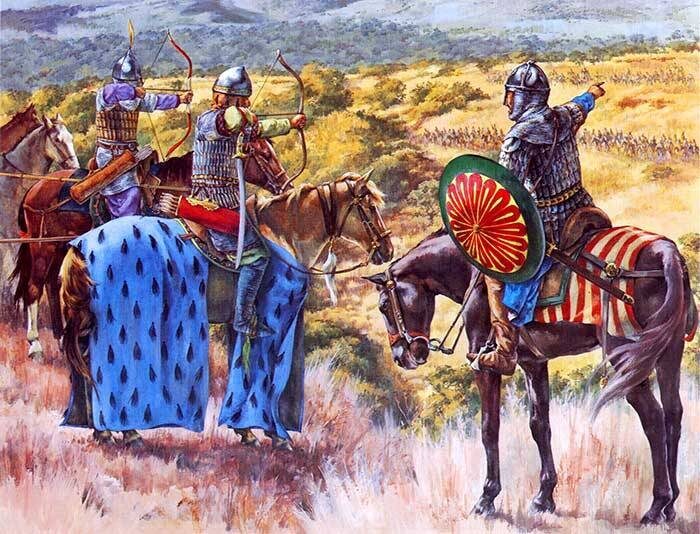
Therefore, from the moment the imperial capital was moved to Baghdad, the caliphs increasingly relied on Turkic ghulam armies. The nomads supplied warriors who had no social ties in the sedentary world and were therefore loyal exclusively to their employer.
This approach continued to prevail even after the caliph’s governors—the Tahirids and the Samanids who succeeded them—became the rulers of Central Asia and most of Iran. The latter recognized the supreme authority of Baghdad and occasionally sent tribute, but otherwise acted as rulers of an independent state.
Given the clan-based nature of Eastern society, they required mercenaries from outside as an independent force. But the Turks gradually settled in, converted to Islam, and very soon realized that here they had become the elite, while back home they were practically paupers. And among their leaders, the desire grew not to be content with pitiful crumbs, but to take it all.
A commander of the Turkic guard named Alp-Tegin was one of the most influential men in the entire Samanid Empire by the mid-10th century. But his attempt to place his protégé on the throne led to his downfall and subsequent flight. With his men, the former slave founded a principality in the city of Ghazni in the mountainous region of Afghanistan.
His descendants formed the powerful Ghaznavid dynasty, which, with the support of their Turkic-Karluk relatives, conquered parts of Northern India and Eastern Iran. From that time on, the region received its first wave of nomadic immigrants; however, these people relatively quickly assumed the status of the local nobility, transitioning to a sedentary lifestyle.
But this was far from the end. The Ghaznavids were representatives of the Karluk branch of the Turks, which had relatively quickly abandoned nomadism. Therefore, the Oghuz and Kipchaks came to dominate the western part of the Great Steppe. At the beginning of the 11th century, the Oghuz Yabgu state collapsed, and as a result of internal strife, Seljuk tribes crossed the Amu Darya.
At first, they sought service with the Ghaznavids, but the latter already considered themselves a full-fledged part of the sedentary world, striving to protect it from steppe invasions. As a result, a war broke out in Central Asia, in which the newcomers, not the local Turks, emerged victorious.
From then on, the gates were open for nomadic migrations—new clans kept arriving from the Great Steppe. The Seljuk sultan became nothing more than a coordinator of their conquests. And the main direction of the invasions turned out to be Iran, where the leaders sought power and gold, and the common soldiers—pastures.
At that time, the country was ruled by the Shiite Buyid dynasty, which kept the Baghdad caliphs on bread and water. But the nominal head of the Islamic world invited Toghrul Beg to his aid, who from that time on became sultan and acted on behalf of the Prophet’s deputy on earth. During the second half of the 11th century, all of Persia was filled with hordes of Turks. They now not only ruled the East, but also lived here.