
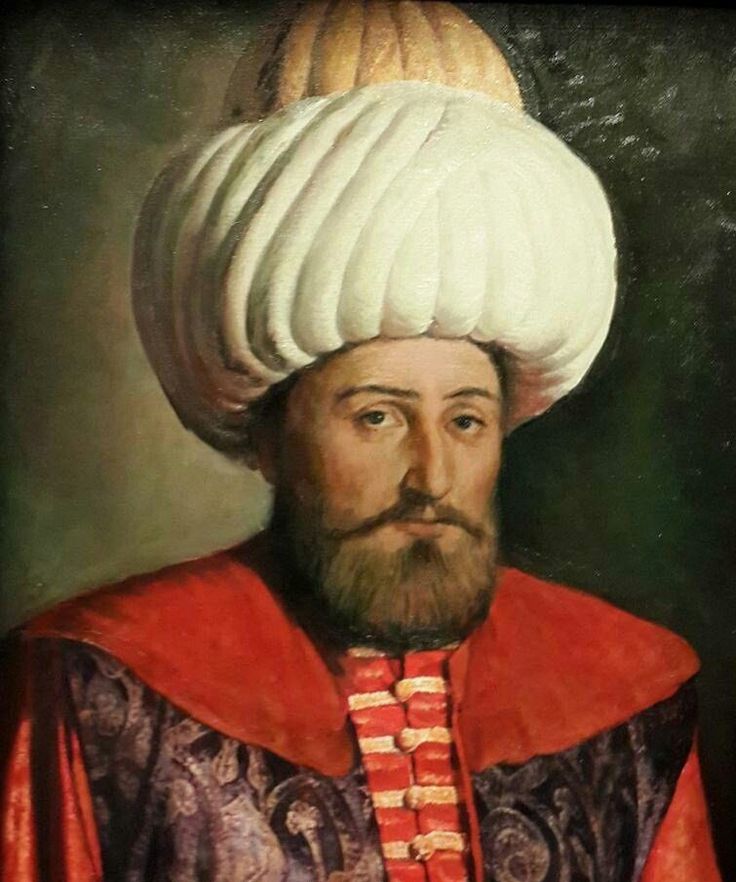
Nadia was born in 1627 in the Russian territories bordering the Crimean Khanate. In 1640, at the age of thirteen, during another raid by the Crimean Tatars, she was taken captive and brought to Bakhchisaray to be sold at the local slave market.
The pretty girl was spotted and purchased by the harem administrator of the Crimean Khan Bahadur I Geray. Bahadir, who was a vassal of the Ottomans, was just about to present Sultan Murad IV with a “sweet gift”—a dozen beautiful maidens of various nationalities and skin colors.
And so Nadia found herself in Constantinople, in the magnificent Topkapi Palace. The girls sent by the Crimean Khan were supposed to enter Murad IV’s seraglio, but the sultan’s harem was already overcrowded; its inhabitants objected to the new arrivals, and it was decided to temporarily transfer the newly arrived beauties to the palace of Kösem, the sultan’s mother and one of the most influential women in the history of the Ottoman Empire.
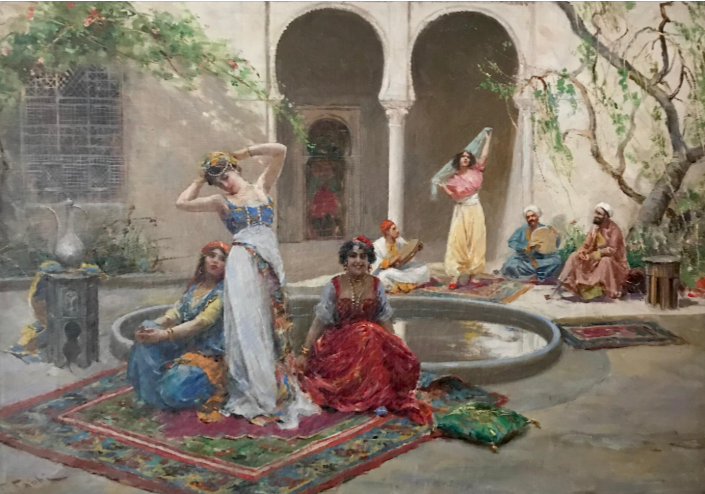
Fabio Fabbii Girls from the Harem, an antique original oil painting by Fabio Fabbii, 2019
Valide Sultan entrusted her daughter Atika with teaching Nadia—who had been given the new name Turhan Hatice—all the intricacies of harem life. Kösem decided that the Slavic girl would be a “sweet gift” for her youngest son, the twenty-five-year-old Ibrahim, whom the people nicknamed “the Mad Sultan.” Turhan Hatice successfully completed her training and was soon presented to Ibrahim. The heir was struck by the Slavic girl’s beauty: a tall, slender, fair-skinned beauty with blue eyes stood out among the other concubines. Ibrahim immediately made Turhan Hatice his concubine.
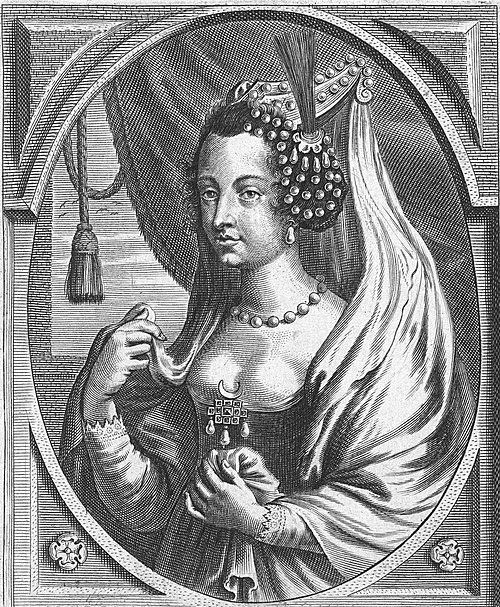
Portrait of Turhan Sultan in an engraving by the Flemish artist Pieter de Jode the Younger, circa 1640–1660
Meanwhile, Ibrahim’s relationship with the sultan was deteriorating by the day. Murad, who had previously executed three of his brothers, did not see his last surviving brother as an heir. Ibrahim was considered mad, and the only thing that truly interested him in this life was women.
In January 1640, Murad decided to transfer the throne of the Ottoman Empire to the aforementioned Crimean Khan Bahadır I Geray. The sultan ordered his brother to be executed. Only the intervention of his mother, Kösem Sultan, at the very last moment saved Ibrahim from the sharp sabers of the Janissaries.
Most likely, Murad would have made a second attempt and eventually gotten to his brother, but in the spring of 1640, the sultan suddenly died. Ibrahim ascended the throne. The concubine Turhan Hatice was proclaimed Haseki Sultan, that is, the first and lawful wife. All would have been well, but Sultan Ibrahim—the only one of all the Ottoman rulers—had as many as eight “first and lawful” wives. And Turhan was his favorite wife for only a brief period: the fact is that Ibrahim, who was known for his unprecedented debauchery, preferred either virgins or plump women.
In the winter of 1642, Turhan Hatice, who had already begun to forget that she was once called Nadezhda, gave birth to Sultan Ibrahim’s heir—Shehzade Mehmed. Thus, Turhan became the First Haseki. Mehmed’s birth brought immense joy both at court and among the people, but immediately after his son’s birth, the sultan lost interest in Turhan. Ibrahim practically stopped visiting the Slavic beauty and spent most of his time in the chambers of the Armenian Shivekar Sultan, who was said to be the fattest woman in the capital.
Turhan Hatice was forced to accept her fate: the First Haseki received her lawful thousand aspers from the treasury and raised her son, hoping that he would become sultan in the future. However, Ibrahim sank ever deeper into the abyss of madness. The sultan fell in love with a certain slave girl who had a son by another man. The ruler preferred this stranger’s boy to his own son and wanted to make him his heir. This was something Turhan simply could not bear! The woman, holding her son in her arms, burst into the sultan’s chambers, demanding justice. Ibrahim flew into a rage, snatched Mehmed from his wife’s arms, and… threw the boy into the pool. The heir was saved by a servant who jumped into the water after the child. A scar remained on Mehmed’s forehead as a reminder of his father’s “kindness.”
Ibrahim’s dissolute behavior, his cruelty, and his unwillingness to attend to state affairs caused growing irritation among the Ottoman nobility. In the summer of 1648, the sultan was deposed and soon strangled by the conspirators. The infant Mehmed was proclaimed the new sultan of the Ottoman Empire under the name Mehmed IV.
His mother, Turhan Hatice, was to be granted the title of Valide Sultan, meaning “mother of the reigning sultan.” However, Turhan was only twenty-one at the time, and due to her inexperience, she did not play a significant role in political affairs. Everything was controlled by the powerful Kösem Sultan, who was unwilling to yield the title of Valide to anyone. Turhan understood that her mother-in-law could ultimately seize power for herself. The young woman decided to fight back. Soon, Turhan managed to win over the Grand Vizier and the chief black eunuch to her side. Kösem had a trump card up her sleeve—the Janissary corps. It was a formidable military force, yet the people hated the Janissaries and openly grumbled against the “thugs’” influence on the government. Turhan decided to take advantage of this. The sultan’s mother accused her mother-in-law of plotting to murder the young Mehmed in order to replace him with one of her own grandsons. The courtiers supported Turhan and swore an oath of loyalty to the sultan. Here is how the scholar and Orientalist Norman Penzer described the subsequent events:
“The mufti declared that Kösem must die. Immediately, the Grand Vizier drafted a decree, which Mehmed IV signed with a trembling hand. With the paper in hand, the Grand Vizier and the guards rushed to Kösem’s apartments, where they conducted a fruitless search. Finally, they found the unfortunate old woman in a wardrobe, dragged her out, and beat her to death with sabers.”
This took place in September 1651. Kösem Sultan was killed, and Turhan Hatice became the sole regent for her young son. Her son adored Turhan, so her power was practically unlimited.
The Valide Sultan attended all state meetings and even spoke at them from behind a special curtain. After the unsuccessful war with the Venetians over the island of Crete and the ensuing financial crisis, Turhan became disillusioned with politics and in 1656 effectively handed over the reins of power to Grand Vizier Köprülü Mehmed Pasha. Having left politics, Turhan turned her attention to philanthropy and construction. Under the patronage of the Valide Sultan, numerous structures were built that to this day define the architectural landscape of Istanbul. Turhan built libraries, hammams, elementary schools, mosques, bazaars, and wells. The people regarded the Valide Sultan with exceptional love and respect. Crucially, the Ottoman nobility shared the people’s feelings toward Turhan.
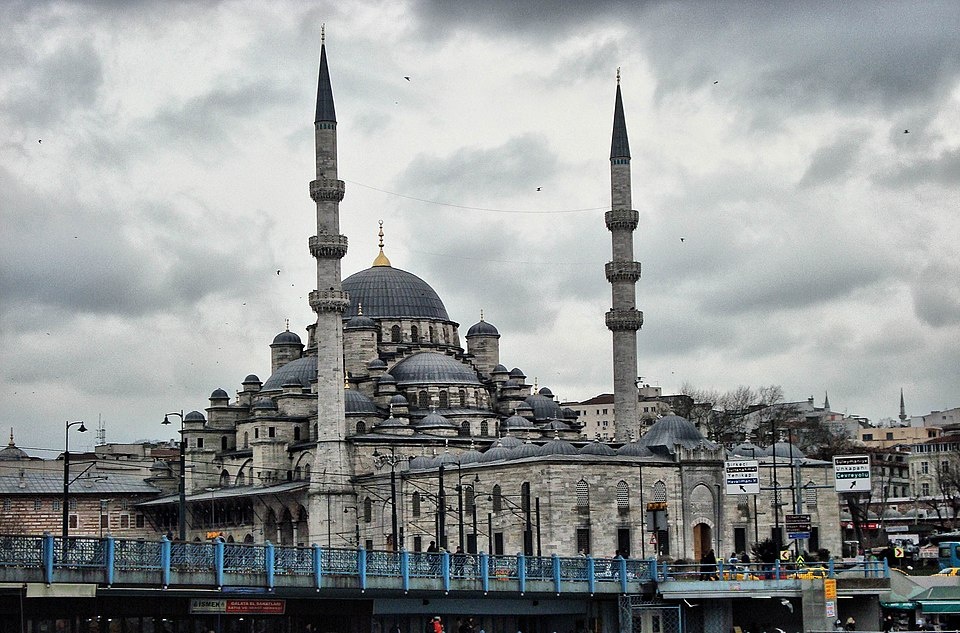
The mosque completed by Turhan Sultan
While her mother was alive, Sultan Mehmed sat on the throne with complete confidence. However, in the summer of 1683, Turhan Sultan fell seriously ill and died in August in her son’s arms at his palace in Edirne at the age of fifty-six. Mehmed ordered his mother to be buried in a tomb bearing her name at the Yeni Mosque.
Turhan became the last great Valide Sultan; after her, women never again wielded such strong influence in Ottoman politics. With Turhan’s death, the period in Turkish history known as the Late Women’s Sultanate came to an end.
Just four years after his mother’s death, Mehmed’s hold on the throne began to waver. Following a series of severe military defeats, the Ottoman Empire fell into a deep crisis. In late autumn of 1687, the military commanders decided to depose Mehmed IV and place his brother Suleiman on the throne, the son of the late Sultan Ibrahim by his Serbian concubine Ashub Sultan (Katarina).
The conspiracy succeeded. Mehmed was deposed and imprisoned in his palace in Edirne. It was there that Mehmed died in 1693 at the age of fifty-one. On his deathbed, the deposed sultan asked to be buried next to his dearly beloved mother.
And so it came to pass that a Russian woman, who had been brought to the Ottoman Empire as a slave, a “sweet gift,” ultimately became the ruler of that country and a builder of cities.