
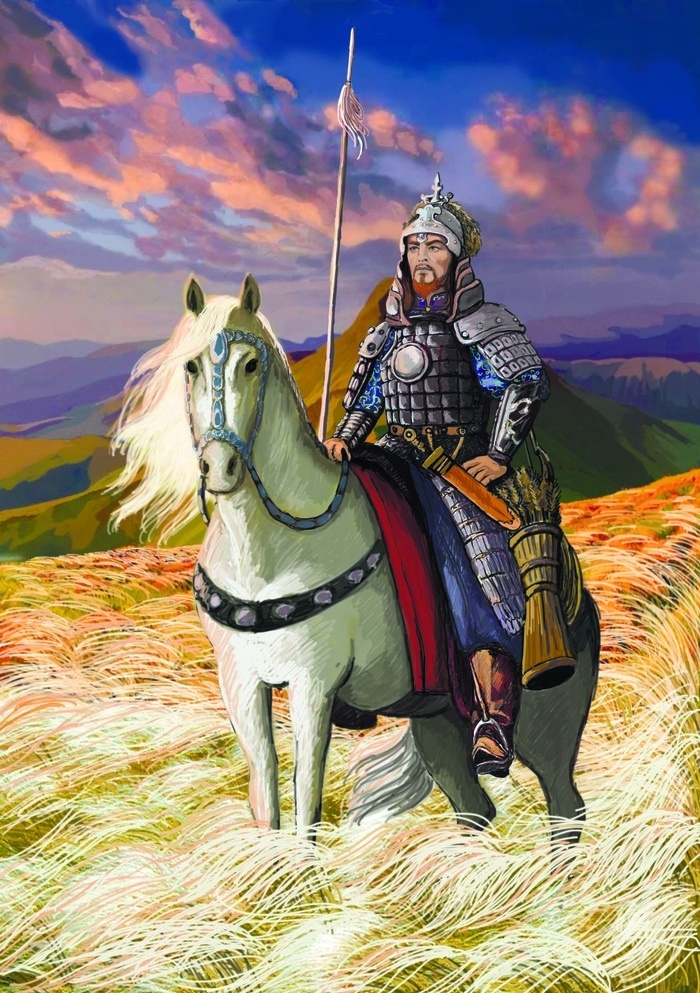
Uzbeks and Kazakhs have long argued over the nationality of Yalangtush Bahadur (in Kazakh, Zhalantos Bahadur), the creator of the modern architectural appearance of Samarkand- Kazakh or Uzbek?
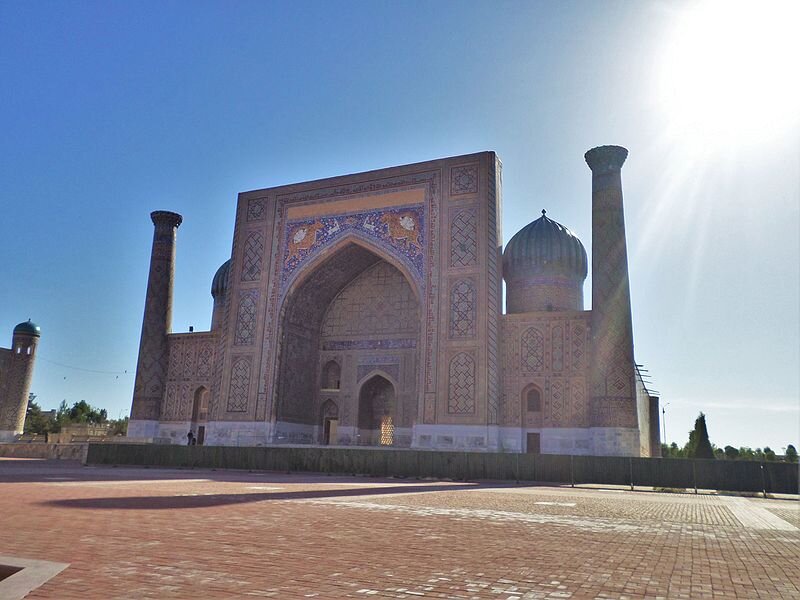
Sherdor Madrasah, Registan Square in Samarkand
Zhalantos Bahadur (Zhalantos Seyitkululy) — the emir of the city of Samarkand came from the Tortkara family of the Kazakh Alshyn Uzbek tribe.
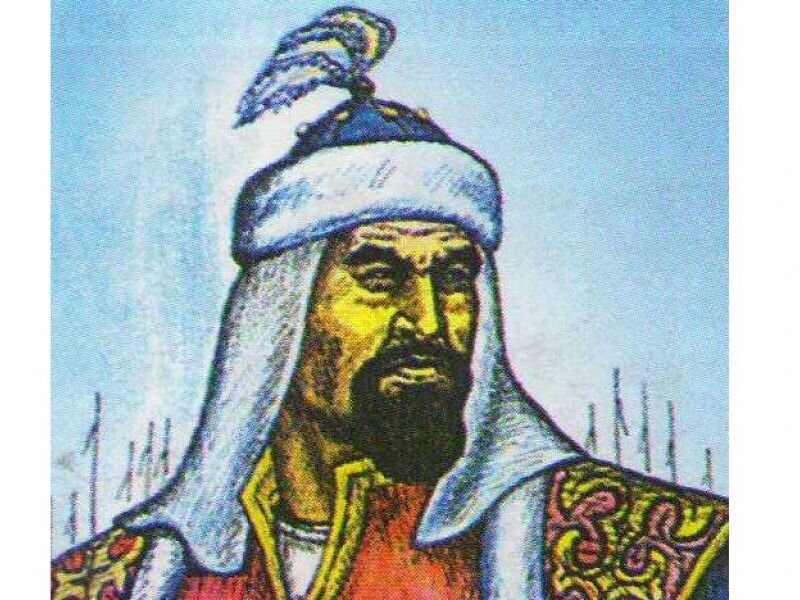
Yalangtushbiy Bahadur (Uzbek: Abdulkarim Yalangto’shbiy Bahodir Boykhoji o’g’li, Yalangto’shbiy otaliq) (September 15, 1578, Bukhara, Bukhara Khanate — 1656, Dahbed, Bukhara Khanate) was an Uzbek military commander, politician, governor (emir) of the Bukhara khans in Samarkand. His name «Yalang tush bahadur» literally translates as «a hero with an open chest.» In addition, his other names appear in the sources: Nizamiddin and Abdulkarim.
This tribe is one of the main tribes of the Uzbek Cossacks, which can be considered the cradle of the Uzbeks and the Younger Zhuz of the Kazakhs. The Kazakh tribes Alim and Bayuli emerged from it, and the Uzbek Alshyns became one of the 92 Uzbek clans.
Zhalantos Bahadur is a native of the Tortkara clan, which became one of the clans of the Alimula tribe (the Uzbeks do not have one). But in my purely personal opinion, he cannot be considered a Kazakh. Although he came from a Cossack background, he was Uzbek in his mentality — that is, a resident of a city that could no longer imagine life without his beloved Samarkand.
To his credit, Zhalantos Bahadur never forgot his kinship with his steppe relatives and helped the Uzbek Cossacks in the wars against the Oirats. It was most likely to him that the idea of the Orbulak battle of 1643 belonged, when the advanced part of the Dzungarian army was destroyed by fusilade fire from fusilier rifles, and only the rashness of the Kazakh Khan Salkam Dzhangir, who did not wait for the main forces led by Yalangtush Bahadur, helped to avoid the complete defeat of the Oirats.
But Yalangtush Bahadur was no longer the son of the steppes, and he was primarily interested in the interests of his native Bukhara Khanate. In gratitude for his help, 100,000 Kazakh horsemen participated in the bloody campaign in Afghanistan against the Mughals in 1644.
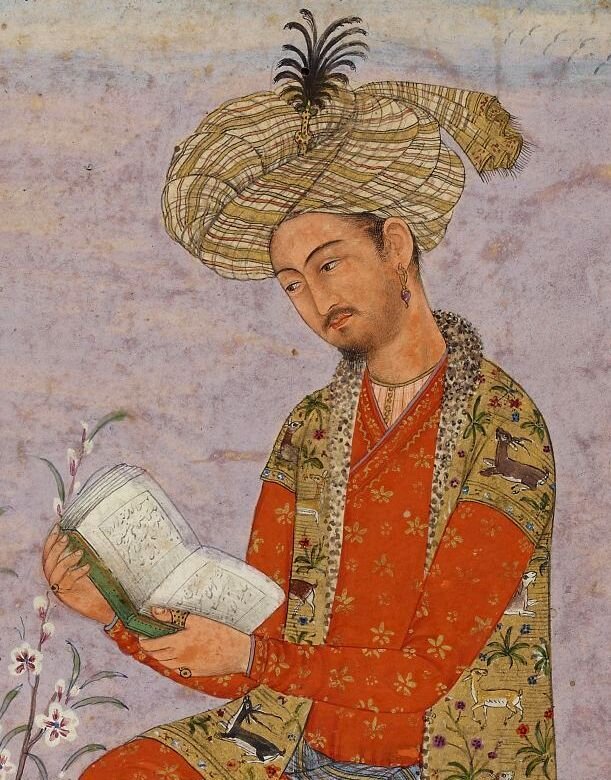
Zahir al-din Muhammad Babur[1] (Uzbek Zahiriddin Muhammad Bobur; «Babur» means «lion, commander, leopard» and comes from the Persian word babr — tiger, February 14, 1483 — December 26, 1530) was a Central Asian and Timurid ruler of India and Afghanistan, commander, founder of the Baburid dynasty and Empire, in some sources referred to as the Mughal Empire (1526). He is also known as an Uzbek poet and writer.
The Kazakhs suffered significant losses in this campaign, and most importantly, they did not need him either strategically or tactically. This contributed to the fact that the Kazakhs were unable to support the friendly part of the Oirats, who lost in a feud with the «war party» led by the founder of the Durban-Oirot (Dzungarian Khanates) Huntaiji Batur.
All this clearly shows the mentality of Yalangtush Bahadur, who was already a settled resident, a representative of the prototype of the modern Uzbek nation.
Jalanthos Bahadur himself owned untold treasures. At his own expense, he maintained the best professional army of Ghulams (heavily armed horsemen) and fusilier rifles at that time, and created a modern architectural complex in Samarkand, which is admired by tourists from all over the world. His brother Aksha-biy (a man of money, if translated from Kazakh) built many handicraft workshops (including those that manufactured firearms).
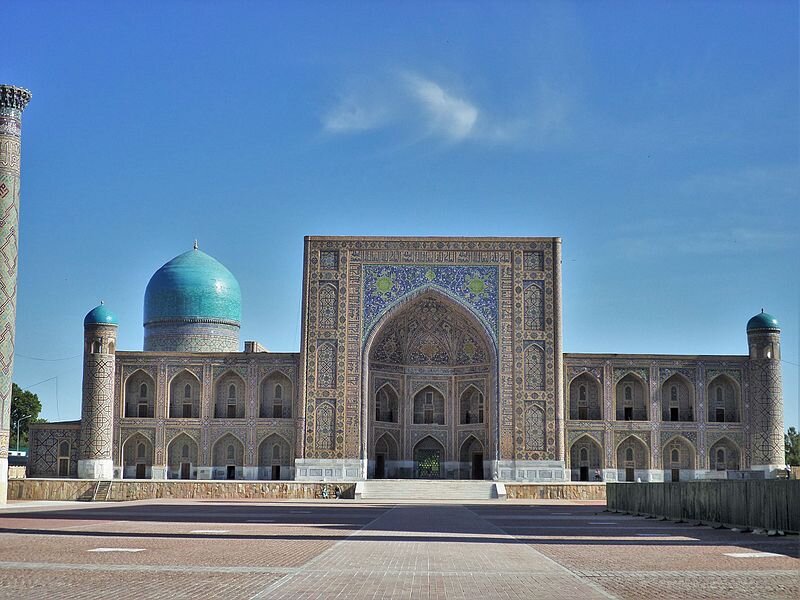
Tillya Qari Madrasah (Uzbek Tillya Qori madrasasi — Gilded madrasah) is a cult, spiritual, educational and educational building of the 17th century in Samarkand on Registan Square. It is the latest building on the square and, together with Ulugbek Madrasah and Sherdor Madrasah, forms an integral architectural ensemble. In 2001, among other attractions of Samarkand, it was included in the UNESCO World Heritage List.
Zhalantos Bahadur was a follower of the Naqshbandiya Suffi teachings, unlike the Kazakhs, who were followers of the teachings of Ahmed Yasawi. And this is also an indicator of his sedentariness, unlike the Uzbek Cossacks, since the Naqshbandiya order, unlike Yassavism, presupposes participation in political life.
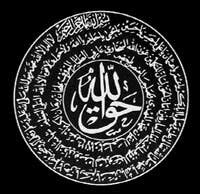
The symbolic emblem of the Naqshbandi Brotherhood is a Sufi brotherhood (tariqa) named after Muhammad Bahauddin Naqshbandi al-Bukhari (died 1389) at the end of the 14th century. Bahauddin Naqshband revived and supplemented the mystical teachings of Abdul Khaliq al-Gidduvani with a number of theoretical and practical provisions borrowed from the Yasawi Tariqa, and also laid the foundations of the brotherhood’s organizational structure. Naqshbandiya is one of the 12 Sunni—leaning maternal fraternities.
And one of the differences from the Uzbek Cossacks Yalangtush Bahadur was that he used Persian rather than Chagatai in his life and office work. That is, his life was completely connected with the life of the settled Persians and Tajiks, and he was a defender of the interests of these peoples of Central Asia, unlike other rulers who used either Chagatai or Turkic languages.
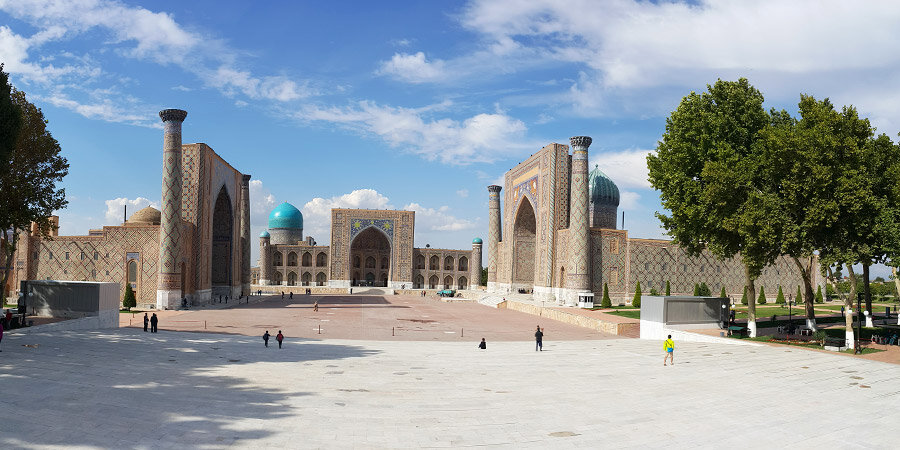
Registan (Uzbek: Registon; from reg — sand and stan — place; literally — a place covered with sand) is a square in the center of Samarkand. Registan was the name given to the main squares in the cities of the Middle East. Samarkand Square is the most famous registan[1] due to the famous architectural ensemble of the XV—XVII centuries located on it, the center of which are Ulugbek madrasah (1417-1420), Sherdor madrasah (1619-1636) and Tillya-Kari madrasah (1646-1660). The ensemble of three madrasahs is a unique example of the art of urban planning and a remarkable example of the architectural design of the main square of the city. It is one of the most striking examples of Islamic architecture. In 2001, this ensemble, along with other ancient historical buildings of Samarkand, was included in the UNESCO World Heritage List.
Zhalantos Bahadur is buried 12 kilometers from the city of Samarkand in the suburb of Dagbit. His modest tomb, as well as the tombs of his daughters, is located in the old Suffiy cemetery, next to which there is a mosque. In this mosque you can get comprehensive information about the religious side of the life of Jalantos Bahadur. On the tombstone itself, when I was there in 2013, there is not even a mention of who is buried there. It used to be.
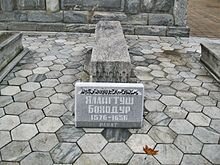
As you can see, even Zhalantos Bahajur’s tomb differs in modesty and simplicity from the beits (memorial houses) of steppe rulers.
In history, he remained one of the founders of modern Uzbek statehood, although he possessed supreme power and untold wealth, but was at the same time modest and merciful (as far as the mores of that time allowed). He was able to instill sedentariness in the nomadic Cossack-Uzbek tribes and begin their unification with the Tajik-Persian population into one nation.