
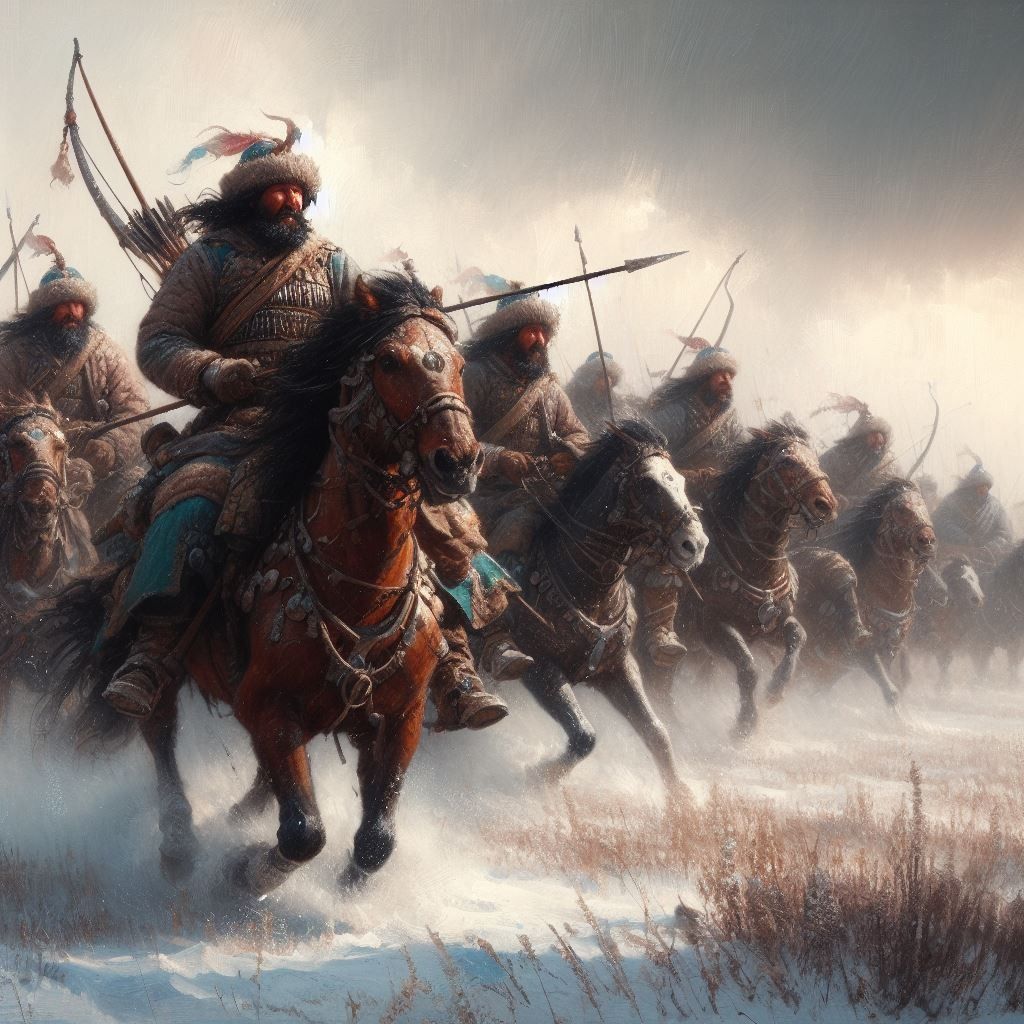
He had killed fourteen of his brothers upon ascending the throne. And now his beloved wife was dying while giving birth to their fourteenth child. Shah Jahan demanded that they find a doctor, a witch doctor, anyone who could ease Mumtaz Mahal’s suffering. But it was all in vain. With her final breath, she closed her beautiful eyes forever, and the light faded for the ruler of the Mughal Empire.

A still from the Shalimar Guerlain advertising campaign, inspired by the story of Shah Jahan and Mumtaz Mahal, featuring model Natalia Vodianova
He remembered the first time he saw her, radiant as if crowned by the sun. A red, sheer scarf on her hair shimmered with golden sparks, and around her neck hung a wooden necklace. Back then, still a prince, he thought that this girl deserved to be adorned with the finest jewels, not these cheap beads.
Shah Jahan’s great ancestors founded the Mughal Empire, ruling over lands now known as India, Pakistan, and Afghanistan. Timur himself was their progenitor. For his beloved third son, Jahan’s father broke the rules and declared him his heir while he was still alive. The prince was a skilled warrior and a talented military leader, hungry for glory and victory.
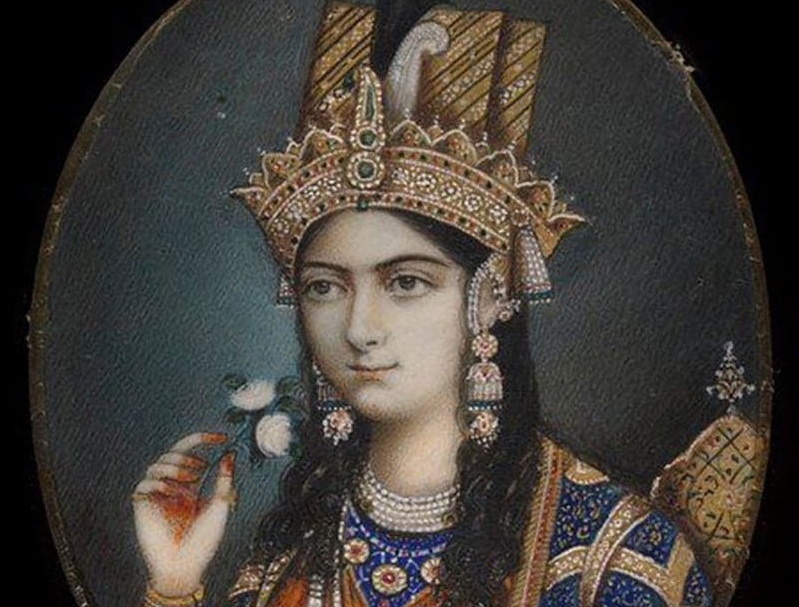
Mumtaz Mahal
But he considered his greatest victory to be his marriage to Arjumand Banu Begum, the vizier’s daughter. Her father was the full brother of Jahan’s mother. The beauty attracted the attention of many, and her father protected her, forbidding her to dress up or adorn herself with jewels. He made her hide her thick, shiny dark hair under a scarf. Of Persian descent, she captivated the heir with the sparkle of her almond-shaped eyes and the kindness in her gaze.
The shehzade’s mother was pleased; she had long planned this meeting, and her son’s sweet delight did not escape her notice. The wedding was held according to all traditions; the girl was given the name Mumtaz Mahal, which meant “Chosen One of the Palace,” but she was more often called “The Ornament of the Palace.”
Upon entering the harem, Mumtaz Mahal began to live by its rules, but she was Shah Jahan’s one and only beloved wife. He forgot the others, even his first wife, Kandari Begum Sahiba, who had recently given birth to a daughter.

Emperor Shah Jahan and Mumtaz Mahal
Over the course of eighteen years of a happy union, Mumtaz Mahal bore her husband thirteen children. The Padishah wished for his beloved to always be by his side, so even while pregnant, Mumtaz Mahal would set out on journeys, accompanied by an army of maids and young women. She stood by him in times of victory and defeat, rejoicing and comforting him; their love was celebrated in songs. But the ruler’s wife did not use her influence to elevate new ministers or depose the discontented; she did not interfere in politics, supporting her husband in everything and, perhaps, only occasionally offering him advice. Mumtaz Mahal knew that her education was limited to the ability to read, and her ambitions did not extend beyond the role of the beloved wife of her beloved husband.
The heir to the Great Mughals was formidable and warlike. His life was spent not within the palace walls, but in military tents and on the battlefield. Shah Jahan had conquered numerous Persian territories, and many sultanates paid him tribute. The capital of the empire was moved from Agra to Delhi.
In 1631, Mumtaz Mahal, carrying her fourteenth child, accompanied her husband on yet another military campaign. Shah Jahan’s army was returning home victorious. The ruler’s red tent was pitched in the open field, far from cities or settlements. Labor began unexpectedly; the physician accompanying the shah could do nothing, and his beloved wife passed away. Her final request was never to forget their love and to build a mausoleum for her.
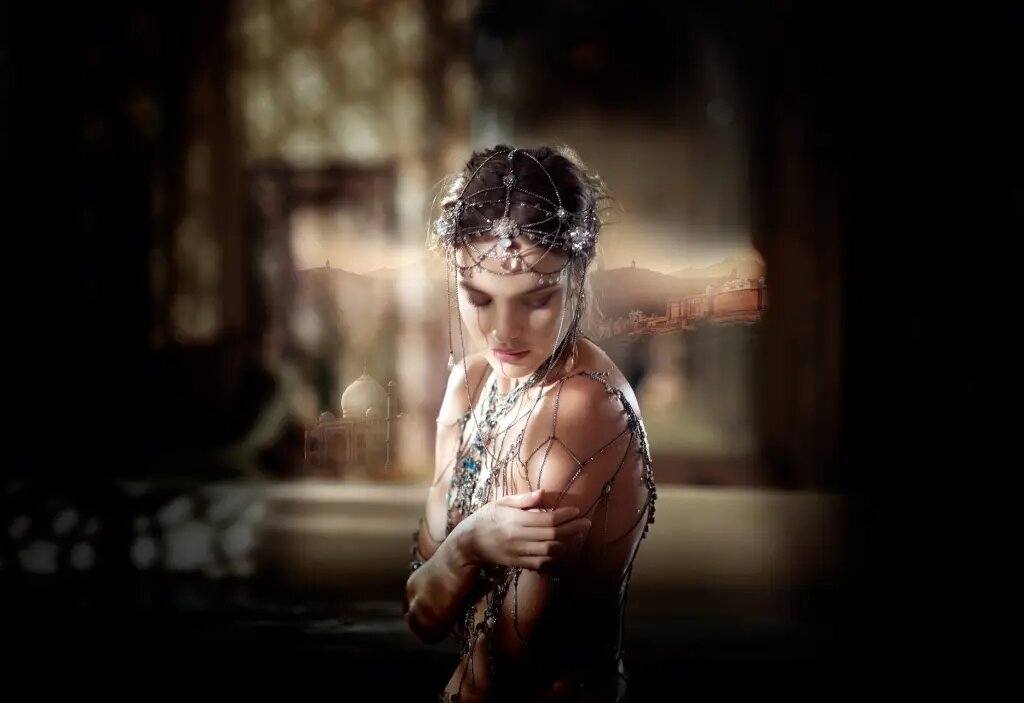
A still from the Shalimar Guerlain advertising campaign, inspired by the story of Shah Jahan and Mumtaz Mahal, featuring model Natalia Vodianova
Heartbroken, Shah Jahan devoted the rest of his life to building a magnificent monument, intended to preserve a lasting reminder of their love. He began constructing a mausoleum for his beloved out of marble that shimmered with shades of pink at dawn and appeared silver in the moonlight.
Twenty thousand builders from all corners of the empire and a thousand elephants worked day and night on the construction of the beautiful Taj Mahal. It is so hot in Agra that it seems as if the river’s waters are ready to evaporate, and the steam rising from the river and the earth creates an incredible effect—it seems as if the mausoleum is floating in the clouds.
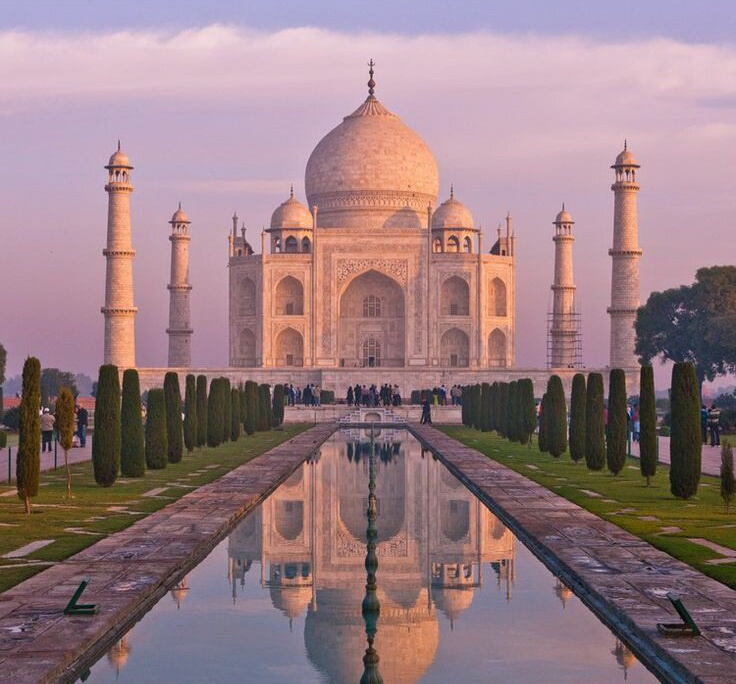
Shah Jahan spent twenty-two years building the Taj Mahal. And on the other bank of the river, by his order, a mausoleum was to be built for himself as well, out of black marble. But this plan was never to come to fruition; work had begun, but the padishah’s sons rebelled. Already an ailing and elderly man, Shah Jahan lost this battle, and his third son by Mumtaz Mahal, Aurangzeb, imprisoned his father in his own chambers.
The former emperor was left with only a few servants, a mirror, and books. He died eight years into his imprisonment.
His son did not complete the black mausoleum, but ordered his father to be buried in the same tomb as his mother. Thus, the Taj Mahal became the final resting place for these two eternal lovers.