
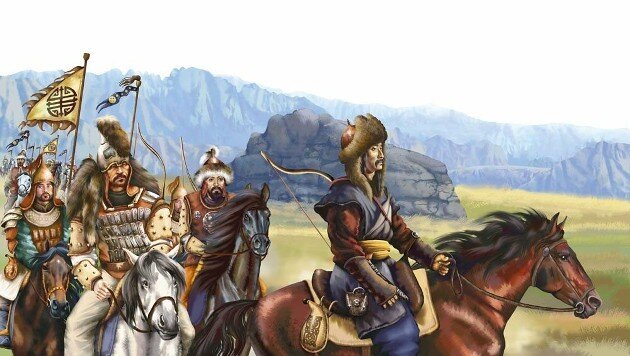
The Struggle Between the Xiongnu and Zhao
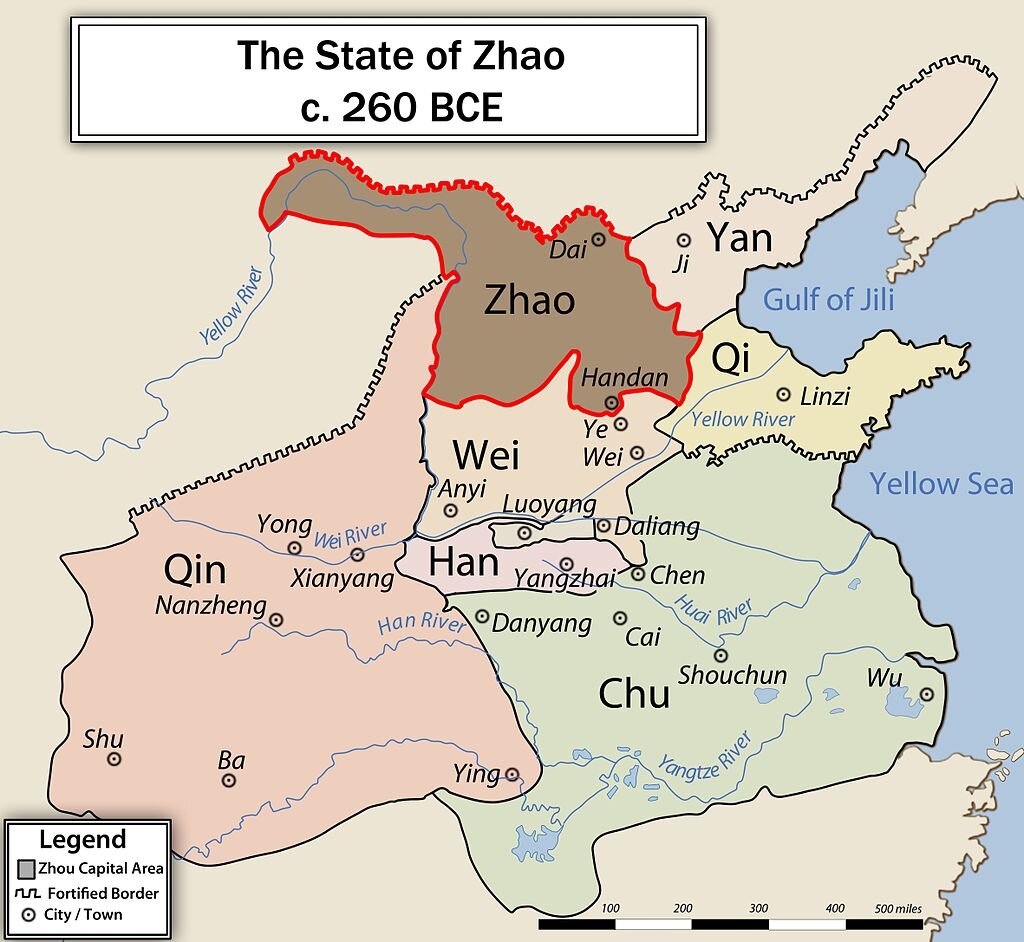
In 403, the Chinese border kingdom of Jin collapsed. In its place, the kingdoms of Wan, Han, and Zhao were formed. Zhao was the northern kingdom and it was this kingdom that stood in the way of the Xiongnu. Another kingdom, Yan, fought against the Donghu (proto-Mongols).
Both of these principalities built defensive fortifications and maintained garrisons there to protect the agricultural areas. However, the fortifications were ineffective, as the nomads easily bypassed them. Therefore, these principalities began to reform their armies, introducing a new type of troops — light cavalry instead of obsolete chariots.
This allowed the Zhao troops to inflict a series of defeats on the Xiongnu in the 3rd century BC. As a result, the Xiongnu lost their hegemony in the steppes north of China for a time.
The Great Wall
The border principality of Qin was Chinese only in language. Its main population consisted of the Rouran and former Chinese migrants who had moved to the steppes. These fierce border guards waged constant wars with the Zhong-Di tribes and recaptured the Chinese lands they had seized.
The Qin princes had close ties with the nomads, especially the Yuezhi, with whom they had trade relations. The Yuezhi were intermediaries in the trade of Chinese silk and other luxury goods to the West. That is why the name of the Chinese as Xing (i.e., Qin) became established in the Middle East, instead of the Chinese self-designation Zhongguo.
The Qin army was mobile and, following the example of the nomads, had a large cavalry. With its help, the Qin rulers conquered the entire Middle Kingdom, including modern-day South China, over a period of 200 years. In 221, the Qin king Ying Zheng proclaimed himself the Chinese emperor with the throne name Qin Shi Huangdi.
His reign was difficult for most of the population, who were burdened with heavy taxes. Many, following an old tradition, fled to the steppes to join the nomads, where there was freedom and the opportunity to earn a living without paying taxes. To stop the outflow of labor, Qin Shi Huangdi ordered the construction of a wall that would prevent people from leaving the Middle Kingdom unhindered. The wall was built over a period of 10 years but proved ineffective—people continued to flee from China to the steppes as before. There were not enough soldiers to guard the wall, and its construction completely depleted the treasury. In the end, the wall was guarded by mercenaries from Zhongdi and the nomads themselves. This finally made it possible to reduce the outflow of population from China.
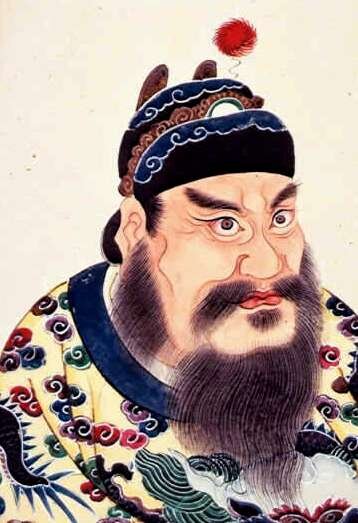
Qin Shi Huangdi, whose real name was Ying Zheng (259 BC — 210 BC), was the ruler of the Qin kingdom (from 245 BC) who ended the 200-year Warring States period.
The Xiongnu and their neighbors
After their defeat by the state of Zhao in the 3rd century BC, the Xiongnu found themselves in a difficult situation. But strangely enough, this turned out to be a positive development for them. The Xiongnu began to pay tribute to the Donghu, who were better organized at that time.
In the west, the Xiongnu began to be squeezed out by the Yuezhi, and in the north, the previously friendly Dingling began to penetrate the Xiongnu’s nomadic lands, trying to bring the nomads into their sphere of influence as vassals.
In 214 BC, Qin troops pushed the Xiongnu out of the foothills of Yinshan and the Ordos steppes, building small fortresses there with the ability to help each other’s garrisons in case of danger.
All this forced the Xiongnu to consolidate, choosing a single leader, Shanyu. This was Tuman, who first gave his son Mode as a hostage to Yuezhi.
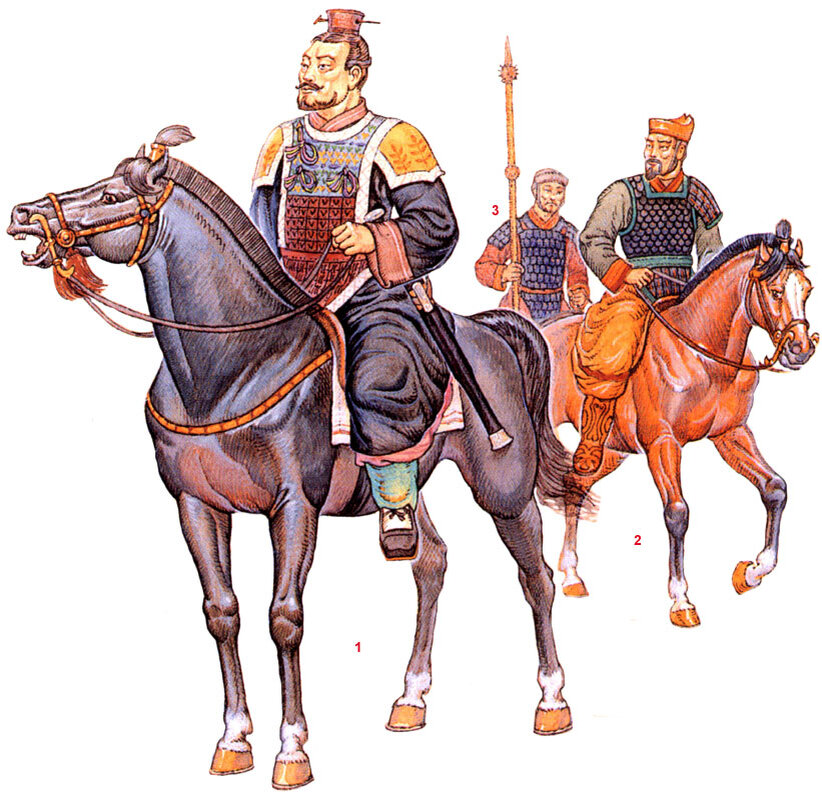
The new Han dynasty
After the death of Qin Shi Huangdi in 210, his son Hu Hai became the second emperor, taking the throne name Ershi Huang.
He became famous for his cruel executions of officials and aristocrats, which led to the formation of a party of discontented people who began to prepare an uprising. The first to rise up in 209 were the army officers Chen Shen and Wu Guang. But they had little strength and the uprising was quickly suppressed.
However, this was the spark that ignited the powder keg, and rebellions spread throughout the Middle Kingdom. Ershi Huang was killed by the chief of the chancellery, Zhao Gao, who replaced him with the emperor’s nephew, Ziyin. In the end, a certain Xiang Yu overthrew Ziyin and seized power in the country.
But this aristocrat from the Chu family was unable to establish a dynasty, as he lost in a civil war with his former comrade-in-arms, the peasant Liu Bang. He founded the new Han dynasty under the throne name Gaozu.
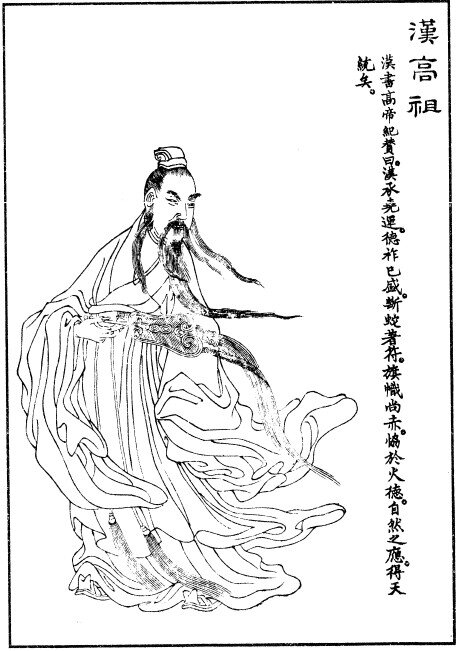
Gaozu (256 BC or 247 BC – June 1, 195 BC) was the first emperor of the Han Empire.