

The First Invasion of China by the Xiongnu
Chinese chronicles from 822 BC mention the first serious invasion of China by the Xiongnu. It required the mobilization of all the forces of the Zhou state, which apparently defeated the Xiongnu, forcing them to retreat to their steppes.
It is unknown whether this was a plundering expedition or whether former Chinese migrants decided to regain power. However, by this time, Zhou had already begun to weaken, and it is quite possible that Chinese migrants, using various steppe tribes, decided to capture China.
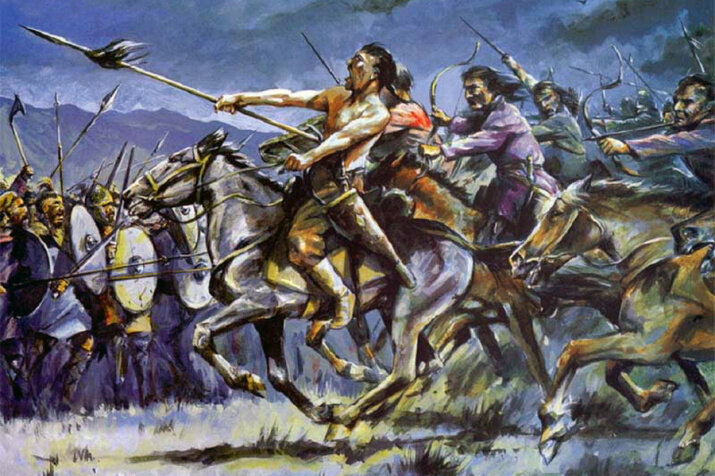
The Zhongnu Offensive
The Xiongnu invasion was only one of many. The Zhongnu also began a systematic offensive against the Celestial Empire and in 771 BC won a major victory over the Zhou forces, settling on the Chinese plain.
Taking advantage of feudal fragmentation, the Jun people systematically captured Chinese lands. At the same time, they actively mixed with the Chinese and adopted Chinese customs.
The Qin principality waged a stubborn struggle against the Jun, carrying out a kind of Reconquista throughout the 7th-6th centuries BC, recapturing Chinese lands. They were able to push part of the Jun back to Lake Kukunor and part to Hinggan, where they began to mix with the Donghu, forming a proto-Mongolian ethnic group.
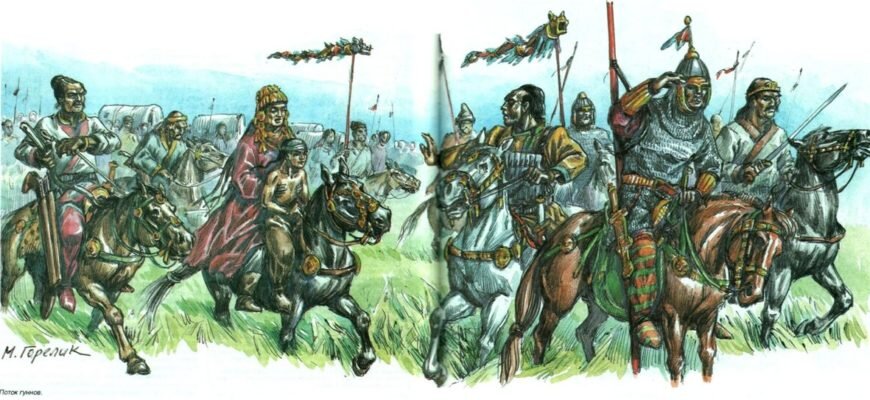
The Patriarchal Xiongnu
While the Rouran waged wars of conquest in China and Chinese migrants (who were mistaken for the Xiongnu) attempted to regain power in the Middle Kingdom, the true Xiongnu led a measured lifestyle.
They roamed in tribes across the steppes of Central Mongolia and Southern Transbaikalia, acting as intermediaries in trade between China and the peoples of Siberia. They had developed bronze metallurgy — apparently, the Prahuns supplied bronze weapons and tools to all their neighbors, including the Chinese. They worshipped the Sun and left behind numerous images on stones depicting scenes of hunting, war, and religious rituals. In other words, they were a creative people.
They had everything they needed for life, except for two things: writing and a state.
Pskhatun and the Proto-Turks
The Xiongnu initially had active contact with the Proto-Turkic tribes, who inhabited the mountain spurs of Western Siberia (Tele). Cultural and interethnic ties were strong and mutually beneficial. The Turks learned methods of steppe warfare from the Xiongnu, and those who went to the steppe later called themselves Oghuz. The Xiongnu learned from the Turks the skill of smelting iron and making various tools and weapons from it. Due to a shortage of iron, the Xiongnu delivered iron from Tibet to the Turks and received finished products in return.
All these contacts brought similar lexical units into the languages of both peoples, which made their languages increasingly similar. But their phenotypes were different — the Xiongnu were of mixed European-Mongoloid type with characteristic high noses, while the Turks were distinctly European with faces wider than those of modern Europeans, white hair, and blue eyes.