

Two Communities of the Xiongnu
Due to the constant influx of Chinese migrants into the nomadic environment of the Xiongnu, two communities formed among them:
One community was traditional and tribal, peacefully grazing their herds in the alpine meadows in summer and in the snow-free steppes in winter. The other community was highly organized and showed no signs of kinship. As a result, historians once believed that the Xiongnu were not a nomadic society based on a clan-tribal structure.
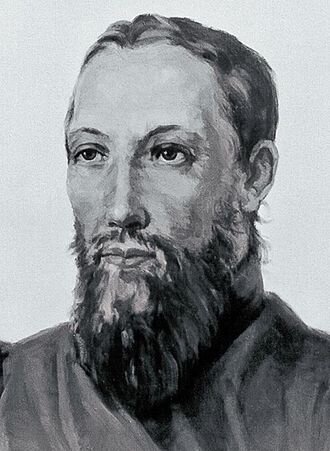
«Those who can wield a bow all join the armored cavalry… everyone engages in military exercises in order to carry out raids… The strong eat the fattest and best food; the old eat the leftovers. The young and strong are respected, the old and weak are little respected… They usually call each other by name; they have no clan names or nicknames» — N.Ya. Bichurin, Collection of Information…, vol. I, p. 40.
Iakinf (Iatsinte; born Nikita Yakovlevich Bichurin, August 29 [September 9], 1777, village of Akulevo, Tsivilsky District, Kazan Province, Russian Empire — May 11 [23], 1853, Saint Petersburg, Russian Empire) — archimandrite of the Russian Orthodox Church (1802–1823); orientalist and traveler, expert in the Chinese language, one of the founders of Russian sinology, the first sinologist to gain European fame — Wikipedia
Zhou and Xiongnu
The ancient Chinese state of Shang-Yin did not wage war against the Xiongnu. It traded its surplus production with the Xiongnu on mutually beneficial terms, and both sides benefited.
This was not the case with the new state of Zhou, which carried out constant raids on the Xiongnu, forcing them to retreat further and further into the Gobi. The Zhou needed slaves for metal production. In response, the Prahuns also began to make raids, which served as an impetus for increasing their organization.
The development of Hunnic society
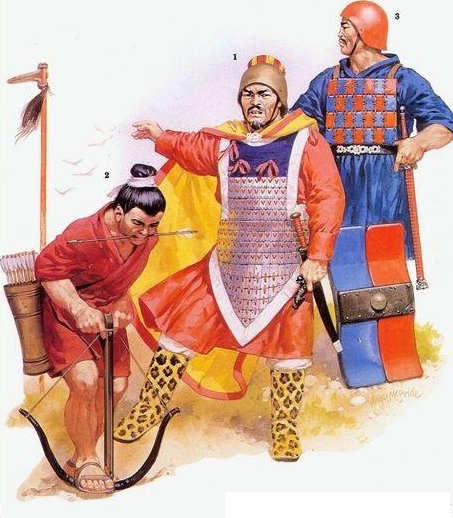
The constant influx of new migrants created two types of economy and two types of attitudes towards the universe in Hunnic society:
In one, consisting of migrants, the spirit of worship of the god of war Ilbis flourished, while the other worshipped the spirits of their ancestors. Some took female slaves for sexual exploitation (and also so that the concubine would be killed when the master died, while the wife remained alive and on the farm). Others captured Chinese women (migrants did not seem to like steppe women very much) and married them. Some rode only horses and lived in dismantlable yurts, while former Chinese migrants lived in tents that were mounted on wheels and pulled by oxen.
This complicated Hunnic society and made it more prepared for various vicissitudes of fate. Of course, the foundations for future contradictions in Hunnic society were also laid — social and ethnic stratification.
Advance through the Gobi
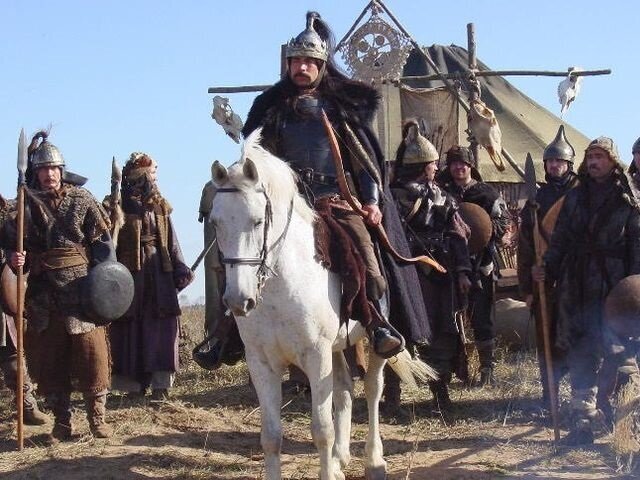
The contradictions between Chinese migrants and the Zhou people were very strong. And it was they (and not the peaceful Hunyun herders) who went further and further north.
Eventually, they crossed the Gobi and found themselves in the Sayan Mountains, where they came into contact with the European-looking Dinglins (possibly the same Hunyuns), who had left the Chinese plains earlier and gone further.
The Hunnu and Chinese mestizos could not compete with the Dinglins, as they were not adapted to mountain conditions. Therefore, they entered into cultural and interethnic contact with them, which mutually enriched both peoples.
But this was not the case with the inhabitants of the Mongolian steppes. The more organized newcomers quickly crushed the small and incapable of resistance local tribes. The Xiongnu were able to organize them into a primitive steppe state — the tribal union of Donghu (proto-Mongols). This happened in the 12th-11th centuries BC.
Neighbors of the Xiongnu
From the middle of the second millennium, the northern steppes on the borders with China underwent significant humidification. Cyclones shifted to this area, and for 1,000 years it was transformed from an arid zone into a fertile oasis, where areas of takyr were interspersed with areas of lush vegetation. Now, only a small basin of the Tarim River in the Xinjiang Uygur Autonomous Region of China remains of its former glory.
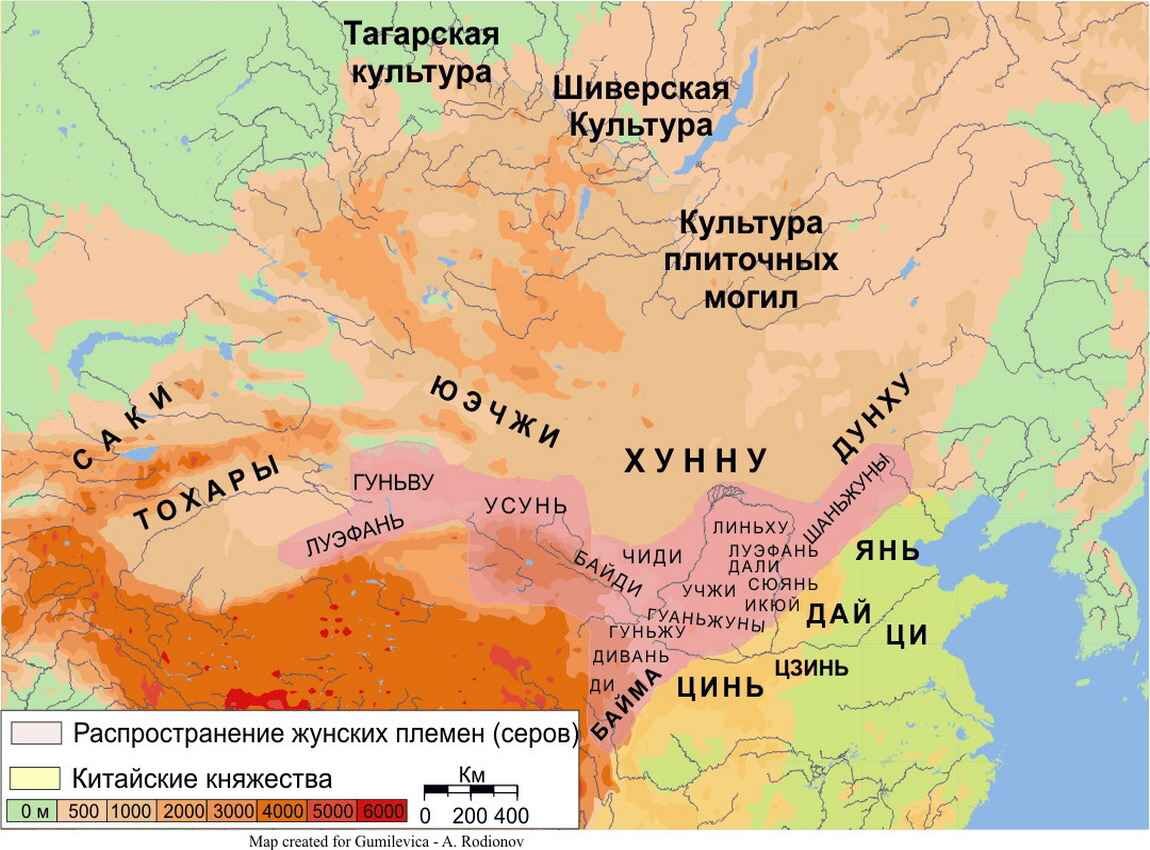
The fertile climate attracted many other ethnic groups to the steppe, such as the Zhuny, who came down from the mountains and began to cultivate the steppe. The Xiongnu were displaced because there was plenty of space, and if they were really in the way, they could go to the Gobi, which at that time was not a waterless desert as it is now, but more resembled the steppes of modern Priaralye.
From the southern foothills of the Sayan Mountains, the European-looking Dinglins began to descend into the steppe, reaching the borders with China (which is when the Chinese learned about them). Along with them came the ancestors of the Kyrgyz (Cigu) and the Kipchaks (Siri). From the east, in the foothills of the Khingan Mountains, where the Zhuns had previously lived, the Donghu began to penetrate, led by their bastiks of Chinese-Xiongnu mixed origin (who were also drawn closer to the homelands of their ancestors and fathers).
From the west, Proto-Scythian tribes (the future Yuezhi) began to penetrate the steppes. They behaved quite aggressively and in the future became a big problem for the generally peaceful Huns.
In addition to them, Siberian peoples of Paleo-Asian origin (related to American Indians) and the ancestors of Tibetans penetrated the steppe.
All this confusion is now a headache for modern archaeologists, who find burials of various races—Mongoloid, Caucasoid, Paleo-Asian, and God knows what else—in one area of the steppe or another. Archaeologists do not understand how several dozen ethnic groups of different racial origins could be located in one area. Although the explanation for this is simple: favorable climatic conditions in the eastern part of the Great Steppe, where there was enough space for everyone, from Chinese migrants to the ancestors of the Chingachgooks who did not migrate to America.