
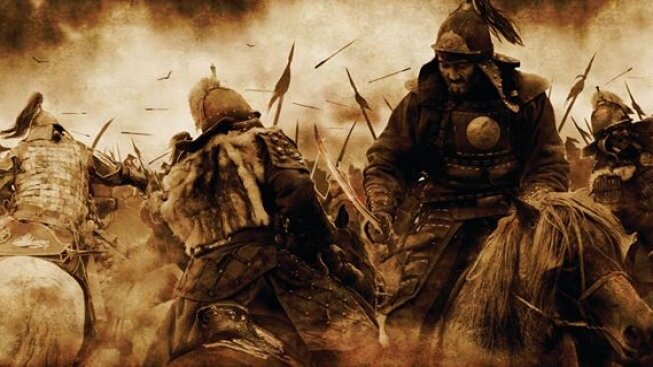
The Strife Between the Southern and Northern Xiongnu
The Northern Xiongnu wanted to establish peaceful relations with the Celestial Empire. However, the Southern Xiongnu, who did not want any competitors, stood in their way.
Therefore, the Southern Xiongnu constantly attacked the Northern Xiongnu, keeping them in a state of border warfare. The raid of 86 AD was particularly severe, during which the Northern Xiongnu lost a large number of livestock.
The defeat of the northern Xiongnu
In 87 AD, the strengthened Xianbei raided the northern Xiongnu, executing their shanyu Yulu. Then, in 89 AD, the Chinese army attacked the northern Xiongnu. In 91, the campaign was repeated and the Xiongnu finally surrendered. The last shanyu of the Mode Yuchugyan clan was killed, and the aristocrats of the Huayan (Hare) clan took over the reins of power among the Northern Xiongnu.
Many northern Xiongnu migrated to the southern Xiongnu, whose numbers in times of peace and tranquility reached 34,000 yurts (237,000 people).
But there were also unconquered northern Xiongnu who fled to southern Siberia and modern-day Central Kazakhstan.
Western Region
In the Western Region (Eastern Turkestan), the Chinese governor Ban Chao sat quietly and waited for the right moment.
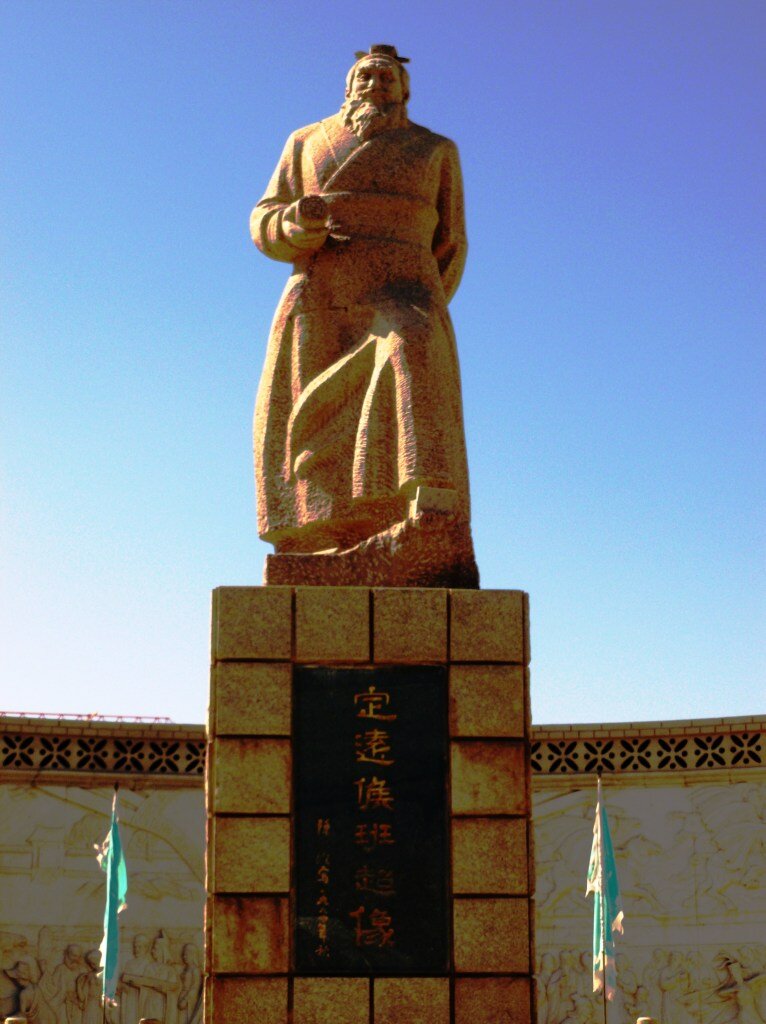
Ban Chao (32-102), adult name Zhongsheng, was a military leader and diplomat of ancient China during the Han dynasty. He was the son of the historian Ban Biao, who began compiling the “Han Shu,” and the brother of the historian Ban Gu, who completed it.
And he waited. In 87 AD, he was finally able to destroy the rebel Kashgarian troops, who were actively fighting against China. The following year, he captured the pro-Chinese Yarkand, which had fallen into the hands of anti-Chinese rebels. In 90 AD, the Chinese finally drove the Xiongnu out of Hami. The Xiongnu retained only their possessions in the northeast.
Strife among the southern Xiongnu
In 93, the southern shanyu Tuntuhe died. A certain Ango, who did not enjoy the trust of the people, became shanyu. However, his nephew Shigi did enjoy their trust. The latter wrote denunciations (and why did the people like him so much?) to the Chinese, who put him in power, and Ango was killed. But then the people, who did not like the way Shigu came to power, rebelled. Fifteen clans of the Southern Xiongnu appointed the son of the late Shanyu Tuntuhe, Fynheu, as the new Shanyu. He did not want to be a ruler, but life forced him to. Realizing that fighting China in the current circumstances was futile, he left with his subjects to the north.
China’s conquest of Tibet
The Chinese regularly raided the lands of the Tibetan Khans, which naturally irritated the latter. In response, the Khans began to raid Chinese lands.
The clashes were fierce, and the outnumbered Kyan eventually asked for peace, which was granted to them in 102. Thus, Tibet was once again conquered by China.
The Northern Xiongnu enter the struggle with China
In 104, the Northern Xiongnu attempted to negotiate with China, but without success. The Xiongnu then decided to take action and, with the support of the local population, captured the entire western border in 105. This allowed them to join forces with the Xiongnu who had migrated to the territory of modern-day Central Kazakhstan.
However, the Xianbei grew stronger and the Xiongnu once again entered into confrontation with their former tribesmen (in 93 AD, 100,000 Xiongnu families adopted the ethnonym Xianbei). The Dingling also caused trouble, remembering the old unresolved question of who was more important, them or the Xiongnu.
These problems caused the Xiongnu to lose control over part of the western border — Kashgar, Yarkand, and Hotan came under the protectorate of the Kushan Empire. In 125, the Chinese were able to regain control of Cheshi, an important stronghold.
After that, the Chinese were able to restore their influence in Kashgar, Yarkand, and Hotan. However, their position was precarious, as the Xiongnu loomed over them from the north and regularly carried out raids, plundering and returning to their nomadic camps with impunity.
The Chinese were also troubled by the Kyan-Tibetans. In 140, a general uprising broke out again in Tibet, which did not stop despite its brutal suppression by the Chinese army.