

Geographical features and clearly defined borders have turned the Middle Yenisei Valley into a unique “ethnogenetic cauldron.” It should be added that the mountain ranges surrounding the Minusinsk Basin created relative isolation of the local population from other regions of Central Asia, which influenced the ethnic identity of the local people. The Khakass-Minusinsk region is an area characterized by diverse landscapes, which influenced the processes of ethnogenesis.
The process of the formation of the Khakas ethnic group has its roots in the pre-Turkic era. This is evidenced by numerous anthropological materials, archaeological data, historical folklore, toponymy, and ethnonymy. The formation of the ethnic foundation of the modern Khakass people began during the Xiongnu-Sarmatian period following the arrival in the Sayan-Altai region of a number of Turkic-speaking Gyan-Gunei and Xiongnu ethnic groups from Central Asia. During this time, intermingling occurred with the existing “Siberian-Scythian” population of the Tagar culture. Ethnic processes during the Tashtyk period (1st century BCE – 5th century CE) led to the formation of the ancient Kyrgyz ethnic group. Modern Khakass people have largely inherited the anthropological features of the Tagars and Tashtyk people. This was noted by the renowned anthropologists G.F. Debets and V.P. Alekseev. Of interest is the perspective on the origin of the Europoid features among the Khakass offered by one of the founders of Soviet anthropology, A.I. Yarkho. He pointed out that the Khakass, apparently, belong to a distinct, undifferentiated, “pure” race.
In the Middle Ages, the ethnogenesis of the Khakass people proceeded in two stages. The initial “Kyrgyz stage” (6th–13th centuries) is associated with the period of the Kyrgyz state (one of the first on the territory of modern Russia). During this time, the distinctive features of Khakass culture, language, and the modern anthropological type took shape. The next stage (14th–18th centuries) was a time of formation and development of the ethnopolitical union known, according to V.Y. Butanaev’s concept, as “Hongorai,” which became the foundation of the Khakas people. Administratively, the state ethno-political union was divided into four principalities (ulus): Ezersky, Altyrsky, Altysarsky, and Tubinsky. The core of the union was an elite group of Kyrgyz who rallied clan groups around them. Subsequently, four tribal groups of the Khakass people emerged in place of the former principalities.
There were no sharp confessional, cultural, linguistic, or other barriers, which facilitated the process of the local population coalescing into a single ethnic group. This is indicated by historical folklore, 17th-century Russian written records noting that most tribal groups were related to the Kyrgyz clan and tribe, ethnographic data on modern Fuyuan Kyrgyz (living in northeastern China), and other sources. In 1703, a significant portion of the population of the Khakass-Minusinsk region was forcibly resettled by the Oirat rulers to Dzungaria. This action facilitated the annexation of Khakassia to Russia and marked the beginning of a new “Russian” phase of ethnogenesis (18th–19th centuries), characterized by the consolidation of the population of the former Kyrgyz uluses and their kyshtym (dependent, vassal) settlements. By this time, the general national terms “Kyrgyz” and “Kyrgyz Tatars” or “Kyrgyz people” were replaced by the ethnonym “Tatars” (Abakan, Minusinsk). The formation of the Khakas ethnic group was completed in the early 19th century.
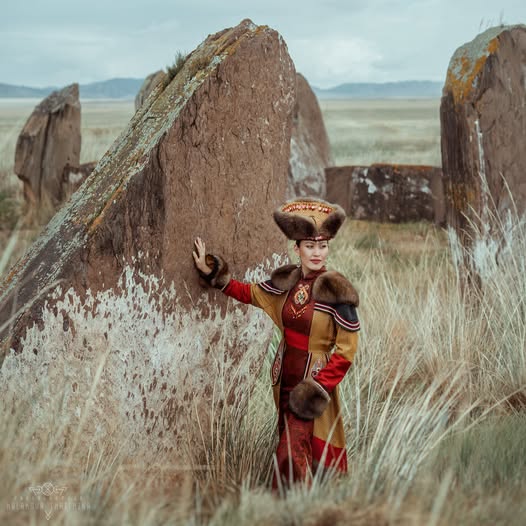
In the 19th century, the Khakass were divided into six ethnic groups within the four Steppe Dumas that had been established. The names of the Dumas led the population of the former principalities to adopt new tribal names derived from the names of the largest clans. In northwestern Khakassia, in the valleys of the Iyus and Chulym rivers, the Kyzyl people formed. The lower reaches of the Abakan and the entire left-bank valley of the Middle Yenisei were the territory inhabited by the Kachin people. The Koibals lived on the right bank of the Yenisei and in the area between the Abakan and Yenisei rivers. Southern Khakassia was the territory of the Sagays (along with the Beltirs and Biryusins—southern Shors—who had merged with them). An analysis of the clan composition shows that there are approximately 1,360 surnames among the Khakass people, all of which trace their genealogy back to the names of ancestors who lived in the mid-18th century. Approximately 800 different surnames (more than 60% of the total) trace their roots to the population of the former uluses of the Kyrgyz region, of which about 75, or 7%, are descended from former princes.
In 1918, following the change of power in the country, the indigenous population of the southern Yenisei Governorate adopted the ethnonym “Khakas” as their national self-designation at a national congress. Subsequently, throughout the 20th and early 21st centuries, the local cultural and linguistic characteristics of the Khakas sub-ethnic groups were standardized, in part under the influence of Soviet cultural doctrine and policy. V.P. Krivonogov, a researcher of contemporary ethnic processes among the Khakass people, noted that belonging to a particular subethnic group does not play a significant role in life modern-day Khakass people, sometimes serving merely as a reminder of past divisions. It is also worth noting the presence of assimilation processes, which have led to a significant portion of the Khakass population no longer knowing their native language, losing their ethnic identity, and entering into interethnic marriages. Today, the Khakas population lives in a compact area covering a significant portion of the Askizsky District, as well as in individual settlements throughout the Republic of Khakassia.