
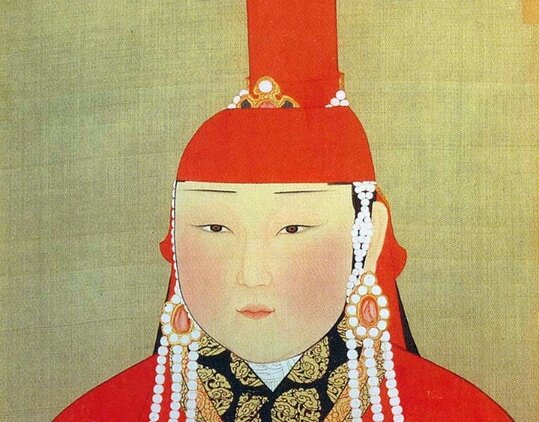
“I will take Jijek—the widow of Khan Berke. Let her be the senior member of my harem,” declared Mengu-Timur. Such was the custom: concubines were for pleasure; wives were for power.
No murmur was heard after these words, even though Berke, whose widow Jijek was, was the new khan’s great-uncle. We do not know how old the widow was; perhaps she was even still quite young, though this did not trouble anyone. Mongol customs differed greatly from those accepted in the Russian principalities.
By the time the Mongol armies invaded the territories of the Polovtsians and the Russian principalities, their wedding rites fully conformed to ancient traditions. Both the purchase of wives and instances of bride kidnapping were practiced. Polygamy had been deeply rooted in Mongol culture since ancient times.

Marriages between close relatives were prohibited, but “levirate”—the custom of marrying one’s brother’s widow to continue the family line—was made mandatory. The Mongols not only adhered to this custom themselves but also sought to spread it among the conquered peoples. For example, in 1246, Batu forced Prince Andrei Mstislavich of Chernigov to marry his brother’s widow.
Another ancient tradition was marrying one’s father’s widows (with the exception of one’s own mother). If the father was deceased, the successor to the late khan would take his widows into his harem. This custom was abandoned only with the adoption of Islam, which explicitly prohibits such marriages in the Quran, calling them “abominable, shameful,” and “an evil custom.”
In 1276, Khan Mengu-Timur attempted to force the son of the Seljuk sultan to marry his father’s widow, but the latter, being a Muslim, chose to flee rather than violate the religious prohibition. But Mengu-Timur himself was not a Muslim; he worshipped the Great Sky—Tengri—and for him, taking Berke Khan’s widow into his harem was a matter of course. Moreover, Jijek-khatun was not merely a ceremonial wife; she played a very significant role in politics and international relations.
Where this woman came from is unknown. Whether this was her birth name or a name she received while in Berke’s harem remains a mystery. There are various translations of her name—“little flower” or “little one.” Please correct me in the comments if you know better.
What do we know about her first husband? That he was a Muslim, had no sons, and founded the Orthodox Sarsk Diocese in Sarai. And yes, Berke himself moved Sarai to a new location. It was Sarai-Batu, became Sarai-Berke, and in its new location, it was recorded in the chronicles as the capital of the Golden Horde.
Khan Berke had three wives: Tagtagai-khatun, Jijek-khatun, and Kehar-khatun. Tagtagai was the eldest, nominally the eldest, because contemporaries noted that it was Jijek who held the dominant position. It was to her that Berke entrusted the reception of the Egyptian envoys; it was she who, following her husband, adopted his faith—Islam.
Moreover, it was Jijek who “toppled” the all-powerful khanum Boraqchin—the widow of Batu himself—from her pedestal, a woman who had resolved to place her own protégés on the khan’s throne after her husband’s death. All Berke had to do was give the order, and Boraqchin was executed. Formally, it was for her ties to the hostile Hulaguids; in reality, it was for sticking her nose too far into politics.
After Borakchin’s fall, little Tuda-Mengu, Mengu-Timur’s brother, was entrusted to Jijek; she raised him, and in fact she stood as a shadow behind Mengu-Timur, just as she had stood before behind Berke, and as she would later stand behind her protégé Tuda-Mengu.
The final say, the very last word—these belonged to this woman; neither her first nor her second husband made decisions without her involvement. Was she, in fact, Mengu-Timur’s wife? I do not know; perhaps their marriage was merely ceremonial, and who knows—perhaps the “little” khatun was still quite beautiful, allowing Mengu-Timur to enjoy her company as they shared a bed. There is evidence that Jijek had a son by Mengu-Timur named Algui.
In the Golden Horde, as in the Mongol Empire as a whole, women were treated with respect. They did not cover their faces and, when necessary, participated in battles, wielding both swords and bows. At the same time, just like men, women were taken captive and were aware of the possible consequences.
A 13th-century Mongol woman had to be able to drive carts, set up and take down yurts, and perform other household duties. The wives of high-ranking officials held a special status. During the population census, known as the “chisl,” in 1257–1259, the wives of census takers accompanied their husbands and participated in assessing taxable classes.
Unlike the traditions of Muscovite Rus’, women attended the khans’ feasts on an equal footing with men, serving kumis to the guests. The khans’ official wives, especially the senior ones, had their own sources of income and land holdings, engaged in charity work, and maintained their own chancelleries and stewards, with up to a hundred carts, dozens of maidservants, and eunuchs.
Later, during Khan Tokhta’s illness in 1312, his senior wife received foreign envoys on her own. She also organized a farewell reception for the Egyptian delegation following Tokhta’s death. And Nogai’s wife participated in important negotiations in 1292–1293. Thus, Jijek-khatun was considered the de facto ruler of the Horde.
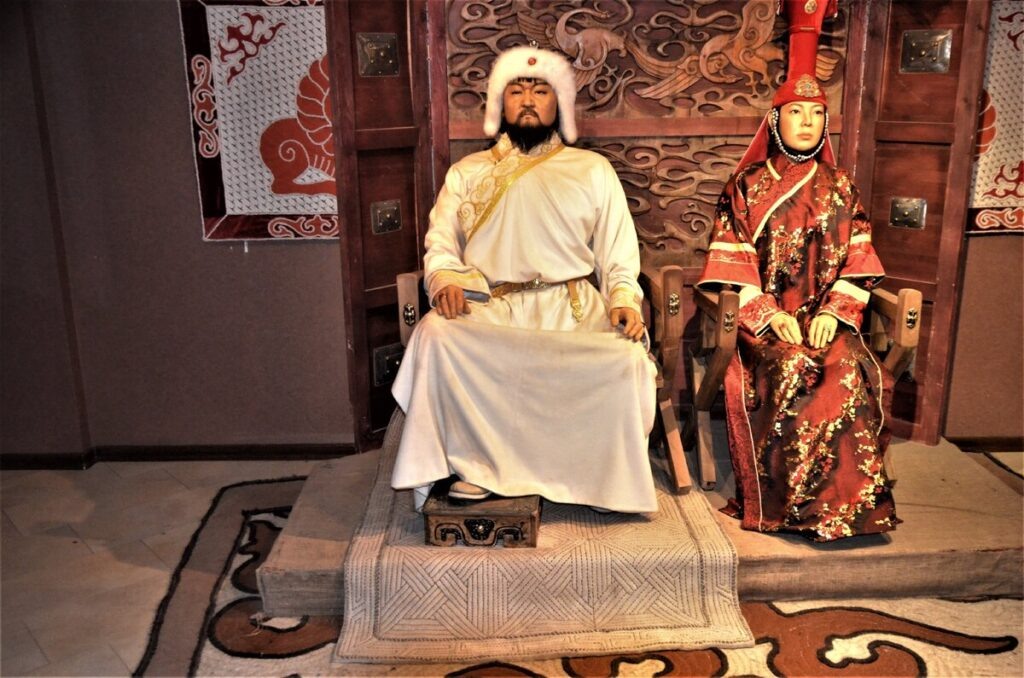
Russian princes who came to the Horde to resolve important disputes, attend the khan’s court, and receive yarliks would first visit the khan’s wives with lavish gifts, then present gifts to the viziers, and only after that would a reception with the khan be arranged. Naturally, the khan was already prepared, and the decision was predetermined.
“The night cuckoo,” sighed the princes and boyars, setting aside the finest silver, the most exquisite fabrics, the largest pearls, and the most beautiful sable furs for Jijek-khatun. “She pretends that nothing depends on her, but she is the one who decides everything.”
Why, then, had the no longer young Dzhidzhek-khatun seized such power? Perhaps because she knew her second husband’s weaknesses? Perhaps because Khan Mengu-Timur had a great weakness for drink. He preferred Russian mead, while order in the Saray was maintained by the viziers and the wise Jijek-khatun.
But nothing lasts forever; Mengu-Timur lived to be about 40 years old, and in 1280 (according to other sources, in 1282) he passed away. After the death of her second husband, Jijek supported the followers of Tuda-Mengu, her late husband’s brother and her own protégé. In other words, she attempted to do what had once brought about the downfall of Borakchin.
Tuda-Mengu sought to establish an alliance with Mamluk Egypt and adhered to Sufi Islam. Soon, Tuda-Mengu left state affairs to Jijek-khatun. After all, she had handled them under the two previous khans; let her continue to do so.
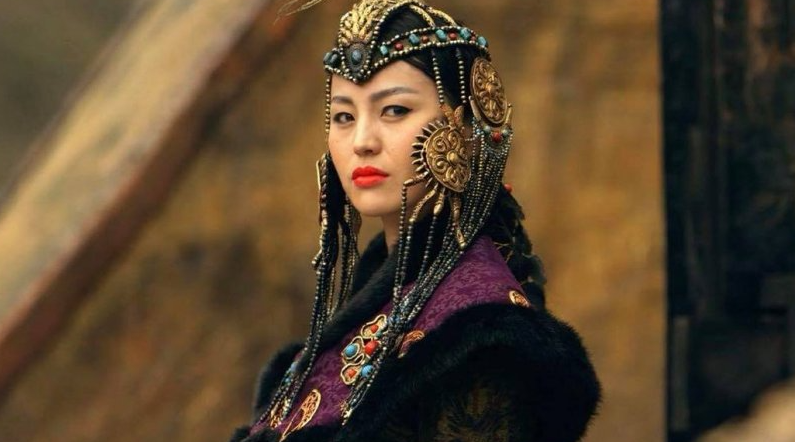
But Jijek-khatun was no longer young, and both the temnik Nogai and Mengu-Timur’s own sons had a different vision of power within the Horde. Political intrigues began. Initially, Nogai managed to convince Mengu-Timur’s sons and nephews of the need to depose Tuda-Mengu and enthrone Tula-Buga. The first “power struggle” began in the Horde, marked by a succession of khans.
Eventually, Nogai persuaded Tula-Buga and several princes, including Mengu-Timur’s son Alguy, to attend a meeting where they were captured and executed. As a result, in 1291, Tokhta ascended the throne of the Golden Horde.
The elderly Jijek-khatun was no longer needed by the new khan. Nogai solved this problem by ordering the “removal” of the woman who had been moving the pieces on the chessboard of Horde politics for nearly half a century. For many decades, until the rise of Taidula, decisions in the Sarai were made by men.