
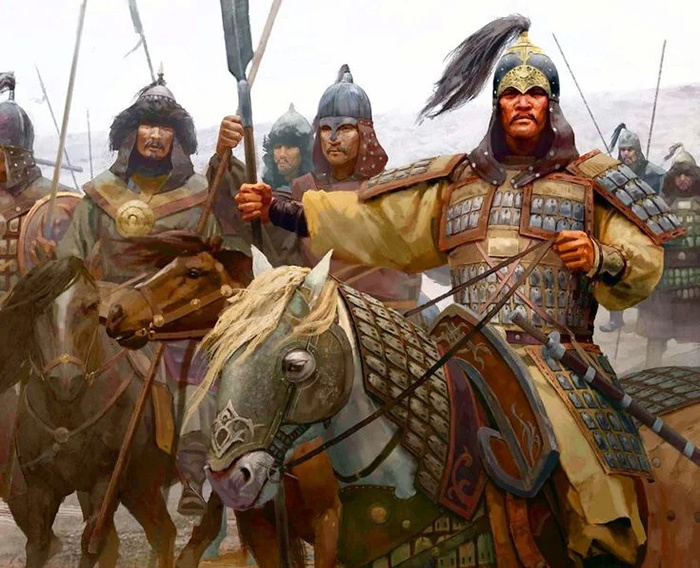
They emerged from the Altai Mountains with hammers in hand—and within half a century, they held half the known world in their grasp.
This is no legend. This is the history of the Turkic Khaganate—one of the largest nomadic empires that ever existed on earth.
Most people look at a map of Eurasia and see the familiar borders: China to the east, Persia to the south, Byzantium to the west. Few stop to consider that in the 6th century, a state existed between all these empires that dictated terms to each of them. And it all began—with iron.
The Altai is rich in ore. For centuries, local tribes smelted metal and forged tools. When Russian pioneers arrived in these lands, they called the local inhabitants—the Shors—“blacksmiths.” This is where the name Novokuznetsk would later come from. But long before this city, long before the Russians, people emerged from these same mountains whom historians would call Turks.
Lev Gumilev called them “Turkuts”—to distinguish them from later Turkic-speaking peoples. But the essence is the same: it was here, in the iron-rich mountains, that a power was maturing that was destined to change the face of an entire continent.
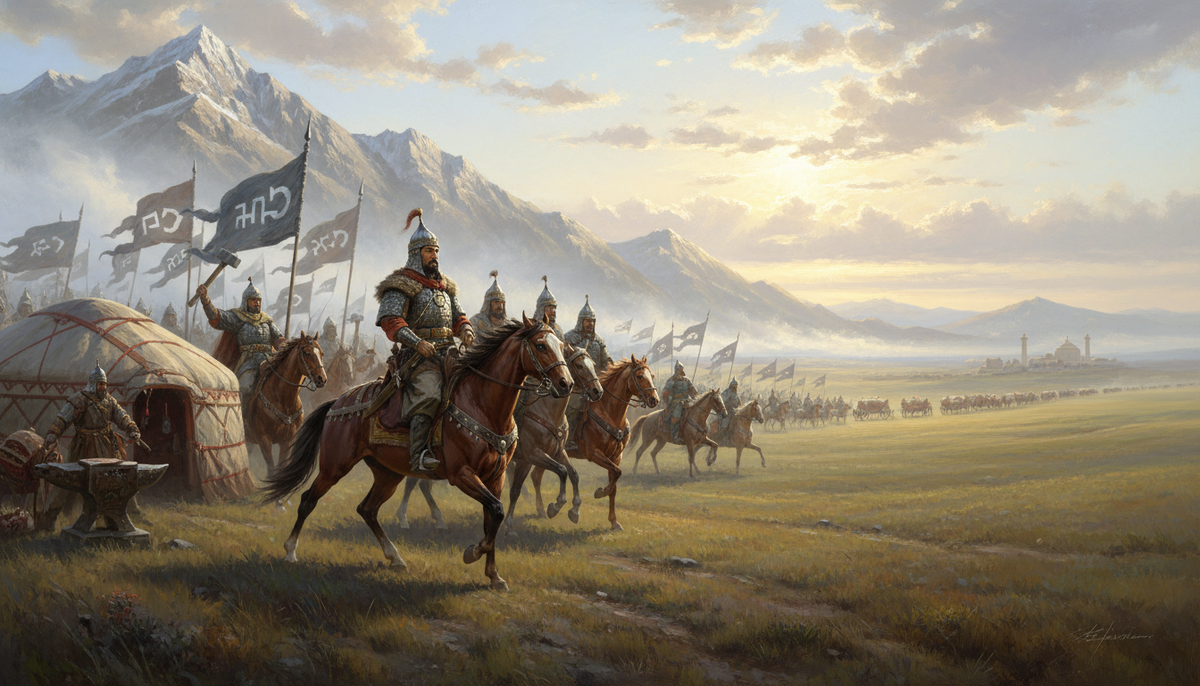
Until the mid-6th century, tribes of the Ashina clan lived in Altai under the rule of the Ruzhan Khaganate. What is a khagan? It is not merely a ruler—it is the khan of khans, the supreme sovereign of the nomadic world. The Rouran kept the Turkic tribes in subjection. But by the end of the 5th century, the Rouran leadership was mired in internal strife. Their power began to falter.
The tribes sensed their suzerain’s weakness—and rose in rebellion.
The year 545. Bumyn of the Ashina clan becomes khan of the Tiele tribes. He waits six years. He forms an alliance with the Chinese kingdom of Western Wei. And in 551, he deals a crushing blow to the Rouran.
Bumyn assumes the title “Ilkhan”—ruler of the peoples.
This is where things get really interesting. Because the Turks didn’t just defeat yet another set of neighbors. They changed the very logic of warfare on the steppe.
It was the Turks who were the first to use stirrups on a massive scale in cavalry combat. It might seem like just an iron loop to rest your foot in. A trifle. But this “trifle” turned the rider into a living battering ram. Stability in the saddle allowed him to strike with a spear at full force without falling from the horse. Heavy cavalry—a formidable weapon that their rivals did not possess.
This was technological superiority. Much like today—rockets against infantry.
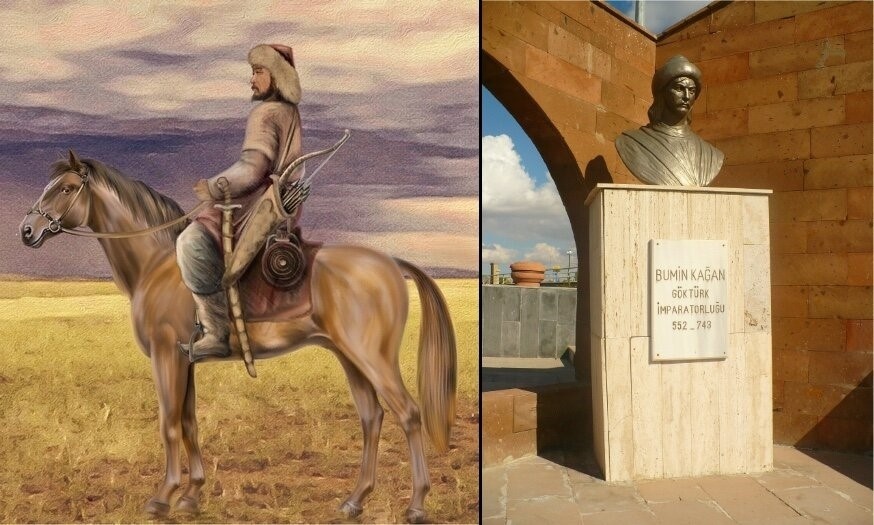
After Bumyn’s death in 552, the throne passed to his son. He crushed the remnants of the Rouran. Then—under his brother Mughan—the Turks marched westward. The campaign was led by Bumyn’s younger brother, Istemi Khan.
Within a few years, his troops had advanced from the Altai Mountains to the shores of the Aral Sea. There they encountered resistance from the Hephthalites—a powerful nomadic confederation. It took several more years to break them. By 558, Istemi had reached the Volga.
The river stopped him. Why—no one knows. Perhaps logistics. Perhaps political calculation. The Turks did not cross. But even then, their empire stretched from the Khingan Mountains in the east to the banks of the great Russian river in the west.
It was not just territory. It was control over trade.
The Great Silk Road—the main artery of the medieval economy—ran through the lands of the Turkic Khaganate. Chinese silks, Persian incense, Byzantine gold. All of this moved across the steppe. And for every trade route, payment was made to whoever controlled the steppe.
The Turks controlled it.
In 564, they finally crushed the Hephthalites and captured Tokharistan—a strategic crossroads in Central Asia. A year later, they treacherously turned their weapons against their Persian allies. In the Battle of Nahshab, the Persian army was defeated. Sogdiana—the richest trading region—fell under the khagan’s rule.
In 567, the Turks struck the Hephthalites again, finishing them off near Bukhara. The Great Silk Road was in their hands.
And in 575, the Persians and Byzantium united to drive the Turks from the western frontiers. And they lost again. Turkic troops reached the Western Caucasus and Crimea.
In thirty years—from a mountain tribe to an empire with which China, Persia, and Byzantium all traded simultaneously.
This is no accident. It is a pattern.
The Toba tribe, related to the Turks, had settled in China even earlier and eventually seized power in the Sui Empire. In 618, they founded a new dynasty—the Tang. The very one under which China would experience one of its golden ages. It was Tang craftsmen who created the rigid cavalry saddle with high pommel—a technology that, centuries later, would reach Europe via the Magyar Hungarians and forever change the face of knightly combat.
Blacksmiths from Altai stand at the origins of what we today call European chivalry.
But every empire carries within it the seeds of its own collapse.
After the death of Tobo Khan in 581, internal strife broke out within the Khaganate. Too many claimants. Too many tribes with conflicting interests. The Chinese Empire, shrewd and patient, bided its time—and its moment came.
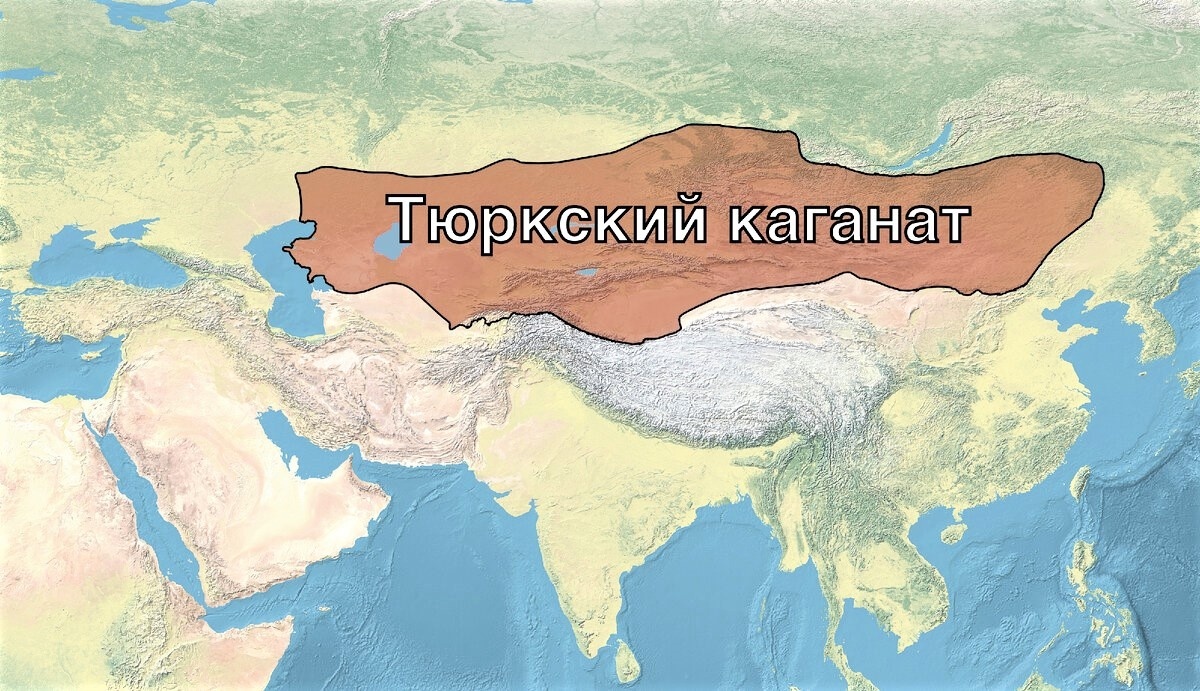
In 603, the Turkic Khaganate split into Western and Eastern halves.
The Western half lasted until 658. Its capital, Suyab, was located in what is now Kyrgyzstan. The Eastern half fell earlier: in 630, it was conquered by the Tang Dynasty of China.
But the story did not end there.
Half a century later, the Turks rose up in rebellion, overthrew Chinese rule, and reestablished the Eastern Khaganate—which went down in history as the Kok-Turkic, or Heavenly Turkic, Khaganate. It existed from 682 to 744.
Kül-Tegin, a military leader and co-ruler of Bilge Khan, lived during this era. His stone portrait and epitaph, written in Turkic runes, have survived to this day. The first known Turkic poet, Yoldyg-Tegin, left behind words that sound like a timeless lesson: “If you, the Turkic people, do not separate yourselves from your khagan, from your shores, from your homeland—you yourselves will live happily.”
Simple words. But behind them lies the experience of a state that lost itself precisely when it forgot to hold together.
The descendants of those Altai blacksmiths live today throughout Eurasia. From Yakutia to Turkey. From Siberia to Iran. They eat beshbarmak, sing with throat singing, and speak languages of the same family.
And most of them do not know that their ancestors once held in their hands the threads that bound China, Persia, and Byzantium into a single trade network.
A people who emerged from mountain forges built one of the greatest empires in human history. Not through numerical superiority. Not through gold. But through determination, iron discipline, and the ability to seize the moment.