
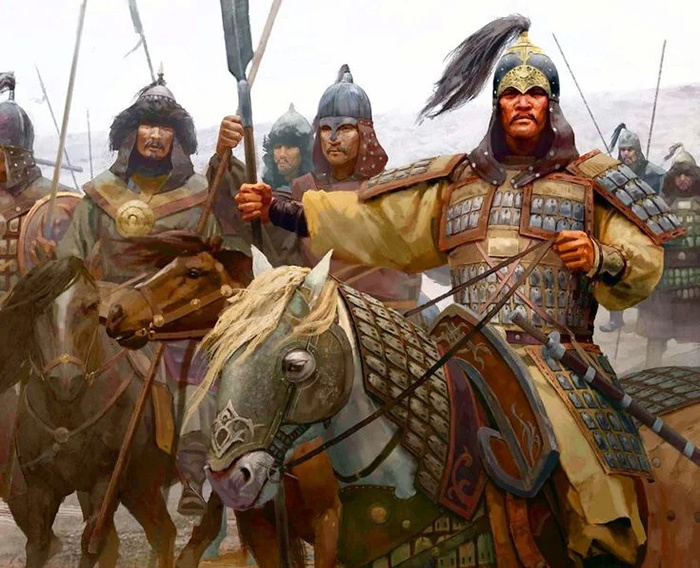
Attempt to create a unitary state of the Xiongnu
Nomadic states do not have territories as their administrative basis, but rather a more flexible structure — the nomadic clan. Therefore, most rulers of nomadic empires usually did not interfere in the affairs of the clan, demanding only loyalty and the provision of warriors.
This was also the case with the Xiongnu. However, with the decline of the empire’s power and, accordingly, of the 24 clans that comprised it, there was a need to reform the state into a unitary one, that is, to create a system of state power from top to bottom.
The first to attempt this was Shanyu Oyan Gyudi, who came to power in 60 BC. In 59, he tried to replace the son of the deceased elder of the Yugyan clan with his own son. This was unheard of in the steppes, and the Yugyans migrated to the Uhuyans. Several other Xiongnu clans, who were relatives of the Yugyan, suffered as a result.
In the end, the elders of the Xiongnu clans united and went against the rebel. Abandoned by everyone, Oyan Gyudi committed suicide.
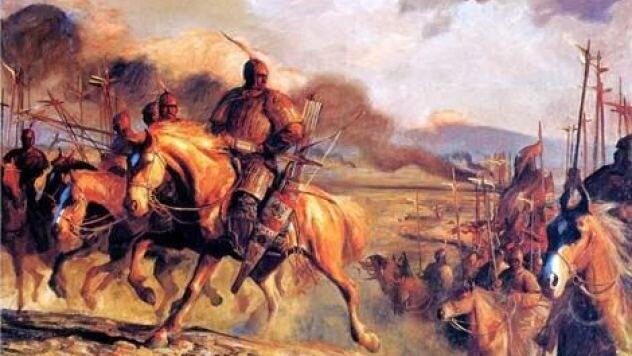
Vassal dependence on the Celestial Empire
The Xiongnu did not want to create a unitary state, and that was their choice. But a state either exists or it does not. The Xiongnu empire had long lacked order in its judicial system, which caused aggrieved clans to leave and enter the service of the Chinese. There was no army, as the clan elders did not want to send their young kinsmen to serve in the shanyu’s tumens. There was no state itself, in which a haphazard clan organization prevailed instead of a centralized system.
Therefore, the next Shanyu, Huhanye, due to circumstances (and not because he was a Sinophile), was forced to become a vassal of the Han emperor Xuan Di in 53, personally going to him for an audience. He left his son as a hostage.
After that, the part of the Xiongnu that remained loyal to Huhanye (there were two other shanyu chosen by another part of the Xiongnu) settled near the Great Wall of China and began to receive payment for its protection.
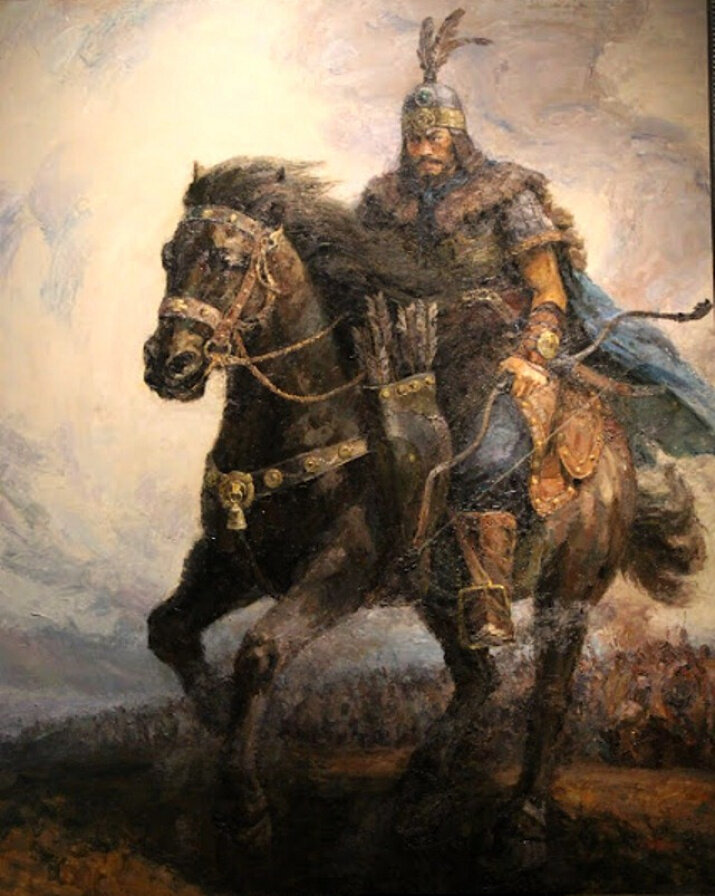
Western Han Province
The sharp weakening of the Xiongnu state allowed the Celestial Empire to include both caravan routes in modern East Turkestan in its territory by 59 BC.
A Chinese governor was appointed there, whose task was to monitor the Wusun and Kangju.
Close cooperation with the Chinese did not bring anything good to the Wusun. Naturally, they did not receive any income from the caravan trade, but Chinese intelligence terrorized Wusun society, effectively dividing it into two groups — China-philes and Xiongnu-philes, which plunged the Wusun into civil war.
Seeing this situation among their neighbors, the Kangjui were not eager to cooperate closely with China. Therefore, the Kangjui adhered to their traditional alliance with the nomadic Xiongnu, who shared their surplus nomadic produce with them in exchange for fodder grain.
In 48 BC, the Kangjuis accepted a 3,000-strong detachment led by Prince Zhizhi of the royal Xiongnu clan, who did not want to become a Chinese vassal.
With the support of the Kangjui, this detachment defeated the capital of the Wusun, Chigu, and fortified it. There is evidence that the garrison of the fortress consisted of Roman legionaries who had been captured by the Parthians, allies of the Kangjui. The legionaries were sent far to the east. The Wusun had to retreat to their eastern territories.

But the following year, the Chinese detachment of the western governor returned Chigu to the Wusun, and Zhizhu was killed along with his tribesmen. After that, the Kangju were forced to conclude a trade agreement with China.
The Chinese now controlled the entire section of the Great Silk Road from Gansu to Parthia. What Emperor Wu Di had so long sought was finally achieved.