
Social and economic situation in Han China
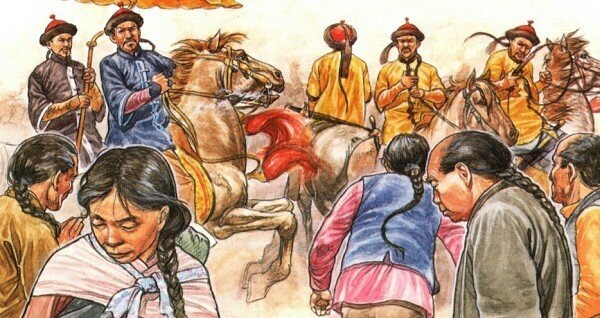
For the Chinese people, the expansion of China’s borders to Central Asia and the subjugation of the Xiongnu did not bring anything good. On the contrary, the maintenance of the nomadic army and the border infrastructure required the introduction of new taxes, which became a burden on the peasants. Duties were imposed on boats and carts, which sharply reduced the trade activity of the Chinese peasantry and forced them to abandon communications (like modern high rates on recycling).
But unscrupulous officials from the state apparatus profited from the smuggling trade with the nomads, selling them silk and rice, which they received as a result of corruption. And although the peasants were allowed to trade with the nomads, they did not do so because of the high duties. Accordingly, the officials had no competitors in cross-border trade, and having administrative levers in their hands, they began to grow rich rapidly, and the peasants became impoverished. All this led to enormous social inequality, which eventually caused the collapse of the Han state.
Xiongnu Vassals
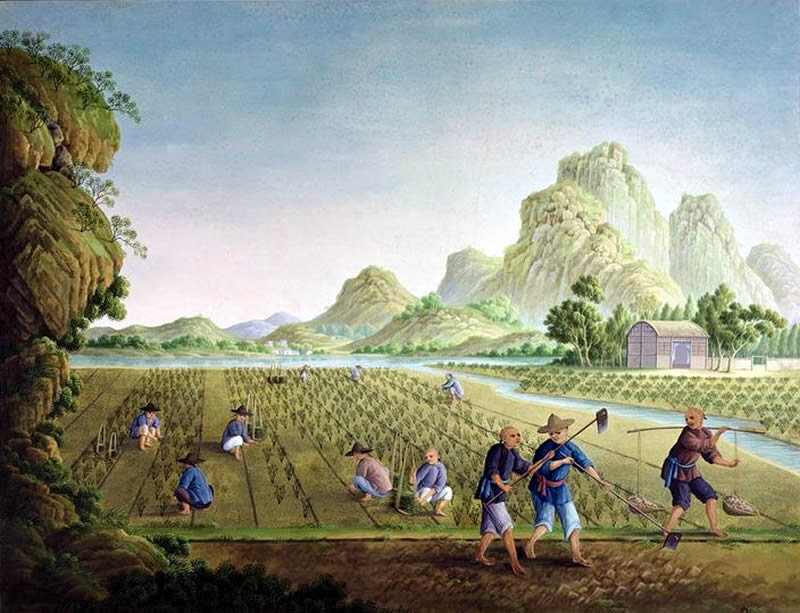
The situation was favorable for the vassal Han Xiongnu. They served as border guards and, receiving everything they needed from the Chinese, lived in contentment. Over 30 years of peaceful life, the Xiongnu have increased in number and regained their strength in the steppe.
The Xiongnu had several shanyu, who became only those of the ruler’s eldest sons who had been in the Khanate of the Han Emperor.
As long as China was ruled by the emperors themselves, everything was fine — the Chinese and the nomads got along with each other and all disputes were settled peacefully.
But when the favorite Wang Mang came to actual power under the young Emperor Ping Di, everything changed.
Central Asia around 30 BC
Usurpation of power by Wang Mang
In 9 AD, Wang Mang consolidated his personal power and became the emperor of the new Xing Dynasty. The new emperor acted in favor of the bureaucracy, of which he became the patron.
He immediately strengthened the state monopoly on almost all types of economic activity by introducing new taxes on hunting and fishing.
The crowning achievement of his reforms was the permission to sell state and public lands (as well as the slaves who worked on them) into private hands, which was immediately taken advantage of by officials who became rich during his reign. They began to massively buy up these lands from the impoverished aristocracy, which then lost the last threads of government in the country.
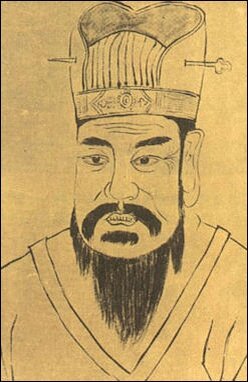
Wang Mang (45 BC — October 6, 23) was a Chinese emperor in 9-23, who interrupted the Liu dynasty, which ruled in the Western Han Empire, the founder of the Xin Empire (that is, the «New» One), its only representative.
Wang Mang and Xiongnu
In the year of his accession to the throne, Wang Mang changed the seal of the Xiongnu Shanyu Wuzhilu, giving him the one that was issued to the highest officials of the Celestial Empire — that is, ordinary managers. At the same time, previously, Shanyu was considered equal to the emperor himself and was only his vassal, remaining an independent ruler in his domain.
Of course, Shanyu and the Xiongnu did not like this, and instead of protecting the borders, they began to raid Chinese border lands.
But in 13, Wuzhilu dies and Chinese intelligence builds Chinese Hyang in his place. He somehow pacifies the Huns (the pro-Chinese party was obviously strong, otherwise he alone was unlikely to succeed) and gives all Chinese defectors to the Chinese.
However, the Chinese executed some of the Xiongnu hostages at court at the beginning of the Xiongnu raids. Hyang’s son was among those executed. After that, he lost all interest in life and everything went by itself.
The Xiongnu were able to negotiate an alliance with the Wuhuans, and at that time Wang Mang disbanded the troops, considering that they were no longer needed. Therefore, the Xiongnu corrected the mistake of their ancestors and first of all captured the Western Region (East Turkestan), which again became their patrimony.
The loss of the Western Region was a big blow to the Chinese economy, which lost revenue from caravans. But Wang Mang did not attach importance to this and even withdrew troops from the western border, throwing them into suppressing popular uprisings that broke out throughout the country. But this did not save him and he was killed during the storming of the capital of Chang’an in 23.
New Xiongnu and New Han
After Wang Mang’s death, a struggle broke out between peasant leaders (red-browed) and representatives of the aristocratic Liu family, from which the Han Dynasty emerged.
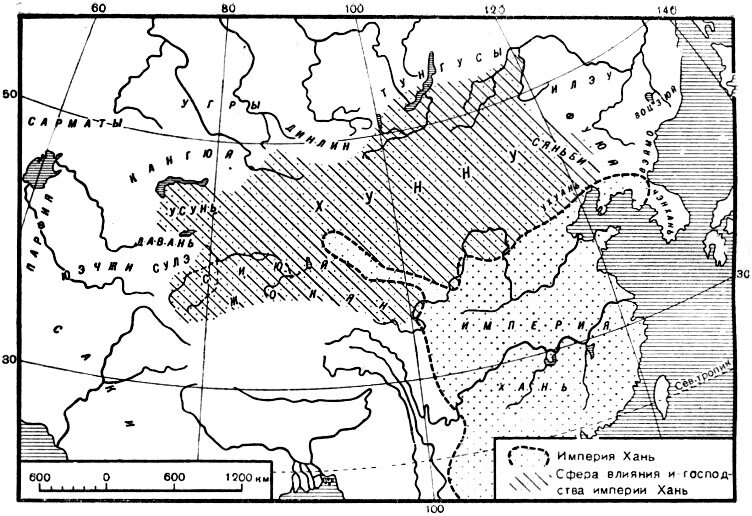
The Xiongnu did not interfere in the confrontation, but did what they had to do — restore their former borders. It was a smart decision, and when a native of Han Guangwu became emperor in a fierce struggle in 25, the Xiongnu could smoke bamboo, as they restored the nomadic empire of their ancestors. Everything was the same-the old borders, the old vassals of the Uisuni, Wuhuan, Dingling, and the old allies Kangyu, the Tibetan-Kyang, and the Koreans.
Guangwu-di (5 BC — 57), the adult name of Liu Wenshu, was the emperor of China in 25-57. The first emperor of the late Han Empire.
But the new Chinese emperor was not a blunder, either — he distributed to the people almost all the land confiscated from officials, reduced taxes, and freed Chinese slaves. With this, he restored peace and order in the Middle Kingdom by 47.
In 47, Guanyu sent an ambassador to Shanyu Yu, with the desire to restore the former vassal relations, in which the Chinese emperor was only a suzerain, and Shanyu was independent in his possessions. But Shanyu refused to sign the treaty and a situation arose of unresolved relations between the two peoples.
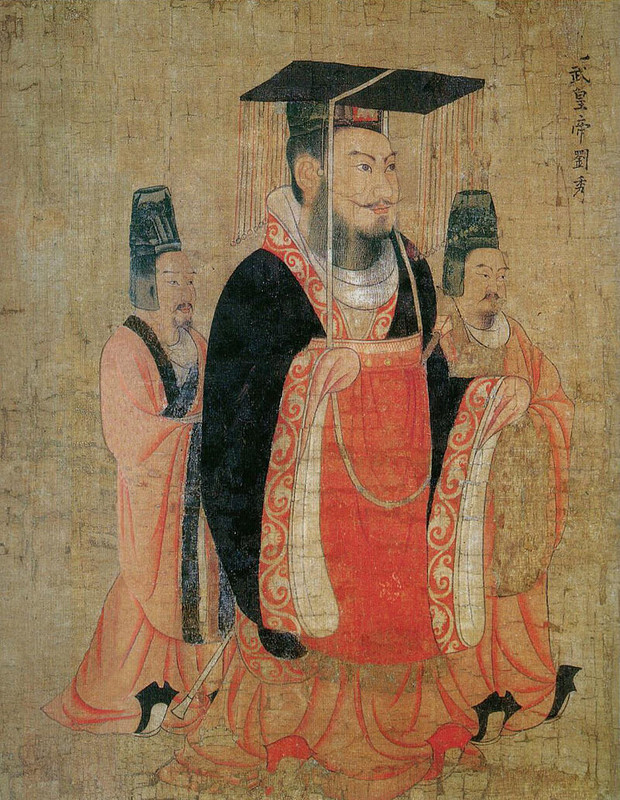
Guanwu-di (5 BC – 57 AD), adult name Liu Wenshu, was Emperor of China from 25 to 57 AD. He was the first emperor of the late Han dynasty.
But the new Chinese emperor was no slouch either — he distributed almost all the land confiscated from officials to the people, lowered taxes, and freed Chinese slaves. By doing so, he restored peace and order in China by 47 AD.
In 47, Guangwu sent an envoy to Shanyu Yuyu with a request to restore the previous vassal relations, under which the Chinese emperor was only a suzerain, and Shanyu was independent in his possessions. But Shanyu refused to sign the treaty, and a situation of unresolved relations between the two peoples arose.