
The heir is not in a straight line
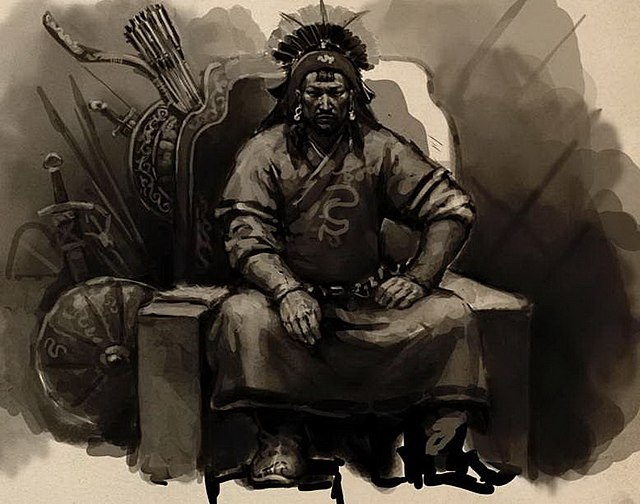
Batu (Batu Khan, Batu, Sain Khan) (1207-1256), son of Jochi and grandson of Genghis Khan, a skilled military commander and successful politician, the actual creator of the Ulus of Jochi (Golden Horde). We don’t know much about Batu’s youth, but most likely, he accompanied his father during campaigns against the Khorezmshah state, and then against various steppe tribes of Central Asia. The most important moment in the beginning of his life was his appointment by Genghis Khan in 1227 as the ruler of his father’s ulus. Interestingly, this appointment did not quite correspond to tradition, since Batu was the second son of Jochi, and Ordu was the eldest. Whatever right Genghis Khan had to create legal norms, it is clear that without the consent of the elite of the ulus, such an appointment would not have been supported. Obviously, the «Shaker of the Universe» made a prescient choice, blessing the rule of a real leader who relied on the army of his ulus. It is important to note that during all these years he had the best commander of the empire, Subotei, who became his main military adviser.
Another factor that influenced this choice was, obviously, the desire of his uncle Ogedei to enlist the support of an influential and powerful ulus in the struggle for the throne of the great kaan against other brothers. And he achieved his goal – the Jochids supported him. In return, he promised them support in their new conquests.
As soon as he became ruler, Batu immediately began to prove that he was worthy of the throne and capable of expanding his possessions to the west. Using the sanction of the All-Mongol Kurultai in 1227 and 1229, when he was confirmed as the leader of the campaign, he launched an invasion of the Volga region. In 1229, Batu’s troops invaded the Trans-Volga region and the Southern Urals, where they defeated the Kipchaks and Saxons, and in 1232 his troops marching on Bulgaria were stopped on the outskirts of Bilyar. It became clear that without the concentration of all the forces of the empire, victory in the West could not be achieved.
Forward to the West
Batu repeatedly tried to persuade the great Kaan to declare a campaign against the western countries. Finally, in 1235, at the All-Mongol kurultai, the great Kaan Ogedei not only proclaimed a campaign under the command of Batu, but also ordered all Genghisids to participate in it, allocating a significant contingent from his possessions.

In 1236, this army invaded Bulgaria and the Lower Volga region in several columns. Despite the resistance of the Bulgars, their country was captured, and the capital, Bilyar, was taken and burned. After completing the conquest of the Volga region, in the winter of 1237, troops led by Batu invaded Russia. The tumans of Batu used tactics completely new to Europe – maneuvering with large masses of cavalry, tactical tricks – false retreats, envelopments and direct storming of cities. The Russian princes did not expect this in any way and were caught off guard. Only after the capture of Ryazan, the Vladimir princes were able to assemble a significant army and tried to give a field battle near Kolomna. Batu’s troops were almost defeated in a fierce battle, and Genghisid Kulkan died in it for the only time during this entire campaign. The victory opened the way for Batu to conquer Northeastern Russia. Attempts by several cities to resist proved futile – they were captured and burned. Batu’s troops almost reached Novgorod, but the spring mud forced them to return to the steppe. In 1238-1239, various corps of Batu troops conquered the steppes of the Northern Black Sea region and the Ciscaucasia. In 1238-1240, Batu’s troops captured Southern Russia, capturing the largest cities – Chernigov, Pereyaslavl, Kiev, Galich. During the preparation of the further campaign, there was a conflict with Ogedei’s son Guyuk, who believed that he should lead this campaign. But Batu was able to maintain and assert his supremacy.
In 1241, Batu’s troops simultaneously invaded the Czech Republic, Hungary and Bulgaria in three parallel columns. In several battles, the militias of the knights of Germany and the Czech Republic (the Battle of Liegnitz) and the royal Hungarian troops (the Battle of Chaillot) were defeated. Batu’s troops reached Dalmatia and Austria. At this time, news reached the troops about Ogedei’s death and the election of a new kaan, which required the presence of all the Genghisids. The hike was interrupted.
Organization of the ulus
At the end of 1242, Batu returned to the Volga region and began actively shaping the management and taxation system of his huge ulus. The first capital of his ulus was Bolgar, where the coinage began. The Jochid possessions stretched from the Danube region in the west to the Irtysh region in the east, from the Pre-Caucasus and Khorezm in the south to the forest zone in the north. Batu divided the Jochi Ulus into 2 wings: Ak Orda and Kok Orda, the border between which ran approximately along the Ural River. This territory was divided between the Jochids and other aristocrats. The eastern part of the ulus, Kok Orda, was ruled by Jochi Ordu’s eldest son, Ejen, and his descendants. A military-administrative system was established inside the wings – the hierarchy of ownership of the clan Tatar aristocracy – they ensured the receipt of taxes and duties, and also served the khans of the Jochi Ulus with their military detachments. Settled territories (the Balkans, Russia) They pledged to obey the authority of the great Kaan, receiving labels on the board, and pay various taxes and tributes.

The achievement of the new Mongol Empire was the organization of trans-Asian trade from China to Europe, which brought huge trade profits. Due to its development, cities began to appear at the junctions of trade routes. A particularly dense network appeared on the Lower Volga, where a new capital, Sarai al–Mahrusa, was built on the site of the Volga crossing. It became not only a trade and craft center, but also the administrative center of the country.
Batu pursued an active military policy, suppressing resistance within, especially among the Russian princes (Dannil Galitsky, Alexander Yaroslavich) and organizing campaigns against the countries of Southern and Central Europe. He conducted active diplomatic negotiations with the Pope, the Armenian tsars and the Seljuk Turks. He supported the rulers of the Bulgarian Kingdom of Asenei against the crusading Latin kingdom.
At the peak of power
The enthronement of the great Kaan Guyuk, despite the opposition of Batu, led to a long cooling of relations with him. Guyuk and his entourage schemed in every possible way against the Jochi Ulus and complicated its policy, not stopping at the murder of Russian princes loyal to it (Yaroslav Vsevolodovich and others). At the same time, formally after the death of Chagatai (1242) Batu became the oldest Genghisid.
The situation was resolved after Guyuk’s death. In 1249-1250, Batu tried to gather all the Genghisids at the Kurultai to choose a new great kaan. Only after long negotiations and a brief internal war did he succeed in 1251 in enthroning his protege Munke, Tului’s son. At the same time, he and he divided the Chagatai Ulus, capturing Central Asia. Thus effectively establishing control over the Great Silk Road.
Supporting Munke’s power, he sent his tumens to conquer Southern China, led by Tsubodai’s son Uriankhadai. This was not only the triumph of Batu’s policy and the last decade of the unity of the Mongol Empire, which he strongly strengthened, but also the pinnacle of his achievements as a politician and commander.
At the same time, the paradox of his rule, however, was that, wishing to strengthen the empire, he developed and strengthened the Jochi Ulus, thereby laying the foundations for the power and independence of the Golden Horde.